
Workplace discrimination almost never announces itself with a cartoon villain or a memo saying you’re being targeted. Usually, it shows up as a pattern. A promotion skips you for someone less qualified. A performance improvement plan lands the week after you disclose a pregnancy. Your manager starts treating you differently once you turn 55. By then, a lot of California employees have already talked themselves out of calling an employment discrimination lawyer.
At Frontier Law Center, we represent California employees in workplace discrimination cases across every protected class under state and federal law. What follows is a plain-language guide to when a situation crosses the line and what to do about it.

★★★★★5/5
“They were super professional from start to finish! The moment I spoke with them, I knew I was in the right hands.”
— Recent Client Review
Quick Answer
What does an employment discrimination lawyer do in California?
An employment discrimination lawyer represents California employees when an employer treats them unfairly because of a protected characteristic such as race, gender, age, disability, religion, pregnancy, or sexual orientation. The work covers more than filing lawsuits. It includes evaluating whether the pattern matches what state and federal law prohibit, filing complaints with the California Civil Rights Department, negotiating severance, and litigating cases when needed.
Types of Workplace Discrimination We Handle
Race Discrimination
Discrimination based on race or gender remains one of the most prevalent forms of illegal workplace treatment in California. This includes unequal pay, biased promotion decisions, hostile work environments built around racial or gender-based stereotypes, and terminations that would not have happened to an employee of a different race or gender.
Age Discrimination (40+)
California and federal law specifically protect workers who are 40 years of age or older from being targeted because of their age. This includes being pushed out in favor of younger, less experienced workers, being excluded from training or advancement opportunities, or facing layoffs structured in a way that disproportionately affects older employees.
Disability Discrimination
Under both FEHA and the ADA, employers are required to provide reasonable accommodations to employees with disabilities and cannot fire, demote, or otherwise penalize employees because of a physical or mental health condition. The failure to engage in the interactive process the legally required back-and-forth between employer and employee about accommodations is itself a violation.
Religious Discrimination
Your employer cannot treat you adversely because of your religion, religious practices, or beliefs. That includes scheduling you in ways that deliberately conflict with religious observances, refusing reasonable accommodations for your faith, or creating a work environment where your religion is used against you.
Pregnancy Discrimination
FEHA provides explicit protections for pregnant employees and those who have recently given birth. Being fired, demoted, or denied leave because of pregnancy is illegal. Employers are also required to provide reasonable accommodations for pregnancy- related conditions. This often intersects with wrongful termination claims, and our attorneys handle both together.
National Origin and Ethnicity Discrimination
Treating an employee differently because of their national origin, ancestry, or perceived ethnicity, including through language restrictions, accent bias, or culturally hostile conduct, is prohibited under California and federal law.
Gender Discrimination
Gender discrimination happens when an employer treats you differently because of your sex, gender identity, gender expression, or pregnancy. In California, FEHA protections cover everything from unequal pay and promotion bias to misgendering, denied leave, and termination tied to how you present at work.
Sexual Orientation Discrimination
Sexual orientation discrimination happens when an employer treats you differently because you are gay, lesbian, bisexual, queer, or perceived to be. California is one of the few states that explicitly protects sexual orientation under FEHA, which means firing, demotion, harassment, or denied promotion based on who you love is illegal at any employer with five or more employees.
How California’s FEHA Gives You Stronger Protection Than Federal Law
California’s Fair Employment and Housing Act (FEHA) is one of the strongest employee protection laws in the country. It gives California employees real advantages over what federal law alone provides, which matters when you’re deciding whether you have a case.



Signs of Workplace Discrimination California Employees Should Not Ignore
Workplace discrimination cases rarely turn on one isolated incident. The case is built from a pattern that connects to something the law protects.
Timing matters more than most employees expect. When adverse action follows a protected event like disclosing a pregnancy, requesting an accommodation, or filing a harassment complaint, courts take the sequence seriously. The same goes for sudden negative performance reviews after you do something your employer didn’t like, a pattern we call “papering the file.”
Not every difficult workplace qualifies. A bad manager or a frustrating reorganization will not typically meet the legal threshold. What separates an unfair job from a legal claim is whether what happened was tied to a protected characteristic. In the bullet point list are the workplace discrimination examples we see most often when California employees first reach out.
Signs Your Firing May Have Been Illegal
- You were fired, demoted, or disciplined shortly after a protected event like medical leave, pregnancy disclosure, or turning a certain age
- Your performance reviews suddenly turned negative after you disclosed something personal or asked for an accommodation
- You are treated differently than coworkers in similar roles, and the only meaningful difference is a protected characteristic
- Comments, jokes, or exclusion from a coworker or manager have created a hostile work environment tied to your race, gender, age, disability, or religion
- Your employer refused to discuss accommodations for a disability or pregnancy, or retaliated against you for asking
For real-world examples of how these patterns play out, see our blogs on disability qualifications and pregnancy termination.
What Makes a Strong Workplace Discrimination Case in California
Not every unfair situation is a legal case. Knowing what makes one stronger helps you think clearly about your own. Strong cases tend to share a few patterns.

Documentation You Still Have Access To
Emails, performance reviews, text messages with coworkers, and written warnings matter most because they capture the timeline in real time. If you haven’t already, save copies to a personal device before anything else happens.
A Clear Protected Characteristic at the Center of the Issue
The clearer the tie between what happened and a protected characteristic, the stronger the case. Your employer does not have to have said anything out loud. Patterns, comparisons, and timing can build a case on their own. Our protected-class pages on age discrimination, race discrimination, and sex and gender discrimination go deeper on each.
A Real Adverse Employment Action
Being fired, demoted, having your hours cut, or being denied a promotion all count as adverse actions. A one-time uncomfortable comment is usually not enough. However, a pattern of conduct can create a hostile work environment claim even without a formal firing.
Retaliation on Top of the Underlying Issue
If you reported discrimination and your employer came after you for it, the retaliation becomes a separate claim under California law. Our workplace retaliation page breaks this down further. You can see how we’ve approached cases like these on our accomplishments page.
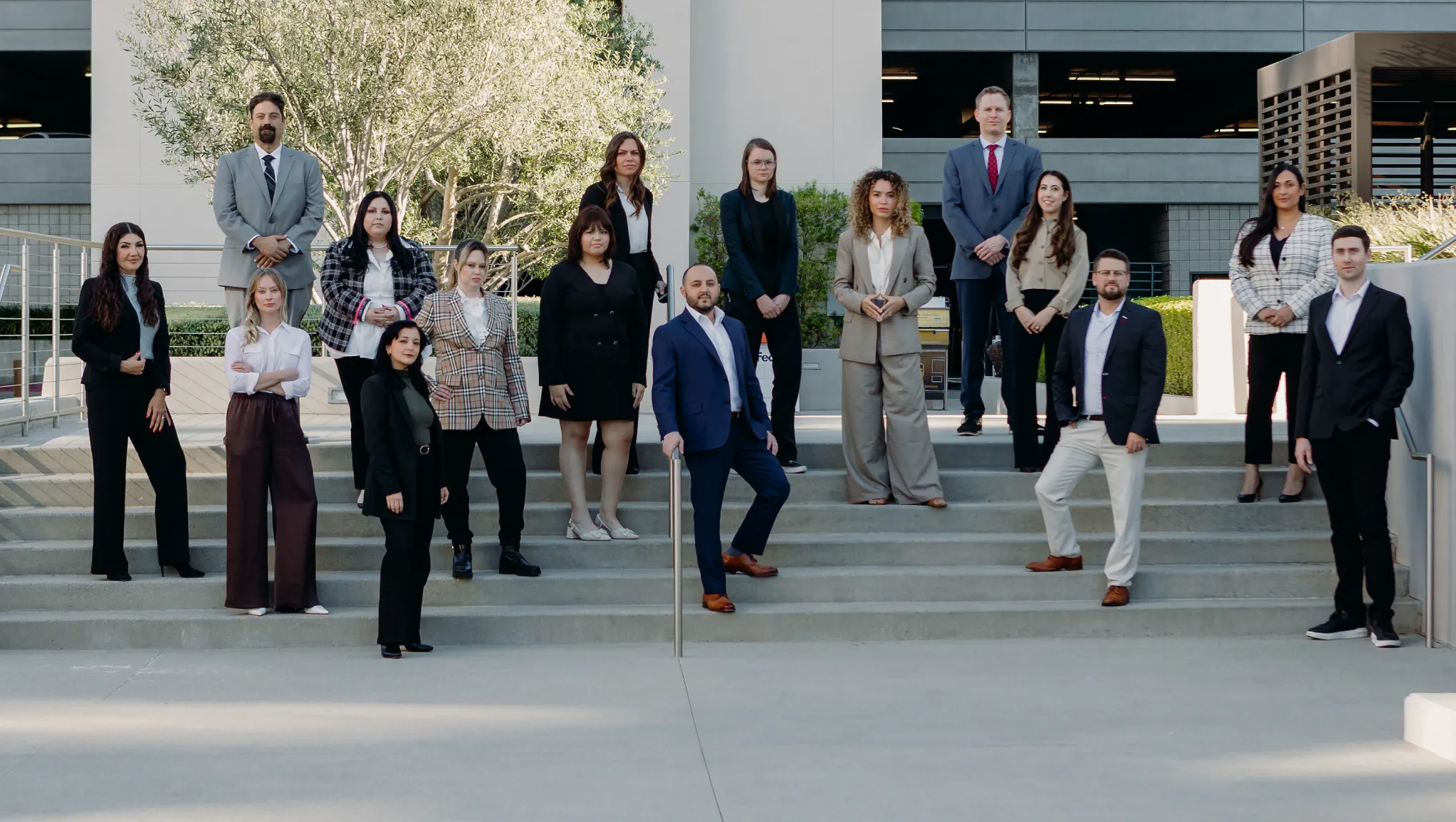
1
Kirsten Starr
Controller
2
Nicole Clancy
Senior Litigation Attorney
3
Mike Rachmann
Litigation Attorney
4
Robert Starr
Attorney, Founding Partner
5
Francine Barlavi
Client Onboarding Team
6
Danny Barlavi
Client Onboarding Team Lead
7
Kaylie Urango
Pre-Litigation Support Specialist
8
Amber Shelgren
Case Evaluation Assistant
9
Taylor McCarthy
Litigation Support Specialist
10
Gabriela Dominguez
Litigation Support Specialist
11
Cynthia Rodriguez
Case Manager
12
Collette Navasartian
Paralegal
13
Rebecca Harteker
Litigation Attorney
14
Manny Starr
Attorney, Managing Partner
15
Colin Rickard
Director of Growth & Operations
16
Mark Tieman
Attorney, Managing Partner
Why California Workers Choose Frontier Law Center
$100M
Frontier Law Center has recovered for California workers, including significant results in discrimination cases across race, gender, age, disability, and pregnancy. We represent only employees — never employers — and every decision our team makes is oriented toward winning for the worker.
What makes Frontier different is how we are built. Our AI-native systems mean that our attorneys arrive at strategy sessions having already processed the key facts, identified patterns in the employer’s conduct, and built the evidentiary foundation that most firms are still constructing weeks later. We were a 2025 finalist for Law.com’s Best Use of Artificial Intelligence. The result for clients is a legal team that is sharper and faster than what most employers — and most employer-side law firms – are prepared to face.
We handle discrimination cases throughout California. If you are looking for workplace discrimination lawyers near you anywhere in the state, we are ready to hear your case.
If you are searching for wrongful termination lawyers near me anywhere in California, we are ready to hear your case. Contact us today — and if you want to explore other employment claims related to your situation, you can also learn more about
What Happens When You Contact Frontier Law Center
1
You tell us your story
Free, confidential, no pressure. You walk us through what happened in your own words. No intake forms, no judgment.
2
We give you an honest assessment
Our attorneys review the facts and tell you plainly what we see. If a claim exists, we walk you through the timeline, strategy, and what to realistically expect.
3
You decide what comes next
No obligation after the consultation. If we take your case, we work on contingency – we do not get paid unless you do. No upfront cost, ever.
Free consultation · Fully confidential · No win, no fee · No upfront cost
Questions California Employees Ask About Workplace Discrimination
A few questions come up more than the rest when employees consider reaching out. Here are the ones we hear most.
How Do I Know If It's Time to Call an Employment Discrimination Lawyer
Reach out the moment you find yourself wondering whether what happened was legal. You don’t need to have decided you want to sue, and you don’t need to have left your job. A free case evaluation is low-friction and carries no obligation.
Can I Handle a California Discrimination Case Without a Lawyer
Yes, you can file with the California Civil Rights Department on your own, and some employees do. Whether that’s the right path depends on case complexity and how comfortable you are negotiating with your employer’s attorneys, who almost always have legal representation. A represented employee typically recovers more than an unrepresented one. Workplace Fairness has a useful overview of the options.
Will My Employer Find Out If I Talk to a Lawyer About Discrimination
No, the initial consultation with an employment discrimination lawyer stays completely confidential. We don’t file, send, or share anything with your employer until you decide to move forward. Many people reach out while still employed, just to understand their rights, and that conversation stays between you and our firm.
How Long Does an Employment Discrimination Case Take in California
It varies based on case complexity and whether your employer will negotiate. Some cases resolve in a few months through a settlement. Others take a year or more if they proceed to litigation. On our first call, we’ll give you an honest read on the timeline for your situation.
What If I'm Not Sure My Situation Counts as Workplace Discrimination in California
That’s the most common place people start, and it’s exactly what a free case evaluation is for. Many California employees are unsure whether what they experienced qualifies under state law, and that uncertainty is normal. We can hear the facts, see whether the pattern matches what California law prohibits, and give you an honest read.
Last Updated: June 10, 2026
The information on this page reflects the law as of the date above and is intended for general informational purposes only. It does not constitute legal advice, nor does it create an attorney-client relationship. Laws and regulations are subject to change, and individual circumstances vary — always consult a qualified attorney for guidance specific to your situation.
Ready to Find Out If You Have a Case?
What’s happening at work may feel impossible to make sense of right now, and you don’t have to figure it out alone. A free case evaluation with an employment discrimination lawyer at Frontier Law Center gives you a clear read on your rights, your realistic options, and what the next step looks like. When you’re ready, reach out to Frontier Law Center