
Your employer may have said that salaried roles don’t get overtime. Or that your position is “exempt.” Or perhaps no one mentioned it at all, and silence became your answer. For many California employees, the problem isn’t ignoring their rights under California overtime law. It’s that no one told them those rights existed.
Most violations of California overtime law don’t look like violations. They look like policy.

★★★★★5/5
“Frontier law, quick and swift. Manny and Adam are standup Guys. If this happens again I’ll be back!!! Pay if you win and they will win. Thank you for your business.”
— Recent Client Review
Quick Answer
What does California overtime law require?
California overtime law requires employers to pay time-and-a-half after 8 hours in a workday and double time after 12 hours. These protections apply on top of the federal 40-hour weekly threshold, making California's rules significantly stronger than those in most other states. Most non-exempt employees qualify, including many salaried employees whose employers have incorrectly labeled them exempt. If your employer is not following these rules, you may be owed back pay for every affected workday.
10,000
+
Workers Helped
100
M+
Recovered
10
+
Years in Practice
California Overtime Law: What Employers Are Required to Pay
Under California Labor Code Section 510, most non-exempt employees qualify for overtime pay based on a daily threshold, not just a weekly one. That distinction matters. In most other states, overtime only kicks in after 40 hours in a workweek. In California, however, hourly employees and non-exempt salaried employees both earn overtime after 8 hours in a single workday, regardless of how many hours they worked the rest of the week. Employees who work on the seventh consecutive day of a workweek also trigger a separate double-time rule.
California overtime rates apply as follows:
| Hours Worked | Pay Rate |
|---|---|
| Up to 8 hours in a workday | Regular rate of pay |
| Hours 8 through 12 in a workday | 1.5x your regular rate (time-and-a-half) |
| Hours beyond 12 in a workday | 2x your regular rate (double time) |
| First 8 hours on the 7th consecutive workday | 1.5x your regular rate |
| Beyond 8 hours on the 7th consecutive workday | 2x your regular rate (double time) |
| Over 40 hours in a workweek | 1.5x your regular rate (for hours not already counted above) |
These rules apply whether your employer pays you hourly or on salary, as long as the non-exempt classification applies to your role. Time-and-a-half and double time are not optional benefits. They are legal requirements under California overtime pay law. If your employer doesn’t follow this structure, you have the right to recover what they failed to pay you, and in many cases, significantly more.
Exempt Employee Status in California: When the Label Does Not Match the Law
Many employees miss out on overtime because their employer told them their role is exempt. In most cases, no one explains what that word actually means under California law, and employers count on that gap staying open.

The Legal Test Your Job Must Actually Pass
Being paid a salary or holding a professional title does not automatically make you exempt from California overtime. For an exemption to apply, your job must satisfy specific legal criteria covering your actual daily duties, your level of independent judgment, and the salary your employer pays you. If your work doesn’t meet those requirements, your employee classification may be incorrect and you may be owed unpaid overtime wages going back as far as three years.

Who Gets Misclassified Most Often
The groups most commonly affected include assistant managers who perform the same tasks as hourly staff, inside salespersons, computer professionals, and salaried workers labeled as independent contractors. If your employer also relies on an alternative workweek schedule to justify skipping overtime pay, those arrangements must meet strict legal requirements. When they don’t, overtime wages are still owed.

What California Labor Laws Let You Recover for Unpaid Overtime
If your employer violated California overtime pay law, the law does not only give you back what they failed to pay. In many cases, it gives you significantly more. The recovery available to you depends on the specific violations involved, how long they occurred, and whether they were willful.
When hourly wages were underpaid because your employer miscalculated the regular rate, that shortfall compounds across every affected overtime hour. California also does not allow most private-sector employers to substitute comp time for overtime pay. If your employer offered comp time instead of wages, that may be a separate violation on top of the underlying overtime claim.
California’s Private Attorneys General Act (PAGA) allows employees to bring representative actions on behalf of coworkers who experienced the same violations. In other words, if your employer applied the same overtime pay law violation across your team or workplace, your case may cover far more than your own wages alone.
You don’t need to calculate what you’re owed before contacting us.
Frontier Law Center does that work for you. Our team reviews your full wage history, hours worked, and employer practices to build the strongest recovery possible. Many of our clients came to us saying they weren’t even sure they had a case.
- Unpaid overtime wages going back up to three years
- Interest on unpaid overtime wages
- Waiting time penalties if your employer delayed your final paycheck
- Liquidated damages for willful violations
- Attorney’s fees and court costs paid by the employer
- Additional recovery if comp time was wrongfully substituted for overtime pay
- Representative action recovery through PAGA if coworkers were affected
California Overtime Violations: Why Your Paycheck May Be Coming Up Short
Not every overtime violation looks obvious. Employers design the most common ones to be hard to notice. Here are the five situations we see most often at Frontier Law Center.

Misclassification as Exempt
Employers sometimes label employees as “exempt” to avoid paying overtime, even when the actual job duties don’t legally qualify. Under California overtime law, the label your employer assigns doesn’t control whether you’re entitled to overtime. Your actual day-to-day work does.
Off-the-Clock Hours That Count
Time worked before your shift, after clocking out, or from home after hours may count toward your overtime threshold under California law. On-call time with restricted movement and travel between job sites during the workday can also qualify. If your employer benefited from that time, you generally have a right to be paid for it. Learn more about how off-the-clock work factors into your overtime rights, and how meal and rest break violations can push your daily hours into overtime territory.
Incorrect Overtime Pay Calculation
California overtime is based on your regular rate of pay, which is not always the same as your base hourly rate. Employers who exclude production bonuses or other non-discretionary pay from that calculation end up underpaying overtime wages, sometimes by a significant amount.
Averaging Hours Across Pay Periods
Some employers average two weeks of hours together to make it appear that no overtime threshold was crossed. That practice is not permitted under California overtime laws. Calculations run workday by workday and week by week, with no averaging allowed.
Altered Time Records
Employers sometimes edit time entries, apply automatic deductions, or pressure employees to underreport hours to reduce overtime. If your records don’t reflect the hours you actually worked, that’s a serious violation and it’s often provable through your own records and the employer’s internal data.
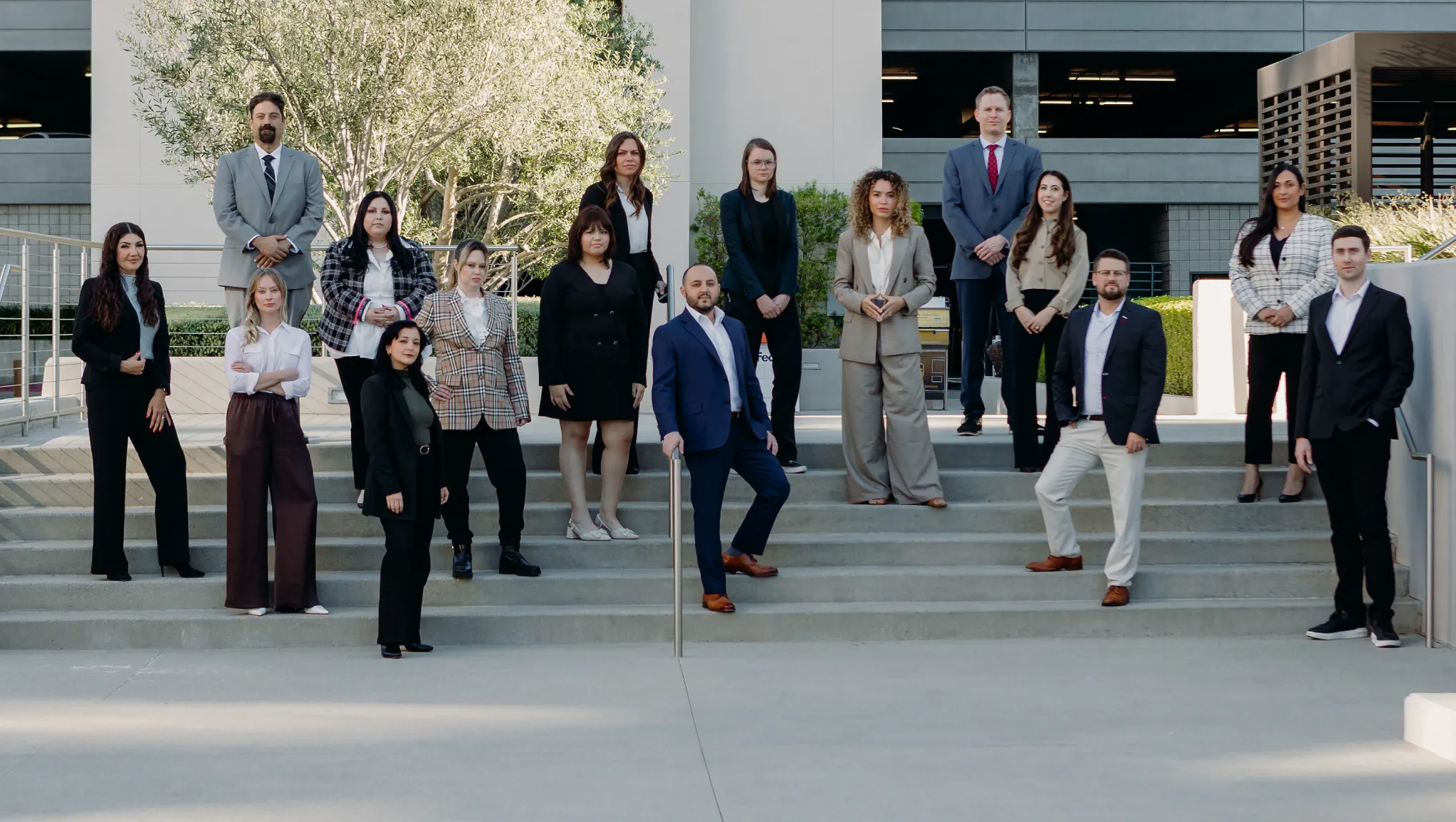
1
Kirsten Starr
Controller
2
Nicole Clancy
Senior Litigation Attorney
3
Mike Rachmann
Litigation Attorney
4
Robert Starr
Attorney, Founding Partner
5
Francine Barlavi
Client Onboarding Team
6
Danny Barlavi
Client Onboarding Team Lead
7
Kaylie Urango
Pre-Litigation Support Specialist
8
Amber Shelgren
Case Evaluation Assistant
9
Taylor McCarthy
Litigation Support Specialist
10
Gabriela Dominguez
Litigation Support Specialist
11
Cynthia Rodriguez
Case Manager
12
Collette Navasartian
Paralegal
13
Rebecca Harteker
Litigation Attorney
14
Manny Starr
Attorney, Managing Partner
15
Colin Rickard
Director of Growth & Operations
16
Mark Tieman
Attorney, Managing Partner
What to Expect When You Contact Frontier Law Center About an Overtime Claim
Frontier Law Center is a plaintiff-side firm. That means we only represent employees, never employers. Every decision we make is focused on recovering what you’re owed. You can learn more about how we help across all types of wage and hour claims.
NO UPFRONT FEES
We handle overtime claims on a contingency basis. You pay nothing to start, and we only get paid when you do. That means our incentives are fully aligned with yours from the first conversation.
FREE CASE EVALUATION
Your first conversation with us costs you nothing and obligates you to nothing. Tell us what happened and we’ll tell you directly whether we believe you have a claim worth pursuing and what the realistic path forward looks like.
When you reach out, we start by reviewing the facts of your situation against California overtime law. We look at your role, how your employer calculated your pay, how your hours were tracked, and whether any of the most common violations apply. If we believe you have a viable claim, we walk you through exactly what the path forward looks like and what you might expect to recover.
If we move forward together, we handle everything: the legal strategy, the evidence gathering, the wage calculations, and the filings. We’ve represented employees in claims ranging from individual back-pay disputes to large-scale representative actions involving thousands of employees. Either way, the process starts the same way: with a conversation.
Frontier Law Center runs on AI-native systems, which means our attorneys spend their time on strategy and client advocacy, not administrative work. We analyze pay data faster, identify patterns in timekeeping violations earlier, and build stronger arguments because the groundwork is done before most firms have finished intake.
How Frontier Law Center Fights For You
California law provides strong employee protections. Does any of this match what you experienced?
1
You Share Your Story
Free, confidential, no pressure. We listen — and we give you an honest answer about your rights.
2
We Investigate
Our attorneys uncover what actually happened. You don’t lift a finger — we do the work.
3
We Fight for You
We negotiate hard and are fully prepared to go to trial. We fight for the maximum recovery.
4
You Move Forward
We only get paid when you win. You get closure, compensation, and a fresh start.
California Overtime Law: Your Most Common Questions Answered
If you’re trying to figure out whether your overtime situation is a legal problem, you’re not alone. These are the questions we hear most often from employees across California, and the answers they deserve.
Can a Salaried Employee Get Overtime Pay in California?
Yes, being paid a salary does not automatically exempt you from California overtime protections. To qualify for an exemption, your job must pass specific legal tests related to your actual duties, your level of independent decision-making, and the salary you receive. If your employer classified you as exempt but you don’t genuinely qualify under the law, you may be owed unpaid overtime wages for every workday you worked more than 8 hours. In fact, this is one of the most common misclassification issues we encounter at Frontier Law Center. You can also learn more about whether you have a case at Nolo’s overtime guide.
Is Overtime After 8 Hours or 40 Hours in California?
Both thresholds apply in California, and whichever one you reach first triggers overtime for those additional hours. California is unusual in that overtime begins after 8 hours in a single workday, not just after 40 hours in a week. So if you work 10 hours on Monday but only 38 hours total by the end of the week, you’re still owed overtime for those extra 2 hours on Monday. Federal overtime law doesn’t work this way. As a result, many employees from other states discover how different California overtime laws are only after they’ve already missed months of overtime wages.
What Is Double Time, and When Does It Apply in California?
Double time is a pay rate of 2 times your regular earnings, and California is one of the few states that requires it. Specifically, double time applies when you work more than 12 hours in a single workday. It also applies to hours worked beyond 8 on your 7th consecutive workday in a workweek. For example, on a 14-hour shift, your first 8 hours are at your regular rate, hours 8 through 12 are at time-and-a-half, and hours 12 through 14 are at double time. Most employers don’t explain this structure clearly, which is precisely why these violations are so common.
What If My Employer Says I Agreed to Waive Overtime?
You cannot legally waive your right to overtime pay in California. Even if you signed a form that appeared to give up that right, or agreed verbally, California law does not enforce that agreement. The state treats overtime as a right that belongs to you as the employee. Therefore, your employer cannot negotiate it away, regardless of what any document says. If your employer uses a signed form or employment agreement to deny you overtime wages, that situation is worth reviewing with us.
How Long Do I Have to File an Overtime Claim in California?
Under California law, you generally have three years to file a claim for unpaid overtime wages under the California Labor Code. Under the federal Fair Labor Standards Act, the standard window is two years, or three years if the violation was willful. Because California’s statute of limitations is more favorable, most California employees file under state law.
Importantly, the clock starts running from each pay period in which a violation occurred, not from the date you left the job. So even former employees often still have time to act. Courts strictly enforce these deadlines, however, which makes early action important. You can read more about statutes of limitations at Cornell Law School’s Legal Information Institute.
Can My Employer Retaliate Against Me for Raising an Overtime Issue?
No, California law prohibits employers from retaliating against employees who assert their wage and hour rights. That includes terminating you, cutting your hours, demoting you, or creating a hostile work environment because you filed a complaint or asked questions about overtime pay rates. If you’ve already experienced retaliation after raising a wage issue, that’s a separate legal claim on top of the underlying overtime violation. Frontier Law Center handles both. You can also learn more about employee protections against retaliation at Workplace Fairness.
Last Updated: June 01, 2026
The information on this page reflects the law as of the date above and is intended for general informational purposes only. It does not constitute legal advice, nor does it create an attorney-client relationship. Laws and regulations are subject to change, and individual circumstances vary — always consult a qualified attorney for guidance specific to your situation.
Find Out What Your California Overtime Claim May Be Worth
If something about your overtime situation doesn’t add up, Frontier Law Center can help you find out what you’re owed. There are no upfront fees and no obligation. Just a free, straightforward case evaluation.