
Something about your paycheck does not add up. Wage theft in California affects millions of employees every year, and most never report it because no one has explained what they are actually entitled to collect. At Frontier Law Center, we help California employees figure out exactly what their employer owes them.
California wage law sets strict rules for when and how you must be paid, but most employers count on their employees never checking the math. If your pay has not matched your hours, the difference may be legally recoverable.

★★★★★5/5
“I reached out to Frontier Law Group for some legal advice and Manny the attorney at this group was amazing. He took his time to listen to my concerns and gave me sound advice.”
— Recent Client Review
Quick Answer
What Is Wage Theft in California?
Wage theft in California happens when an employer fails to pay you the full wages you are legally owed. That includes unpaid overtime, shaved hours, missed meal and rest break premiums, unauthorized paycheck deductions, tip theft, and late or missing final paychecks. Under the California Labor Code, employers must pay every employee accurately, on time, and for every hour worked. When they fall short, you may have the right to recover the unpaid wages plus penalties and attorney's fees.
10,000
+
Workers Helped
100
M+
Recovered
10
+
Years in Practice
What Wage Theft Means Under California Labor Laws
California has some of the strongest wage protections in the country, and the Division of Labor Standards Enforcement (DLSE) enforces them on behalf of employees statewide. The DLSE, also known as the Labor Commissioner’s Office, gives employees two primary paths when their employer has underpaid them: filing a wage claim directly with the Labor Commissioner, or pursuing a civil lawsuit in Superior Court. Both options are legitimate, and the right choice depends on the specifics of your situation.
We help you figure out which path fits your case and what the full value of your claim looks like before you commit to anything.
Our Video on Wage Theft
How California Employers Commit Wage Theft
Most wage theft is structural. Employers build it into payroll systems, schedules, and policies rather than making one deliberate choice, and it tends to affect every employee in the same job at once. The situations below represent the patterns Frontier Law Center sees most often when California employees reach out about a missing or short paycheck. Finding your situation in this list does not guarantee a legal claim. What it means is that you should not count yourself out before speaking with someone who can evaluate the actual facts.
You don’t need to have all the answers.
You just need to tell us your story. We’ll figure out if it was illegal. Many of our most successful clients started by
saying “I’m not even sure I have a case.”
- Overtime was calculated using federal rules instead of California’s daily eight-hour threshold
- Work before clocking in or after clocking out went unpaid because no one formally asked you to track it
- Hours disappeared from your timecard through a rounding policy that never rounds in your favor
- Meal and rest breaks were skipped, cut short, or interrupted without a premium added to your pay
- Minimum wage falls short of what California or your city actually requires for your job
- Deductions for cash shortages, customer disputes, or equipment damage came out of your check without your written consent
- Tips you earned were pooled with managers or supervisors who have no legal right to a share
- Final paycheck arrived days or weeks late after your last day of employment
Your Recovery Options After Unpaid Wages in California
A wage theft claim in California often recovers far more than missed wages alone. The categories below represent what a properly calculated claim can include, and most employees are surprised by how much their employer actually owes when everything is added up. We calculate the full scope of what you are owed as part of every free case evaluation.

Unpaid Wages and Overtime
This is the foundation of most wage theft claims. It covers every hour your employer failed to pay you at the correct rate, including base wages, overtime at California’s daily threshold, and break premiums for missed meal and rest periods.
Penalties and Fines
California law stacks multiple penalties on top of unpaid wages. When your final paycheck arrives late, waiting time penalties accrue at your daily wage rate for up to 30 days under Labor Code Section 203. If your paystubs were inaccurate or incomplete, wage statement penalties apply separately under Labor Code Section 226. Both are recoverable on top of whatever base wages you are owed.
PAGA Civil Penalties
If your employer’s violation affected other employees in the same job, you may be able to pursue civil penalties on behalf of the entire group through California’s Private Attorneys General Act. PAGA cases can significantly increase the total value of a claim and put substantial pressure on employers to resolve violations.
Liquidated Damages
In certain minimum wage and overtime cases, California law allows you to recover liquidated damages equal to the amount your employer underpaid you. This effectively doubles the underlying wage recovery and applies in addition to the unpaid wages themselves.
Attorney’s Fees and Costs
California’s wage laws allow prevailing employees to recover their attorney’s fees and litigation costs from the employer. In practice, this means you do not need to factor legal costs into your decision to come forward.
What to Do If Your Employer Owes You Unpaid Wages in California
Start by preserving evidence. Save your paystubs and screenshot your schedule. Also hold onto any texts or emails where work came up outside your official hours, and keep copies of timecards if you can access them. There is no need to confront your employer or alert anyone at work right now.
Beyond that, filing deadlines matter. California’s statute of limitations for wage claims varies by claim type, and the clock starts from the date of each individual violation, not the date you noticed something was off. As a result, acting sooner keeps more of your options open. The table below shows the key deadlines for each type of claim.
| Claim Type | Filing Body | Deadline |
|---|---|---|
| Unpaid wages or overtime (statutory) | California Labor Commissioner or Superior Court | 3 years from each violation |
| Written contract wage claims | California Superior Court | 4 years from each violation |
| Oral contract wage claims | California Superior Court | 2 years from each violation |
| PAGA civil penalties | CA Labor and Workforce Development Agency | 1 year from the last violation |
| Waiting time penalties | California Labor Commissioner or Superior Court | 3 years from the final paycheck date |
Suing for unpaid wages in California is a real option that many employees pursue successfully. Working with an employment lawyer for wage theft is often the fastest way to understand the full value of your claim, including penalties and premiums most employees never know to ask for. We represent California employees in wage theft claims of every size, from individual disputes to class actions, and we work on a contingency basis, meaning there are no out-of-pocket costs unless we recover money on your behalf.
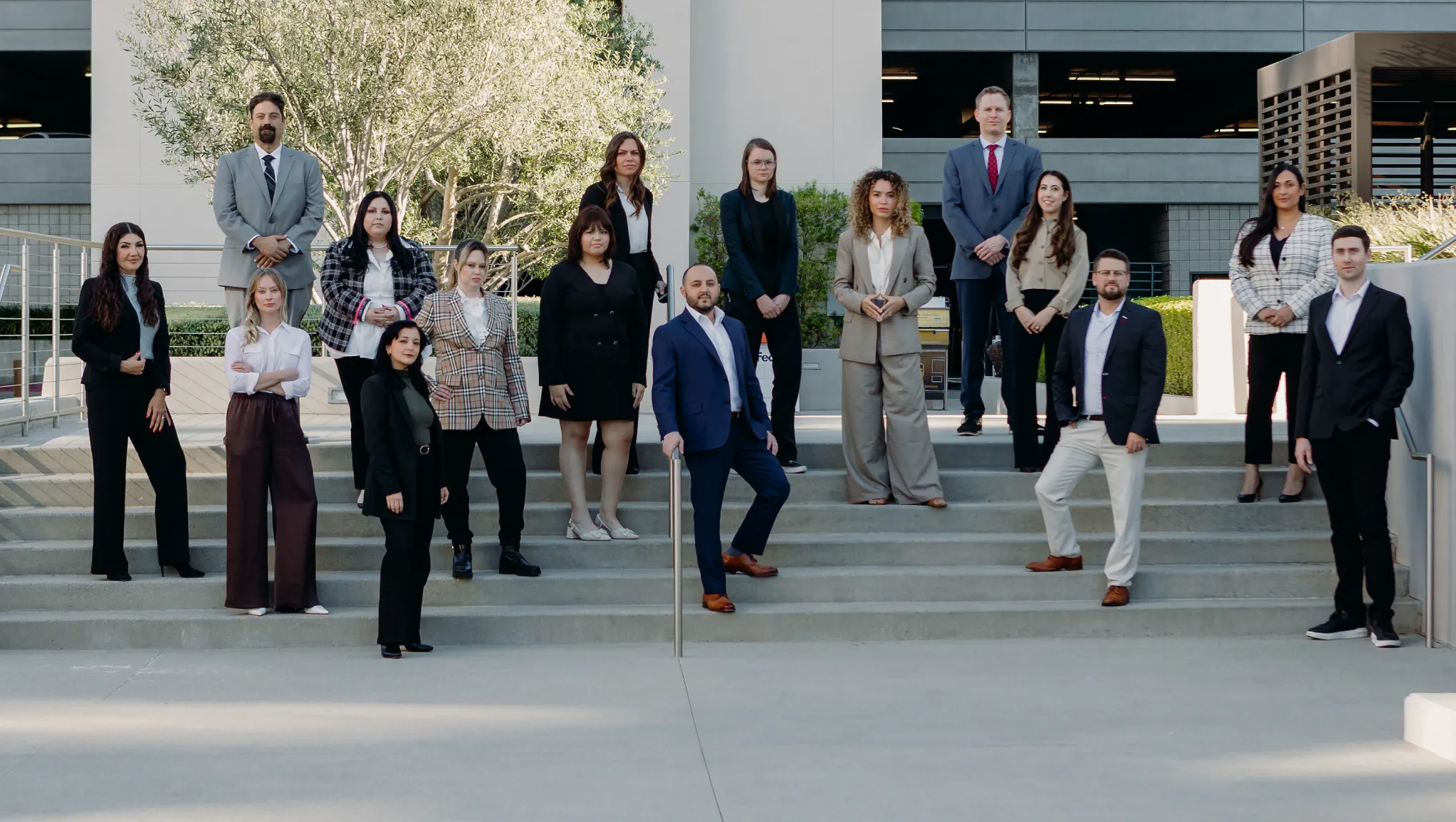
1
Kirsten Starr
Controller
2
Nicole Clancy
Senior Litigation Attorney
3
Mike Rachmann
Litigation Attorney
4
Robert Starr
Attorney, Founding Partner
5
Francine Barlavi
Client Onboarding Team
6
Danny Barlavi
Client Onboarding Team Lead
7
Kaylie Urango
Pre-Litigation Support Specialist
8
Amber Shelgren
Case Evaluation Assistant
9
Taylor McCarthy
Litigation Support Specialist
10
Gabriela Dominguez
Litigation Support Specialist
11
Cynthia Rodriguez
Case Manager
12
Collette Navasartian
Paralegal
13
Rebecca Harteker
Litigation Attorney
14
Manny Starr
Attorney, Managing Partner
15
Colin Rickard
Director of Growth & Operations
16
Mark Tieman
Attorney, Managing Partner
How Frontier Law Center Fights for California Employees Owed Back Pay
Frontier Law Center is a plaintiff-side employment firm based in Woodland Hills, California. We represent employees dealing with violations of wage and hour laws in Los Angeles and across the state: in individual claims, class actions, and PAGA representative actions. As a wage theft attorney and employment lawyer for wage theft cases, we have never represented an employer, and we never will.
California’s First AI-Native Employment Law Firm
Our AI-assisted document review lets us analyze timesheets and pay records at a depth most firms cannot match. That means our attorneys spend their time on strategy and direct advocacy rather than sorting through paperwork, and your case moves faster because of it.
Our case results reflect that commitment. We represented a class of industrial steel workers whose employer had built an unlawful rounding policy into its payroll system, shaving time from every shift while paying overtime at the wrong rate and leaving meal and rest breaks uncompensated. An entire workforce was underpaid for years without knowing it.
In 2024, we also won full relief in arbitration for a line technician at a Southern California airport whose employer denied him lawful meal and rest breaks throughout his employment, recovering premium pay, waiting time penalties, wage statement penalties, and unpaid overtime. If you are searching for an employment lawyer for unpaid wages, these are the kinds of cases we take on every day, across the state.
How Frontier Law Center Fights For You
California law provides strong employee protections. Does any of this match what you experienced?
1
You Share Your Story
Free, confidential, no pressure. We listen — and we give you an honest answer about your rights.
2
We Investigate
Our attorneys uncover what actually happened. You don’t lift a finger — we do the work.
3
We Fight for You
We negotiate hard and are fully prepared to go to trial. We fight for the maximum recovery.
4
You Move Forward
We only get paid when you win. You get closure, compensation, and a fresh start.
Unpaid Wage Questions California Employees Actually Ask
The questions below come directly from employees across California who reached out before they knew whether they had a case. Every situation is different, and yours may not fit neatly into any of these answers.
What Is the Difference Between Filing with the California Labor Commissioner and Suing My Employer?
The Labor Commissioner process moves through a settlement conference and, if unresolved, a hearing before an officer who issues a written decision. A civil lawsuit allows for broader discovery and, in some cases, a larger total recovery. We help you evaluate which path makes the most sense based on your specific claim.
How Do I Calculate How Much My Employer Owes Me for Wage Theft?
Unpaid wages are the starting point, but the total typically includes overtime premiums, break premiums, waiting time penalties, wage statement penalties, and PAGA civil penalties when violations affected other employees. Most employees are surprised by how large the full number is once everything is added up. We calculate it as part of every free case evaluation.
Can My Employer Retaliate Against Me for Reporting Wage Theft in California?
Retaliation is illegal under California Labor Code Section 98.6, whether you file with the Labor Commissioner, consult an attorney, or raise the issue internally. If your employer takes adverse action after you assert your wage rights, that retaliation becomes a separate legal violation that often strengthens your overall claim.
Can I Come Forward While Still Working for the Same Employer?
Yes, you do not need to have been fired to pursue a wage claim in California. California Labor Code Section 98.6 protects you from retaliation for asserting your wage rights, and if your employer does retaliate, that becomes a separate violation we handle alongside your underlying claim.
Does Wage Theft Apply to Salaried Employees and Independent Contractors in California?
A salary or contractor label does not automatically remove wage protections. Exempt status requires meeting California’s strict duties tests, and contractors may be misclassified under AB5’s ABC test. If your role does not meet the legal criteria, you may be entitled to overtime, minimum wage, and break rights regardless of how you were classified.
What Happens If My Employer Claims the Underpayment Was a Payroll Mistake?
Calling it a mistake does not eliminate the legal obligation to correct it. California employers must provide accurate, timely payment regardless of intent, and a pattern of similar errors can support a finding of willfulness, which triggers additional penalties on top of what is already owed.
Last Updated: June 01, 2026
The information on this page reflects the law as of the date above and is intended for general informational purposes only. It does not constitute legal advice, nor does it create an attorney-client relationship. Laws and regulations are subject to change, and individual circumstances vary — always consult a qualified attorney for guidance specific to your situation.
Your Stolen Wages Belong to You. Find Out What You Can Recover.
Every week you wait is a week of recovery you may not get back. California’s statute of limitations is running on your wage claim right now, and the evidence you need is easier to preserve today than it will be in six months.
Whether you are looking for an employment lawyer for unpaid wages or a wage theft attorney in California, Frontier Law Center is ready to fight for what you are owed. We offer free, confidential case evaluations with no upfront cost and no obligation, and we only get paid when you do.