
If you are not sure whether your employer owes you money, a wage and hour attorney can tell you exactly where you stand. Wage and hour claims in California are more common than most employees realize, and most never get filed. Violations show up as overtime at the wrong base rate, a tip pool quietly redirected to management, or a final paycheck that arrived two days late. Research estimates the Los Angeles metro workforce loses between $1.6 billion and $2.5 billion per year to wage violations alone.
Frontier Law Center is a plaintiff-side employment law firm. Our wage and hour attorneys represent employees throughout California against employers who have not paid them what they are owed. Contact us for a free case evaluation.

★★★★★5/5
“Professional firm with great realistic results. A pleasure to work with. I recommend them for any type of employment law.”
— Recent Client Review
Quick Answer
Do I have a wage and hour claim in California?
You may have a wage and hour claim in California if your employer failed to pay overtime, denied required meal or rest breaks, withheld a final paycheck, or underpaid you in any other way. California has some of the strongest wage laws in the country, and violations are often built into routine scheduling and payroll practices rather than committed intentionally. If your pay has not matched your actual work hours, a free case evaluation with Frontier Law Center can tell you exactly what you are owed.
Types of Wage and Hour Claims in California We Handle
Wage and hour violations in California are rarely isolated. Employers build them into scheduling and payroll in ways that affect every employee in the same job at once. Below are the claims we handle most often.
Minimum Wage Violations
California’s minimum wage is among the highest in the country and varies by city, county, and industry. Fast food employees, healthcare workers, and employees in major metro areas are often covered by local wage floors that exceed the statewide minimum. Violations are not always obvious underpayment; they also occur through illegal deductions, unpaid training time, and misclassification that strips employees of their wage protections.
Wage Theft
Wage theft occurs any time an employer fails to pay employees the full compensation they have legally earned, whether through unpaid overtime, withheld final paychecks, stolen tips, or hours that were never recorded. It is the most common form of theft in America, and California employees have more legal tools to fight it than workers in almost any other state. Research estimates the Los Angeles metro workforce alone loses between $1.6 billion and $2.5 billion per year to wage violations.
California Overtime Law
California’s overtime rules are stricter than federal law and apply on a daily basis, not just weekly. You earn time and a half for any hours beyond eight in a single workday or forty in a week, and double time for hours beyond twelve in a day. These violations often result from misconfigured payroll systems or incorrect base rate calculations, but the law requires the correct payment regardless of intent. Learn more about how overtime is calculated in California.
Off the Clock Work
California law requires employers to pay for all time they know about and allow to continue, including work performed before a shift starts, after it ends, or during unpaid meal breaks. Requiring employees to complete tasks off the clock, whether setting up before a shift, responding to messages during a break, or finishing paperwork after clocking out, is illegal under California law. Violations in this category are sometimes called micro work because each incident is small, but the amounts accumulate significantly across a full workforce over time.
Tip Pooling Violations
California law gives employees full ownership of the tips they earn, and employers, managers, and supervisors are prohibited from taking any share. Tip pools are permitted only among employees who provide direct customer service, and any arrangement that funnels gratuities toward ownership or management is illegal. Employees who experienced unlawful tip pooling can recover the full amount withheld plus applicable interest. Read more about tip pooling laws in California.
California Break Laws
California requires a 30-minute unpaid meal break for any shift over five hours and a paid 10-minute rest break for every four hours worked. Both breaks must be completely duty-free, and your employer cannot require you to remain available during that time. When an employer fails to provide a compliant break, they owe you one additional hour of pay at your regular rate for each missed period. Learn more about California meal break laws.
Independent Contractor Misclassification
California’s ABC test under AB5 presumes that a worker is an employee unless the hiring company can satisfy all three prongs of the test. Failing even one means the worker is a legal employee entitled to minimum wage, overtime, meal and rest breaks, and expense reimbursements. Misclassification often affects gig workers and platform-based employees who are incorrectly treated as contractors to avoid wage obligations. Learn more about misclassification of employees in California.
Final Paycheck Law
California sets strict deadlines for when employees must receive their final paycheck. If you are discharged, your employer must pay all final wages on the day of termination with no exceptions or grace period. Final wages include accrued vacation, earned commissions, and vested bonuses, and failure to pay on time triggers additional waiting time penalties under Labor Code Section 203. Read more about California final paycheck law.
What a Successful Wage Claim Can Recover
A wage claim in California can recover far more than the wages that were withheld. The law layers multiple categories of damages on top of the base amount owed, and many of those layers apply automatically once a violation is established.

The Compensation California Law Entitles You To
Direct recovery typically includes unpaid wages and overtime, meal and rest break premiums, waiting time penalties, expense reimbursements under Labor Code Section 2802, attorney’s fees, and civil penalties under PAGA. Courts sometimes award liquidated damages equal to the underlying wage loss, which doubles the total amount recovered. Employers who fail to provide accurate pay stubs owe additional wage statement penalties on top of everything else.

What Happens If Your Employer Refuses to Settle
When an employer disputes a valid claim, your wage and hour attorney at Frontier Law Center is prepared to take legal action through settlement conferences, arbitration, or trial. Individual claims can also be consolidated into a class action when the same violation affects an entire workforce. In 2025, our attorneys secured a $5 million settlement for approximately 5,000 employees of a national service organization addressing unpaid overtime and incorrect rate calculations.

How A Wage and Hour Attorney Approaches A Case
Frontier Law Center is California’s first AI-native employment law firm. Our wage and hour attorneys use AI-assisted document analysis to review timesheets, pay records, and payroll histories at a scale most firms cannot match. That frees our legal team to focus on strategy and direct advocacy for your interests. Attorney Manny Starr and our litigation team have recovered wages for California employees across manufacturing, hospitality, retail, healthcare, and professional services.

California Filing Deadlines and Time Limits
The clock starts from the date of each violation, not the date you discover it. Most employees wait too long and lose part of their recovery as a result. Cornell Law School’s overview of statutes of limitations is a useful reference, but a wage and hour attorney is the only way to know how these deadlines apply to your specific facts.
| Claim Type | Filing Body | Deadline |
|---|---|---|
| Unpaid minimum wage or overtime (statutory) | California Labor Commissioner or Superior Court | 3 years |
| Written contract wage claims | California Superior Court | 4 years |
| Oral contract wage claims | California Superior Court | 2 years |
| PAGA claims | California Labor and Workforce Development Agency | 1 year from last violation |
| Waiting time penalties | California Labor Commissioner or Superior Court | 3 years |
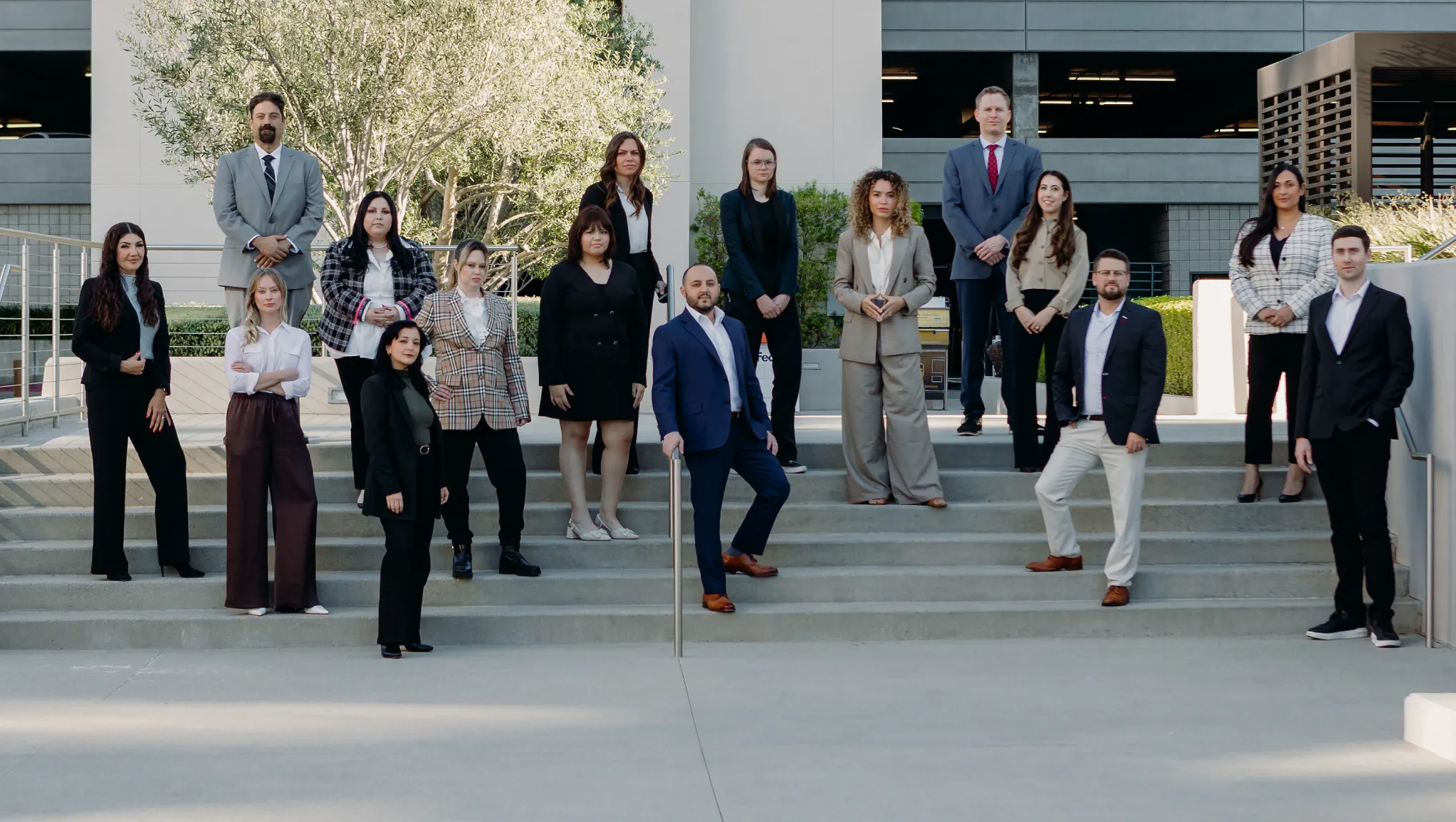
1
Kirsten Starr
Controller
2
Nicole Clancy
Senior Litigation Attorney
3
Mike Rachmann
Litigation Attorney
4
Robert Starr
Attorney, Founding Partner
5
Francine Barlavi
Client Onboarding Team
6
Danny Barlavi
Client Onboarding Team Lead
7
Kaylie Urango
Pre-Litigation Support Specialist
8
Amber Shelgren
Case Evaluation Assistant
9
Taylor McCarthy
Litigation Support Specialist
10
Gabriela Dominguez
Litigation Support Specialist
11
Cynthia Rodriguez
Case Manager
12
Collette Navasartian
Paralegal
13
Rebecca Harteker
Litigation Attorney
14
Manny Starr
Attorney, Managing Partner
15
Colin Rickard
Director of Growth & Operations
16
Mark Tieman
Attorney, Managing Partner
What Happens When You Contact Frontier Law Center
You do not need to know whether you have a case before reaching out. The first conversation is free, and it is designed for exactly the situation you are in.
You tell us what happened in your own words, and we listen without judgment or pressure. Our attorneys review the facts and give you a plain, honest picture of what your rights are, what you may be owed, and what options are realistically available to you. There are no forms to fill out before you call and no obligation after your consultation.
We were a 2025 finalist for Law.com’s Best Use of Artificial Intelligence. For workers with wage claims, that means their case is built with more precision, more speed, and a legal team that is fully focused on strategy rather than administrative work.
We handle wage and hour claims throughout California. If you are looking for wage and hour lawyers near you anywhere in the state, we are ready to hear your case. If your situation also involves workplace retaliation for raising wage concerns, you can explore that on our Workplace Retaliation Page.
If you are searching for wrongful termination lawyers near me anywhere in California, we are ready to hear your case. Contact us today — and if you want to explore other employment claims related to your situation, you can also learn more about
How Frontier Law Center Fights For You
California law provides strong employee protections. Does any of this match what you experienced?
1
You Share Your Story
Free, confidential, no pressure. We listen — and we give you an honest answer about your rights.
2
We Investigate
Our attorneys uncover what actually happened. You don’t lift a finger — we do the work.
3
We Fight for You
We negotiate hard and are fully prepared to go to trial. We fight for the maximum recovery.
4
You Move Forward
We only get paid when you win. You get closure, compensation, and a fresh start.
Frequently Asked Questions About Wage and Hour Claims in California
Below are the most common questions we hear from employees, answered plainly.
Can I File a Claim If I Still Work for the Company?
You do not need to leave your job to pursue wage and hour claims in California. The Labor Commissioner’s Office provides a recovery path that does not require you to quit first. California law also protects you from retaliation for asserting your wage rights. If you are concerned about what happens at work after you come forward, a wage and hour attorney at Frontier Law Center can address those concerns during your free consultation.
What Is the Labor Commissioner's Role in California?
The Labor Commissioner’s Office, formally known as the DLSE, is California’s primary wage enforcement agency. Employees can file a claim directly with the Labor Commissioner as an alternative to a civil lawsuit, and the process follows a defined path. First, you submit an Initial Report or Claim form along with any supporting documentation.
The Labor Commissioner then typically schedules a settlement conference between you and your employer to see if the dispute can be resolved. If it cannot, a formal wage claim hearing is scheduled before a hearing officer. The officer reviews the evidence and issues a written decision, usually within 15 days. Either side can appeal that decision within a set timeframe. A wage and hour attorney can help you evaluate whether the Labor Commissioner path or direct civil litigation is better suited to your situation, and can represent you through either process.
How Do I Know If I Was Misclassified as an Independent Contractor?
California uses a three-part ABC test under AB5. A worker must meet all three criteria to qualify as an independent contractor. Fail any one and the worker is a legal employee with full wage and hour protections. If you had a set schedule, worked exclusively for one company, or used company-provided equipment or tools, a wage and hour attorney can review your classification and tell you where you stand.
What Is the Difference Between Filing with the Labor Commissioner and Filing a Lawsuit in California?
Filing with the Labor Commissioner is an administrative process managed by the DLSE. It is generally faster and lower cost, but the damages available are more limited and the process offers less flexibility than civil litigation. Filing a civil lawsuit in Superior Court opens up a wider range of remedies, including PAGA penalties, class action consolidation, and emotional distress damages in some cases. Many employees do not know they have both options. A wage and hour attorney can review the specific facts of your situation and recommend the path most likely to result in full recovery.
Does It Cost Anything to Talk to a Wage and Hour Attorney at Frontier Law Center?
No, the initial consultation costs you absolutely nothing. If we take your case, we work on contingency and only get paid if we recover money for you. You never pay anything out of pocket to get started.
Last Updated: June 09, 2026
Attorney Advertising. The information on this page is for general informational purposes only and does not constitute legal advice. Reading this page does not create an attorney-client relationship. Prior results do not guarantee a similar outcome. Every case is different.
Contact a Wage and Hour Lawyer Today
If you are not sure whether your employer owes you wages, you are not alone. Most employees in your situation have never spoken with a wage and hour attorney about what California law actually requires of their employer.
A free case evaluation with Frontier Law Center gives you a clear picture of your rights, an honest assessment of what you may be owed, and a plain explanation of your options with no pressure to move forward. Reach out today.