
You put in the work right up until your last day, and that final paycheck should reflect every hour of it. When it does not, the mix of confusion and frustration is something California employees describe to us every day. A California final paycheck attorney can tell you what your employer owes and what your options actually look like.

★★★★★5/5
“Great people and great customer service always keep you inform with what’s going on. Highly recommend this law Firm.”
— Recent Client Review
Quick Answer
What is a California final paycheck violation?
A California final paycheck violation occurs when an employer misses the required deadline, pays less than the full amount owed, takes an illegal deduction, or uses an unauthorized delivery method. California Labor Code Sections 201 and 202 set hard deadlines: same-day payment if you are fired or laid off, and 72 hours from resignation if you quit without notice. When an employer misses that deadline, Labor Code Section 203 triggers waiting time penalties that accrue at your full daily wage rate for every calendar day the check stays unpaid, up to 30 days. These protections apply whether you were terminated, laid off, or resigned.
10,000
+
Workers Helped
100
M+
Recovered
10
+
Years in Practice
What California Final Paycheck Law Requires From Your Employer
California final paycheck law sets hard deadlines that apply the moment your employment ends. If you were fired or laid off, your final wages are due the same day. If you resigned with at least 72 hours of notice, that same-day rule applies to you as well. If you quit without notice, your employer has exactly 72 hours to deliver your check.
The law also requires that every dollar you legally earned be included in that final payment, not just your last week of work. That means overtime wages, accrued and unused vacation, earned commissions, incentive pay, and any bonuses tied to milestones you already completed. Accrued vacation in California is treated as earned wages and cannot be forfeited under any policy.
The situations in the bullet point list are what employees most often describe when they contact Frontier Law Center about a late or short final paycheck. If any of them match yours, California law likely gives you a path to recover what you are owed, plus waiting time penalties that grow every day the check stays outstanding.
You don’t need to have all the answers.
You just need to tell us your story. We’ll figure out if it was illegal. Many of our most successful clients started by
saying “I’m not even sure I have a case.”
Does Any of This Sound Familiar?
- Final check never arrived on the day you were fired or laid off
- Resignation came with notice, but wages were held until the next regular payroll run
- Overtime wages, accrued vacation, commissions, or bonuses you already earned were missing from the total
- Damaged equipment, unreturned tools, cash shortages, or a prior wage advance were deducted without legal basis
- Direct deposit was switched on your last day without any prior authorization from you
- A check arrived by mail with a late postmark, and your employer called that timely delivery
- The amount was short, and your written request for the difference has gone unanswered
The Four Most Common Final Paycheck Violations
Final paycheck cases tend to follow four patterns across every type of workplace. If your situation matches any of these, do not assume it is a clerical error.

Late Final Paycheck After Termination or Resignation
This is the violation Frontier Law Center sees most often. Your employer misses the legal deadline by days or weeks, then blames payroll, apologizes, or says nothing. None of that changes what they owe you. When a check is willfully late, California Labor Code Section 203 triggers waiting time penalties that accrue at your daily wage rate for every calendar day the check stays unpaid, up to 30 days.
Missing Wages, Vacation, or Commissions
Your final wage payment must include every dollar you legally earned from your last pay period. That covers all work hours, overtime wages, unpaid commissions, accrued vacation, incentive pay, and bonuses tied to milestones you already hit. California treats accrued vacation as earned wages under Labor Code Section 227.3, and use-it-or-lose-it vacation policies are not enforceable here. If something is missing, that is a violation.
Illegal Deductions From the Final Check
California limits what employers can legally take from your last check. Cash register shortages, broken equipment, unreturned tools, a missing uniform: none of those are legal grounds to dock your final wages. Lawful deductions are limited to taxes, court-ordered garnishments, pre-authorized contributions to retirement plans or health insurance, and benefit premiums agreed to in writing. No employment policy or company handbook overrides these rules. If your paystub shows a deduction for property losses, employee wrongdoing, or a prior wage advance, that money is still owed to you.
Direct Deposit Tricks and Delivery Problems
The deadline is about when you receive your wages, not when payroll queued the transfer. Your employer cannot switch you to direct deposit on your last day to buy extra time, and mailing a check with a late postmark does not count as timely delivery. If you had authorized direct deposit previously, that method is fine. If not, California final paycheck law requires in-person delivery by the legal deadline.
How California Waiting Time Penalties Work
Under California Labor Code Section 203, a waiting time penalty equals one full day of your regular wages for every calendar day the check is late. The clock runs through weekends and holidays. The penalty maxes out at 30 days and stacks on top of any unpaid wages. The examples below show how fast the totals grow.
The law uses the word “willfully” in Section 203, but courts read it broadly. Employers rarely escape the penalty by calling the delay a mistake. The burden is on them to prove a genuine dispute over what you were owed.
| Scenario | Daily Wage | Days Late | Waiting Time Penalty |
|---|---|---|---|
| Hourly employee, 8-hour shift at $22/hr | $176 | 14 | $2,464 |
| Salaried employee at $80,000 per year | $307 | 30 (cap) | $9,210 |
| Commissioned sales employee, $400 average daily earnings | $400 | 21 | $8,400 |
Filing a Wage Claim vs. Hiring a California Final Paycheck Attorney
You have two main paths to recover unpaid wages and waiting time penalties. The right one depends on how much is at stake and how complicated your situation is.

File a Claim With the Labor Commissioner
A DLSE wage claim with the California Labor Commissioner works best when the dollar amount is smaller, the facts are clear, there is no dispute over commissions or bonuses, and you did not sign an arbitration agreement. Keep in mind that the process can be slow, and your employer can appeal a Labor Commissioner award and push the case into court regardless.

Hire a California Final Paycheck Attorney
A civil lawsuit through a California final paycheck attorney makes more sense when the amount owed is significant, your employer disputed earned wages or accrued vacation, you experienced retaliation after demanding your pay, or the same violation affected multiple coworkers and a PAGA claim may apply. Most plaintiff-side firms, including Frontier Law Center, work on contingency, so there is no upfront cost to you.
If you signed an arbitration agreement, your case may need to go through private arbitration instead of court. That does not erase your rights, but it changes the strategy. Our arbitration agreements in California guide explains what that means for wage cases.

Steps to Take Before You Resign in California
If you have not yet resigned, the order of steps you take matters to your claim. Taking action in the right sequence gives your case the strongest possible foundation. The table below breaks down what to do and why each step counts.
Our guide on what to do after being fired in California covers many of the same protective steps and is a strong reference if you are handling the early stages on your own.
| Step | Action | Why It Matters |
|---|---|---|
| 1 | Put your concerns in writing | Email HR or a supervisor before you resign. California courts look for proof the employee gave the company a real opportunity to fix the problem. A complaint the employer dismissed or ignored often becomes the most powerful evidence in the case. |
| 2 | Use the internal complaint process | If your employer has a formal HR or ethics complaint process, document that you used it. Keep copies of every response, including silence. Non-responses are evidence too. |
| 3 | File with the California Civil Rights Department | The CRD enforces FEHA and handles discrimination, harassment, and retaliation claims. A CRD complaint produces the right-to-sue letter that makes a private lawsuit possible. This step is often required before you can take legal action. |
| 4 | Check your EDD eligibility | California's EDD recognizes good cause resignations. Employees who resign due to intolerable working conditions may still qualify for unemployment benefits under its Voluntary Quit determination guidelines. Filing for EDD does not replace a legal claim, but the facts often support both. |
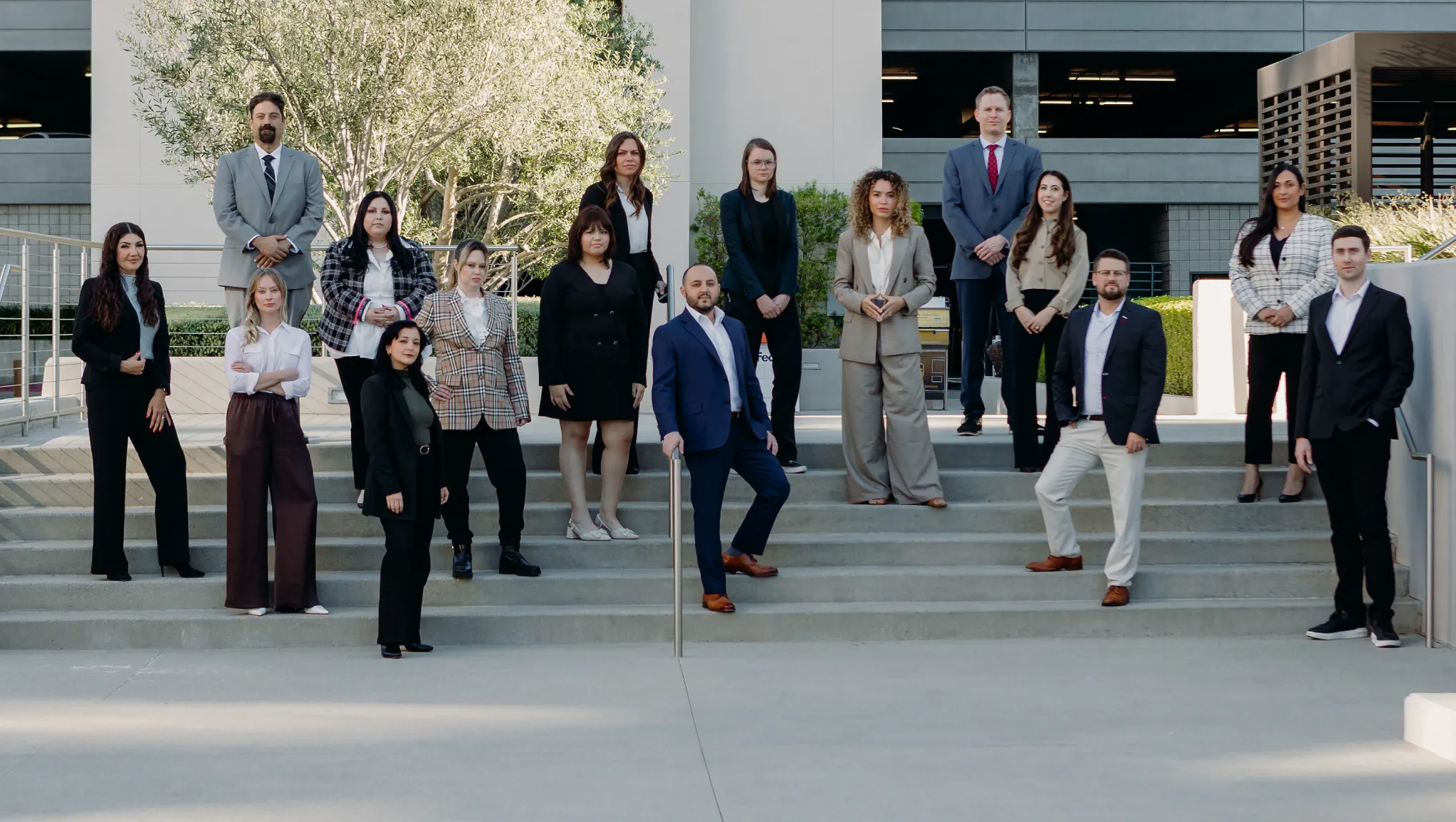
1
Kirsten Starr
Controller
2
Nicole Clancy
Senior Litigation Attorney
3
Mike Rachmann
Litigation Attorney
4
Robert Starr
Attorney, Founding Partner
5
Francine Barlavi
Client Onboarding Team
6
Danny Barlavi
Client Onboarding Team Lead
7
Kaylie Urango
Pre-Litigation Support Specialist
8
Amber Shelgren
Case Evaluation Assistant
9
Taylor McCarthy
Litigation Support Specialist
10
Gabriela Dominguez
Litigation Support Specialist
11
Cynthia Rodriguez
Case Manager
12
Collette Navasartian
Paralegal
13
Rebecca Harteker
Litigation Attorney
14
Manny Starr
Attorney, Managing Partner
15
Colin Rickard
Director of Growth & Operations
16
Mark Tieman
Attorney, Managing Partner
Why California Workers Choose Frontier Law Center
Frontier Law Center is a plaintiff-side employment law firm based in Woodland Hills, which means every resource, every strategy, and every hour our attorneys log is dedicated to helping employees recover what they are owed. We handle wage and hour claims across California, and final paycheck cases are at the core of that practice.

In 2025, Frontier Law Center was named a finalist for Law.com’s Best Use of Artificial Intelligence in Legal Practice, recognized alongside global firms like Baker McKenzie and King and Spalding. For employees in a final paycheck dispute, that recognition translates directly to a more precise and faster legal team. Our attorneys spend their time on strategy and advocacy because the groundwork gets done before most firms have finished intake.
Final paycheck violations often hide inside payroll patterns that affect more than one employee. Our AI-assisted document review identifies those patterns quickly, which means we calculate every dollar owed, including waiting time penalties that are easy to miss in a stack of paystubs, and we do it faster than a traditional review would allow.
When the same violation touched multiple employees, a single final paycheck case can grow into a PAGA claim with civil penalties on top of individual back wages. Every consultation with Frontier Law Center is free and confidential. We work on a contingency basis, so you pay nothing unless we recover money on your behalf.
California Final Paycheck Law Questions Employees Are Asking
The answers below reflect what employees most often ask when they are not sure if they have a case. If your situation does not fit any of these, a free evaluation is the fastest way to find out.
Is a Late Final Paycheck Always a Violation Under California Final Paycheck Law?
Yes, a late final paycheck is a violation in nearly every case under California law. California final paycheck law sets hard deadlines in Labor Code Sections 201 and 202. A missed deadline is a violation unless the employer proves a real, good-faith dispute over the amount owed. Calling it a payroll mistake rarely satisfies that standard.
How Is the Waiting Time Penalty Calculated for Salaried Employees?
The waiting time penalty for salaried employees starts with your daily wage. Divide your annual salary by about 260 working days to get that number. Then multiply it by the days the check is late, up to 30. Even a check that arrives two to three weeks late can generate a meaningful penalty on top of the unpaid wages.
Can I File a Lawsuit if I Already Filed a Wage Claim?
No, in most cases you choose one path for the same wage period. Moving from a Labor Commissioner claim to a civil lawsuit is possible if your situation changes. However, filing both at the same time for the same wages creates legal conflicts. A California final paycheck attorney can tell you which path fits before you commit.
Does a Severance Offer Cancel My Right to Sue for Final Pay?
No, a severance offer does not cancel your final paycheck claim. Severance and final wages are separate under California law. Your employer cannot tie payment of wages you already earned to signing a release. Many releases are also written more broadly than the law allows. Have an attorney review any release before you sign.
What if I Worked Remotely for a California Employer From Another State?
Remote employees are often still covered by California final paycheck law. Protection usually follows the location of the employer’s California operations, not where you logged in each day. Because this depends on your specific employment setup, it is worth raising during a free consultation.
Can My Employer Retaliate for Demanding My Final Paycheck?
No, retaliation for asserting your final paycheck rights is illegal. California Labor Code Section 98.6 protects employees who file or threaten to file a wage claim. California’s whistleblower protection laws add another layer of coverage, and if your termination followed a workers compensation claim or the reporting of illegal conduct, those circumstances create additional retaliation claims on top of the wage violation. If retaliation happens, it becomes its own separate claim and usually strengthens your case. A California final paycheck attorney can evaluate whether retaliation applies to your situation during a free consultation.
Last Updated: June 01, 2026
The information on this page reflects the law as of the date above and is intended for general informational purposes only. It does not constitute legal advice, nor does it create an attorney-client relationship. Laws and regulations are subject to change, and individual circumstances vary — always consult a qualified attorney for guidance specific to your situation.
Your Final Check May Be Worth More Than You Think
California law stacks multiple remedies in your favor, and most employees only discover that after talking to an attorney. A free case evaluation with Frontier Law Center costs you nothing and takes the guesswork out of what comes next.
1
Kirsten Starr
Controller
2
Nicole Clancy
Senior Litigation Attorney
3
Mike Rachmann
Litigation Attorney
4
Robert Starr
Attorney, Founding Partner
5
Francine Barlavi
Client Onboarding Team
6
Danny Barlavi
Client Onboarding Team Lead
7
Kaylie Urango
Pre-Litigation Support Specialist
8
Amber Shelgren
Case Evaluation Assistant
9
Taylor McCarthy
Litigation Support Specialist
10
Gabriela Dominguez
Litigation Support Specialist
11
Cynthia Rodriguez
Case Manager
12
Collette Navasartian
Paralegal
13
Rebecca Harteker
Litigation Attorney
14
Manny Starr
Attorney, Managing Partner
15
Colin Rickard
Director of Growth & Operations
16
Mark Tieman
Attorney, Managing Partner