
Your employer just fired you, and something about it does not feel right. You need a wrongful termination lawyer who will give you a straight answer, not legal jargon or a runaround. Losing your job is hard enough under any circumstances. Losing it illegally, without anyone telling you the true reason, is something else entirely. You deserve to hear the truth from someone who is fully on your side.
At Frontier Law Center, we are a plaintiff-side wrongful termination lawyer firm in California. We represent employees exclusively, and if you think your firing was unlawful, a free call with our team is the right first step.

★★★★★5/5
“I had a first rate experience. Love the AI.
But it was the attention of your attorneys that formed the basis of an outstanding experience!”
— Recent Client Review
Definition
What is wrongful termination in California?
Wrongful termination, also called wrongful discharge, occurs when an employer fires an employee in violation of state or federal law, public policy, or an employment contract. California is an at-will employment state, meaning employers can terminate employees for any lawful reason. However, at-will employment does not protect employers who fire someone based on discrimination, retaliation, a breach of written or implied contract, or other illegal grounds.
10,000
+
Workers Helped
100
M+
Recovered
10
+
Years in Practice
Common Grounds for a Wrongful Termination Claim in California
Termination Based on Discrimination
The California Civil Rights Department enforces California’s Fair Employment and Housing Act (FEHA), which bans employers from firing you based on who you are. Protected characteristics include race, gender, age, disability, medical condition, religion, national origin, sexual orientation, gender identity, and pregnancy. Federal law adds another layer of protection through Title VII of the Civil Rights Act and the Americans with Disabilities Act (ADA), both enforced by the EEOC. Together, these laws cover sexual harassment, pregnancy discrimination, gender discrimination, and racial discrimination in the workplace. A wrongful termination lawyer at Frontier Law Center can evaluate whether any apply to your case.
Retaliation for Protected Activity
California law protects employees who speak up, and retaliation is one of the most common grounds for a wrongful termination claim. If you reported harassment, filed a workers’ compensation claim, requested leave under the California Family Rights Act (CFRA) or the federal Family and Medical Leave Act (FMLA), asked for a medical accommodation, or complained about unpaid wages, and your employer fired you soon after, that timing matters and may support a retaliation claim.
Whistleblower Retaliation
California Labor Code Section 1102.5 is one of the strongest whistleblower laws in the country. It protects employees who report illegal activity to a government agency, to law enforcement, or even to a manager at their own company. If you were fired after reporting wrongdoing at work, the law may be on your side. Learn more about whistleblower retaliation.
Constructive Discharge
Sometimes employers do not fire you directly but instead make your job so unbearable that you feel you have no real choice but to quit. California courts call this constructive discharge, and they treat it exactly the same as a termination. If your employer pushed you out through harassment, demotion, isolation, or deliberate mistreatment, you may still have a strong wrongful termination claim. Find out how constructive discharge applies to your situation.
Workers’ Compensation Retaliation
If you were injured at work and filed a workers’ compensation claim, or even considered filing one, California law explicitly protects you from retaliation. Your employer cannot punish you for exercising that right, and this is one of the most clearly defined forms of illegal termination in the state. Find out more about workers’ comp retaliation and your rights.
What At-Will Employment Actually Means in California
Most employees are told California is an at-will state. That means your employer can fire you at any time, for any reason, or for no reason at all. That statement is accurate as far as it goes. Here is what most people do not know: at-will employment has real and significant legal limits that protect you. You can read more about how California’s at-will rule actually works on our blog.
The Exceptions That Matter
Your employer cannot fire you for discriminatory reasons. They cannot fire you for speaking up about problems at work, breaching a contract, or violating California public policy. When a firing crosses any of these lines, it is illegal. That holds regardless of how your employer frames it or what written reason they provide. A wrongful termination lawyer can help you figure out whether yours did.
Why Employers Rarely Tell the Truth
Employers almost never disclose the real reason they fired someone. They point to performance, create paper trails after the fact, and offer vague explanations. Those explanations usually raise more questions than they answer. That is exactly why you need more than a gut feeling. You need an experienced wrongful termination lawyer who knows how to uncover what actually happened and build a case from the evidence.
You don’t need to have all the answers.
You just need to tell us your story. We’ll figure out if it was illegal. Many of our most successful clients started by
saying “I’m not even sure I have a case.”
Signs Your Firing May Have Been Illegal
- Fired shortly after you filed a complaint, reported harassment, or raised a workplace concern
- Termination came right after you filed or discussed filing a workers’ compensation claim
- Let go after requesting a medical leave, accommodation, or FMLA leave
- The reason your employer gave for firing you does not match your actual performance history or record
- Treated differently than coworkers in the same role who did similar things
- Termination contradicted the terms in your offer letter, employment contract, or employee handbook
- Fired shortly after reporting illegal activity at your company to a manager or government agency
- Your employer’s explanation for your firing changed or felt vague and inconsistent when pressed
Common Grounds for Wrongful Termination
California law provides strong employee protections. Does any of this match what you experienced?
Retaliation
Fired for reporting harassment, discrimination, safety violations, or other misconduct.
Discrimination
Termination based on race, gender, age (40+), disability, pregnancy, or other protected characteristics.
Whistleblower
Fired for reporting illegal activity to a government agency, supervisor, or law enforcement.
FMLA / CFRA Leave
Fired for taking legally protected medical, family, or pregnancy leave.
Arbitration Agreement
A private contract that requires employees to resolve workplace disputes through arbitration rather than in court. Have a lawyer review yours before you sign.
Severance Agreement Review
A review delivers a direct answer on whether to sign, negotiate specific changes, or walk away. Don’t let your employer force you to sign.
Wage Complaints
Fired after complaining about unpaid overtime, missed breaks, or wage theft.
Workers’ Compensation
Fired for filing or planning to file a workers’ comp claim after a workplace injury.
Constructive Discharge
Forced to resign because your employer made working conditions intolerable.
Signs You May Need a Wrongful Termination Lawyer
Ask yourself:
- Did something change at work right before you were let go?
- A complaint you filed, a leave you took, an injury you reported, a concern you raised?
- Were you treated differently than others in the same role?
- Did the reason you were given fail to match your actual work history, or contradict what your offer letter or employee handbook promised?
You may not know whether your firing was illegal, and that uncertainty is completely normal. An attorney needs to review the full picture before anyone can say for certain. However, there are warning signs worth paying close attention to right now. If you are unsure what to do next, start by reviewing what to do immediately after being fired in California.
If either of those questions gives you pause, do not try to figure this out on your own. Most employees who contact us are not sure they have a case, and that uncertainty is normal. Employers are skilled at making illegal terminations look legitimate. Most people do not know what to look for until they speak with someone who handles these cases every day.
A wrongful termination lawyer can spot patterns you would never see on your own. At Frontier Law Center, we know what questions to ask, what documents matter most, and how to read a timeline that an employer has tried to obscure. The first conversation costs you nothing, and there is no pressure, no obligation, or commitment required. You tell us what happened, and we tell you honestly what we see. Many clients walk away from that call with answers they have been searching for. If you have been sitting on this for days or weeks, now is the right time to reach out. Find out if you have a case, free and confidential.
California Filing Deadlines for Wrongful Termination Claims
Filing deadlines in California are strict. Missing them can permanently bar your claim, regardless of how strong your case is. The deadline depends entirely on the type of claim you are bringing. For a full breakdown of how these deadlines work, see our post on the statute of limitations for your claim.
| Claim Type | Filing Body | Deadline |
|---|---|---|
| Discrimination and retaliation | California Civil Rights Department (CRD) | 3 years from the adverse action |
| Federal discrimination (Title VII, ADEA, ADA) | Equal Employment Opportunity Commission (EEOC) | 180 to 300 days from the adverse action |
| Contract-based wrongful termination | California Superior Court | 2 to 4 years depending on contract type |
| Workers' comp retaliation | California Labor Commissioner | 1 year from the adverse action |
If you are not sure which deadline applies to your situation, a free consultation with a wrongful termination lawyer is the clearest way to find out before that window closes. If you want to understand what happens after you file and how the process unfolds from start to finish, our guide on how long a wrongful termination case takes walks through each stage.
Before You Sign Anything
Two situations come up frequently in wrongful termination cases: severance agreements and arbitration clauses. Employees often miss them until it is too late. Both can significantly limit your legal options. Both deserve a close look before you act. Our blog on whether to sign a severance agreement in California walks through what to watch for.

Severance Agreements
Many employers offer severance after a firing, and most severance packages include broad language that waives your right to bring any legal claims. Once you sign, those rights are typically gone for good. If you have been offered severance, have a wrongful termination attorney review it before you respond. Have your severance agreement reviewed before you sign.

Arbitration Agreements
Many employers require employees to sign arbitration agreements that waive the right to a jury trial. However, these agreements have real limitations under California law, and some are partially or entirely unenforceable. An attorney can review yours and advise you on what legal options remain available. Learn how arbitration agreements affect your claim.

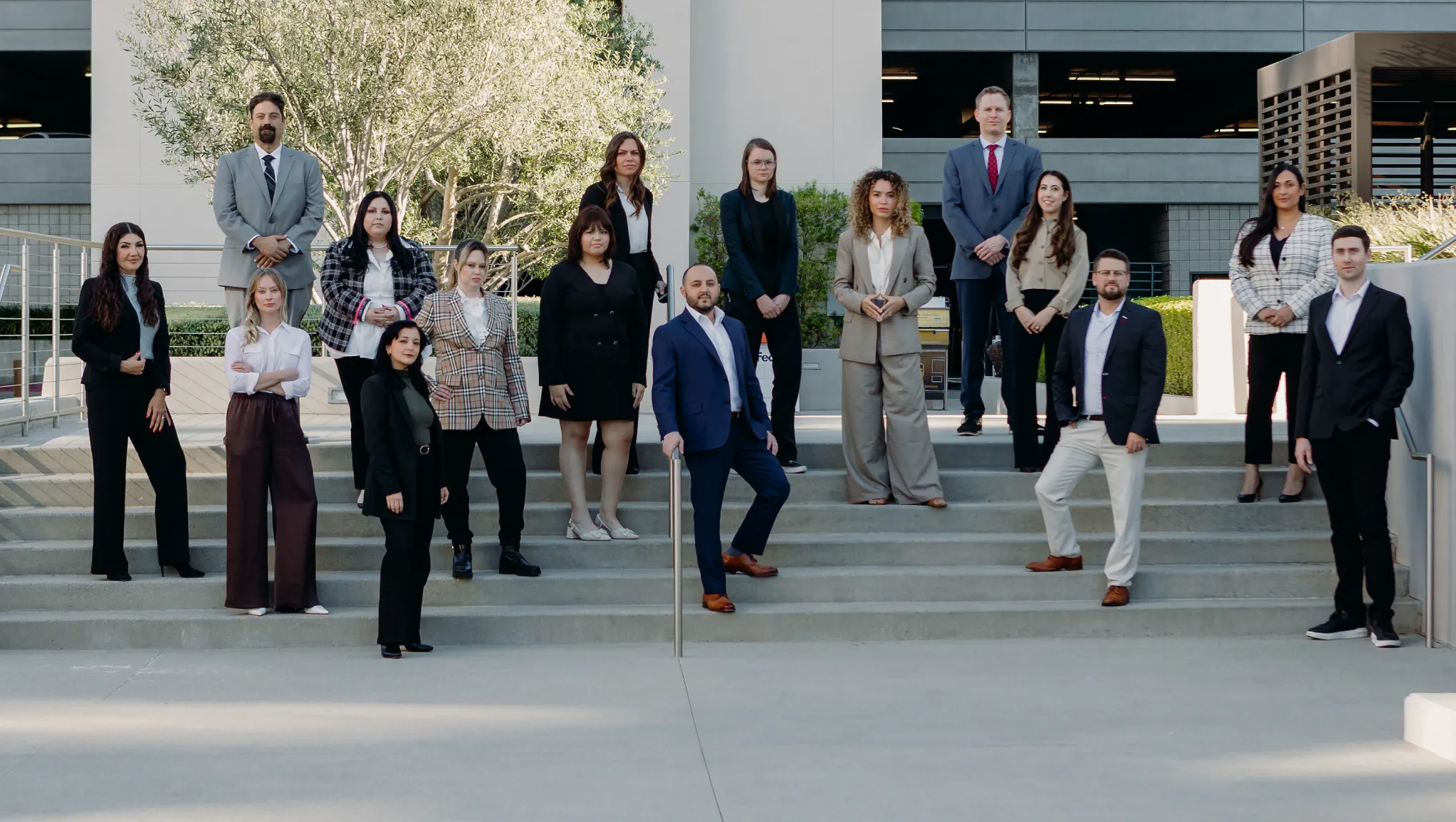
1
Kirsten Starr
Controller
2
Nicole Clancy
Senior Litigation Attorney
3
Mike Rachmann
Litigation Attorney
4
Robert Starr
Attorney, Founding Partner
5
Francine Barlavi
Client Onboarding Team
6
Danny Barlavi
Client Onboarding Team Lead
7
Kaylie Urango
Pre-Litigation Support Specialist
8
Amber Shelgren
Case Evaluation Assistant
9
Taylor McCarthy
Litigation Support Specialist
10
Gabriela Dominguez
Litigation Support Specialist
11
Cynthia Rodriguez
Case Manager
12
Collette Navasartian
Paralegal
13
Rebecca Harteker
Litigation Attorney
14
Manny Starr
Attorney, Managing Partner
15
Colin Rickard
Director of Growth & Operations
16
Mark Tieman
Attorney, Managing Partner
Why California Workers Choose Frontier Law Center
Frontier Law Center is a plaintiff-side firm, which means we only represent employees. We do not take cases for employers. Every decision we make is focused on winning for the worker. You can learn more about how we help across all types of employment claims.
$100M
Frontier has recovered for California workers across wrongful termination, discrimination, and individual employment cases statewide. What separates us from most firms is how we are built. Frontier runs on AI-native systems, which means our attorneys spend their time on strategy and client advocacy, not administrative overhead. We analyze documents faster, identify patterns in employer conduct more precisely, and build stronger arguments because the groundwork is done before most firms have finished intake.

In 2025, Frontier Law Center was named a finalist for Law.com’s Best Use of Artificial Intelligence in Legal Practice, recognized alongside global firms like Baker McKenzie and King and Spalding. For employees, that recognition translates directly into a more effective legal team. Our attorneys spend their time on strategy and client advocacy because the groundwork gets done faster. We analyze documents more precisely, identify patterns in employer conduct earlier, and build stronger arguments before most firms have finished intake.
Our case results speak to that. We represented approximately 5,000 security guards in a class action to recover unpaid wages and overtime. We won a pregnancy discrimination case against a large veterinary hospital on behalf of a worker fired for being pregnant. We reached a strong settlement in a sexual harassment matter where a supervisor used their position to intimidate a coworker. And we won an age discrimination case against a nursing facility that replaced an experienced nurse with someone younger. These are the same types of cases we work on every day, across the state.
If you are searching for wrongful termination lawyers near me anywhere in California, we are ready to hear your case. Contact us today — and if you want to explore other employment claims related to your situation, you can also learn more about
How Frontier Law Center Fights For You
California law provides strong employee protections. Does any of this match what you experienced?
1
You Share Your Story
Free, confidential, no pressure. We listen — and we give you an honest answer about your rights.
2
We Investigate
Our attorneys uncover what actually happened. You don’t lift a finger — we do the work.
3
We Fight for You
We negotiate hard and are fully prepared to go to trial. We fight for the maximum recovery.
4
You Move Forward
We only get paid when you win. You get closure, compensation, and a fresh start.
Frequently Asked Questions About Wrongful Termination in California
Workers who reach out to us often arrive with the same questions. We have answered the most common ones below in plain language, because understanding your situation should not require a law degree. If your question is not here, the consultation is free and our attorneys are happy to walk through it with you directly.
What Is Wrongful Termination Under California Law?
Wrongful termination in California means an employer fired an employee in violation of state or federal law, public policy, or an employment contract. It is also referred to as wrongful discharge. California is an at-will state, so employers can fire someone without explanation, but they cannot fire someone for an illegal reason. The California Civil Rights Department and the Division of Labor Standards Enforcement (DLSE) both help enforce these protections.
How Long Do I Have to File a Wrongful Termination Claim in California?
Filing deadlines in California vary by claim type, and missing them permanently bars your case regardless of how strong it is.
- Discrimination and retaliation (CRD): 3 years from the adverse action
- Federal discrimination (EEOC): 180 to 300 days from the adverse action
- Contract-based wrongful termination: 2 to 4 years depending on contract type
- Workers’ comp retaliation: 1 year from the adverse action
If you are unsure which deadline applies to your situation, a free consultation with Frontier Law Center can give you a clear answer before time runs out.
Can You Sue for Wrongful Termination in California?
Yes, California employees have the right to bring a wrongful termination claim if fired for an illegal reason. Depending on the type of violation, that may mean filing a complaint with the California Civil Rights Department, filing a charge with the EEOC, or bringing a civil lawsuit directly. Our blog on whether and how to sue for wrongful termination in California covers each path in detail.
How Do You Prove Wrongful Termination?
Proving wrongful termination typically involves showing that the employer’s stated reason for the firing was a pretext for an illegal motive. Evidence that supports a claim includes emails and text messages, documented timelines showing what happened before the termination, performance records that contradict the employer’s explanation, and witness accounts from coworkers. Our attorneys know what documentation matters most and how to build the clearest possible case from what you have.
What Is Constructive Discharge, and Does It Count as Wrongful Termination?
Constructive discharge, sometimes called constructive dismissal, means your employer made your working conditions so intolerable that a reasonable person would have had no choice but to resign. California courts treat this as a termination for legal purposes, and it can support a wrongful termination claim even if you technically quit. Learn more about how constructive discharge claims work.
What Can I Recover in a Wrongful Termination Case?
California wrongful termination cases can result in multiple types of compensation, depending on your specific situation.
| Type of Recovery | What It Covers |
|---|---|
| Lost wages | Pay and benefits you lost from the date of termination |
| Future lost earnings | Projected income losses if you cannot find comparable work |
| Emotional distress damages | Compensation for psychological harm caused by the termination |
| Punitive damages | Additional penalties against the employer in cases of malicious conduct |
| Attorney’s fees | Legal costs, which the employer may be required to pay if you win |
Should I Review My Severance Agreement Before Signing?
Yes, and do it before you sign anything. Many severance packages include language that permanently gives up your right to sue. Once you sign, those rights are usually gone. Have an attorney review your severance agreement before you give anything up.
Does an Arbitration Agreement Prevent Me from Suing My Employer?
An arbitration agreement does not necessarily prevent you from filing a lawsuit. Many employers use arbitration agreements to limit an employee’s right to a jury trial, but these agreements have significant limitations under California law and some cannot be enforced at all. Learn how arbitration agreements affect your options.
Last Updated: April 07, 2026
The information on this page reflects the law as of the date above and is intended for general informational purposes only. It does not constitute legal advice, nor does it create an attorney-client relationship. Laws and regulations are subject to change, and individual circumstances vary — always consult a qualified attorney for guidance specific to your situation.