
Your employer has been doing something that goes beyond one paycheck. Maybe your whole team has been misclassified, or wage theft is built into the scheduling system for an entire job category. California law addresses these situations through two tools: class actions and PAGA claims.
A class action allows an affected group to recover unpaid wages and damages together in one proceeding. A PAGA claim allows a single employee to pursue civil penalties for labor code violations on the state’s behalf. Frontier Law Center represents employees throughout California in both, and a free case evaluation costs you nothing.

★★★★★5/5
“The service I receive from frontier was exceptional. They were very professional and kept me informed every step of the way. I would high recommend them to anyone in need of the service they offer.”
— Recent Client Review
Quick Answer
What is the difference between a class action and a PAGA claim in California?
A class action is a lawsuit brought by a group of employees who experienced the same workplace violation, allowing them to recover unpaid wages and damages together. A PAGA claim allows a single employee to pursue civil penalties for labor code violations on behalf of the California state government. Both tools often apply to the same facts, and employees can pursue both at the same time. Class actions are generally stronger for recovering wages directly, while PAGA claims are more effective for collecting penalties that individual lawsuits cannot reach.
Some Violations Are Too Widespread to Fight One at a Time
Not every employment violation affects a single worker. Some employers build illegal practices into the very structure of how they operate: misclassifying entire job categories as exempt from overtime, creating company-wide scheduling policies that deny workers their required meal breaks, implementing tip pooling arrangements that skim from employees across the board, or systematically underpaying a workforce that has no idea the shortfall is even happening.
When that is what is going on, the most powerful legal tool is not an individual case. It is a class action or a PAGA claim – legal mechanisms that allow workers to pursue recovery together, hold employers accountable at a systemic level, and create meaningful consequences for conduct that would otherwise go unaddressed because no single person’s claim is large enough to justify pursuing it alone.
At Frontier Law Center, we have represented thousands of California workers in class actions and PAGA matters. We know how to identify systemic violations, build the evidentiary foundation, and take these cases all the way through resolution.

The Difference Between a Class Action and a PAGA Claim
Both class actions and PAGA claims are vehicles for collective enforcement, but they work differently – and understanding which applies to your situation matters.

Class Action Lawsuits
class action allows a group of workers who have all suffered the same or similar harm from the same employer practice to pursue their claims together as a single case. One or more named plaintiffs represent the class, and any recovery is distributed among the class members. Class actions require court certification, which our attorneys handle, and they are appropriate when a large number of employees have been harmed in a consistent, definable way.
Learn more about Systemic Wage Violations and how class actions address widespread employer misconduct.
PAGA Claims
The Private Attorneys General Act allows a single employee- or a group of employees – to file a claim on behalf of the state of California for labor code violations affecting themselves and other current or former employees. Unlike class actions, PAGA claims do not require court certification, which makes them a powerful and often faster path to accountability. A portion of the recovery goes to the state; the remainder is distributed to the affected workers. Learn more about PAGA Claims.
When Both Apply
In many cases, a situation involves both viable class claims and PAGA penalties. Our attorneys evaluate both paths and pursue the combination that creates the strongest outcome for the workers involved.
Types of Cases We Handle Under Class Action and PAGA
Systemic Wage and Hour Violations
When an employer’s payroll policies or practices consistently deny workers minimum wage, overtime, or required break premiums across an entire job classification or workforce, a class action or PAGA claim is often the most effective response. These cases can result in significant recoveries for workers who never would have had a viable individual claim.
PAGA Claims for Labor Code Violations
PAGA covers a broad range of California Labor Code violations, including wage and hour issues, meal and rest break violations, improper pay stub practices, and failures to reimburse business expenses. Because PAGA penalties are calculated per pay period per employee, they can be substantial even when individual violations seem small.
Mass Layoffs and WARN
Act Violations California’s WARN Act requires employers with 75 or more employees to provide 60 days’ advance written notice before conducting a mass layoff, plant closing, or major relocation affecting 50 or more workers. Employers who fail to provide that notice owe affected employees back pay and benefits for the period of required notice they did not receive – and the federal WARN Act may provide additional protections. If you were part of a sudden mass layoff with little or no advance notice, you may have a WARN Act claim.
Why These Cases Often Start With One Person
Most class actions and PAGA matters begin the same way an individual case does: one worker realizes something is not right about their paycheck, their scheduling, or the way their employer treats everyone around them. That initial conversation, a free call where you describe what you are experiencing, is often where a much larger case begins to take shape.
Our attorneys know how to identify the signs that an individual complaint reflects a systemic practice. If what happened to you happened in a way that could not have affected just you alone, it is worth having that conversation.

California Filing Deadlines for Class Action and PAGA Claims
| CLAIM TYPE | FILING BODY | DEADLINE |
|---|---|---|
| PAGA claims | California Labor & Workforce Development Agency (LWDA) | 1 years from the last violation |
| Class action wage claims (statutory) | California Superior Court | 3 years |
| Class action wage claims (written contract) | California Superior Court | 4 years |
| WARN Act (California) | California Superior Court | 3 years |
| WARN Act (Federal) | U.S. District Court | 3 years |
PAGA deadlines in particular are short. If you believe a systemic violation is occurring at your workplace, or recently occurred, speaking with an attorney sooner rather than later is critical.
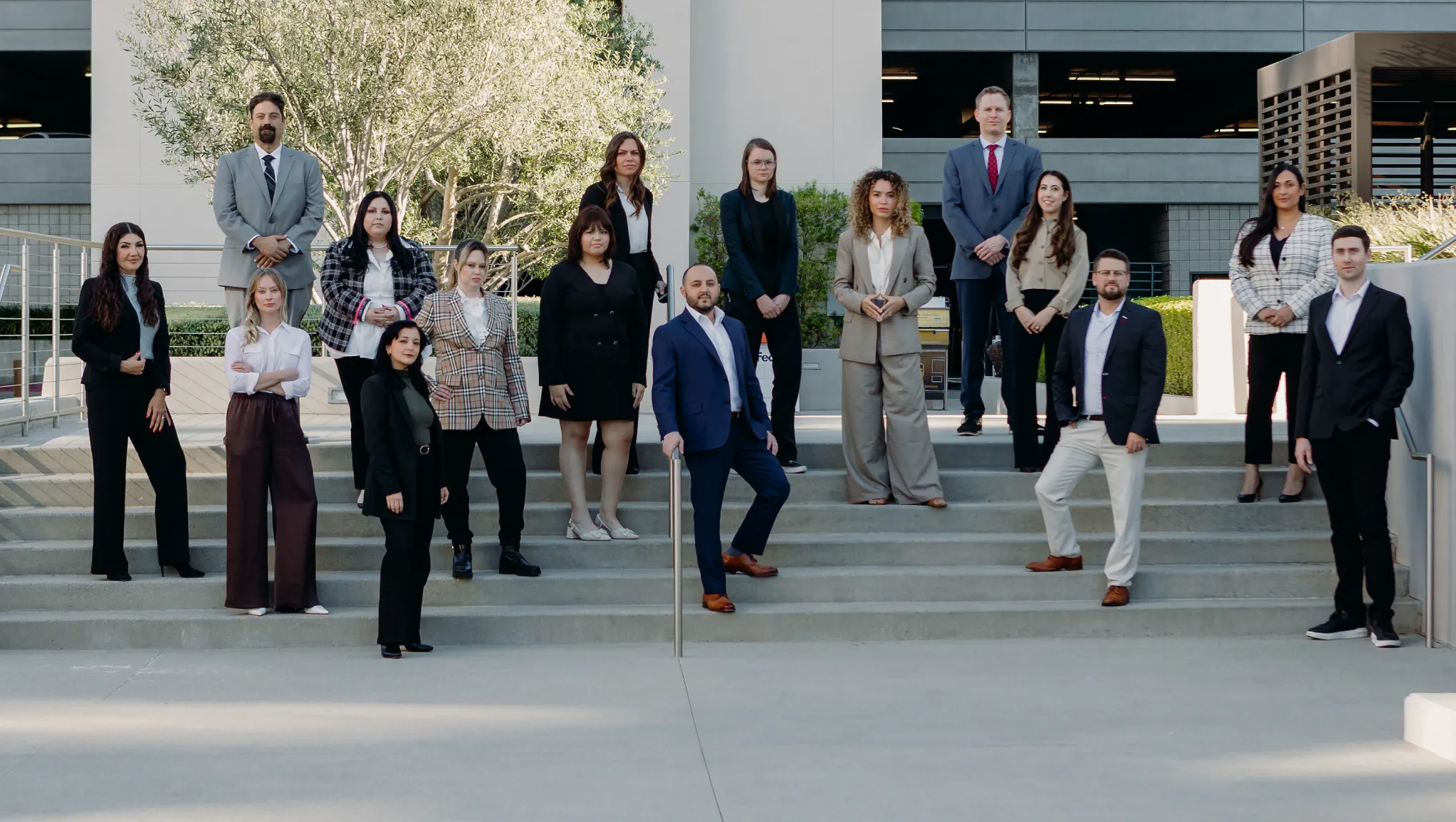
1
Kirsten Starr
Controller
2
Nicole Clancy
Senior Litigation Attorney
3
Mike Rachmann
Litigation Attorney
4
Robert Starr
Attorney, Founding Partner
5
Francine Barlavi
Client Onboarding Team
6
Danny Barlavi
Client Onboarding Team Lead
7
Kaylie Urango
Pre-Litigation Support Specialist
8
Amber Shelgren
Case Evaluation Assistant
9
Taylor McCarthy
Litigation Support Specialist
10
Gabriela Dominguez
Litigation Support Specialist
11
Cynthia Rodriguez
Case Manager
12
Collette Navasartian
Paralegal
13
Rebecca Harteker
Litigation Attorney
14
Manny Starr
Attorney, Managing Partner
15
Colin Rickard
Director of Growth & Operations
16
Mark Tieman
Attorney, Managing Partner
Why California Workers Choose Frontier Law Center
Large-scale employment litigation lives and dies on the ability to find patterns in data. Pay records, time entries, employee classifications, and scheduling policies all contain the evidence that proves a systemic violation. Frontier Law Center’s AI-native systems create a concrete advantage at every stage. Our attorneys analyze thousands of records across large workforces, identify violations precisely, and build a more accurate factual case than traditional document review allows.
Our Track Record in Large-Scale California Cases
We represented approximately 5,000 security guards in a class action to recover unpaid wages and overtime. Frontier Law Center was a 2025 finalist for Law.com’s Best Use of Artificial Intelligence, recognized alongside national firms including Baker McKenzie and King and Spalding. For employees and their attorneys, that recognition has a practical meaning: cases get prepared faster, evidence gets organized more precisely, and our team stays focused on litigation strategy.
Frontier Law Center handles class actions and PAGA matters throughout California. If your employer’s practices affect your entire team and not just you, a free case evaluation is the right first step.
How Frontier Law Center Fights For You
1
You Share Your Story
Free, confidential, no pressure. We listen — and we give you an honest answer about your rights.
2
We Investigate
Our attorneys uncover what actually happened. You don’t lift a finger — we do the work.
3
We Fight for You
We negotiate hard and are fully prepared to go to trial. We fight for the maximum recovery.
4
You Move Forward
We only get paid when you win. You get closure, compensation, and a fresh start.
Free consultation · Fully confidential · No win, no fee · No upfront cost
Frequently Asked Questions About Class Actions and PAGA in California
What is a class action lawsuit?
A class action is a lawsuit brought by one or more named plaintiffs on behalf of a larger group of people — the class — who have all been harmed in the same or substantially similar way by the same defendant. In employment class actions, the class typically consists of current or former employees who experienced the same illegal practice.
What is PAGA, and how is it different from a class action?
PAGA- the Private Attorneys General Act – allows an individual employee to file a claim for labor code violations on behalf of themselves, other aggrieved employees, and the state of California. Unlike class actions, PAGA claims do not require court certification, and a portion of the recovery is allocated to the state. PAGA is often a faster and more flexible path than a traditional class action.
Do I need other employees to join me to file a PAGA claim?
No. A single employee can initiate a PAGA claim without needing other workers to formally join. The claim is brought on behalf of all similarly situated employees, but it starts with one person’s decision to come forward.
What is the WARN Act?
The California WARN Act requires employers with 75 or more employees to give 60 days’ advance written notice before a mass layoff, plant closing, or major relocation affecting 50 or more workers. Employers who fail to provide that notice owe affected workers back pay and benefits for the days of notice they were legally required to give.
How much can workers recover in a PAGA case?
PAGA penalties are calculated per pay period per aggrieved employee. For initial violations, the civil penalty is $100 per employee per pay period. For subsequent violations, it rises to $200. In workplaces with large numbers of employees and ongoing violations across many pay periods, these penalties can become substantial.
Who is eligible to participate in a class action settlement?
Eligibility depends on the class definition certified by the court, which is typically based on factors like job title, location, dates of employment, and the nature of the violation. Our attorneys can tell you whether you are likely to qualify based on your situation.
Last Updated: April 07, 2026
The information on this page reflects the law as of the date above and is intended for general informational purposes only. It does not constitute legal advice, nor does it create an attorney-client relationship. Laws and regulations are subject to change, and individual circumstances vary — always consult a qualified attorney for guidance specific to your situation.