
By the time you got off the BART at Powell, you had already replayed the meeting four times. Something about the way your manager would not quite look at you when they said “restructuring” did not sit right. Neither did the fact that your role was the only one that disappeared. Other days it looks different, like a paycheck that came up short, a complaint to HR that went nowhere, or a promotion that always lands on someone else. San Francisco runs on reputation and momentum, which makes it hard to admit something happened at work. Frontier Law Center’s San Francisco employment lawyers spend every day working through these situations for California employees, and there is no cost to find out where you stand.

★★★★★5/5
“Did an amazing job and were available whenever I called and always kept me updated. I felt confident in them and won my case. Highly recommend! Thank you!”
— Recent Client Review
Quick Answer
Do San Francisco employees have rights beyond California state law?
Yes, San Francisco enforces its own employment ordinances on top of California law. The city sets a local minimum wage above the state floor, requires paid sick leave, restricts questions about salary history and criminal records, and gives employees at larger companies the right to request a predictable schedule. The San Francisco Office of Labor Standards Enforcement handles these city rules, while state agencies handle discrimination, retaliation, and most wage claims.
What Cases a San Francisco Employment Lawyer Handles at Frontier Law Center
San Francisco employees come to Frontier Law Center with situations spanning every industry. Our San Francisco employment lawyers handle every type of workplace violation, and a free consultation costs you nothing.

Wage & Hour Issues
Wage theft in San Francisco often hides behind flat salaries, skipped premiums, and hours missing from a paycheck. Overall, the city’s minimum wage sits above the state floor, so a shortfall here can violate two laws at once. Our wage and hour practice recovers back wages, penalties, and interest.

Wrongful Termination
California is an at-will state, but at-will status does not protect an illegal firing or wrongful termination. When a termination follows a complaint, a leave request, or a misconduct report, timing itself becomes evidence. In fact, tech layoffs complicate this further, since selection decisions can hide discrimination behind a spreadsheet.

Discrimination & Harassment
Being treated differently because of your race, gender, age, disability, or pregnancy is not just unfair. In fact, it is illegal under California’s Fair Employment and Housing Act. These patterns of discrimination and harassment are often subtle, and employees experience them for months before realizing they have a case.

Workplace Retaliation
Speaking up at work should not cost you your job. In fact, California law protects employees who report harassment, discrimination, wage violations, or unsafe conditions. If your employer responded to a protected workplace retaliation complaint by cutting hours or making your job harder, that is retaliation.

Sexual Harassment
What matters is not whether HR responded. Instead, what matters is what California law requires of your employer. Employers are liable for sexual harassment that is severe or pervasive, and equally liable when they knew and failed to act.

Class Actions & PAGA
Some employers run the same illegal policy across an entire workforce, betting no employee will push back. However, a class action or PAGA claim changes that math, letting San Francisco employees pursue accountability at scale and recover civil penalties that individual lawsuits cannot reach. Similarly, mass layoffs raise issues when notice requirements get skipped.
Not sure which applies to you?
Tell us what happened and we’ll figure it out together for free.
When Employees in San Francisco Should Contact an Employment Attorney
Contact a San Francisco employment law attorney as soon as you notice a pattern. Waiting, in fact, is the most common mistake we see. Evidence disappears and filing windows close while employees debate whether their situation counts. Even so, you do not need certainty before you call, since Frontier Law Center evaluates plenty of situations that turn out to be nothing.
The earlier you reach out, the more options stay open. Before a termination, we can advise on documentation while you still have system access. If you already have a severance agreement in hand, a free initial conversation still helps. We point out red flags and walk through your general rights and deadlines. A full review of your agreement happens after you become a client, and the same is true for any negotiation with your employer. However, that process usually takes longer than signing deadlines allow.
Warning Signs Worth Documenting Right Away
- Your performance reviews turned negative right after years of strong ratings
- You received a performance improvement plan shortly after you raised a complaint
- Your responsibilities shrank, or you were excluded from meetings you used to attend
- Your employer let you go right before a bonus or equity vesting date
You do not need to have this all figured out before you call.
Many employees who reach out are still deciding what to do next. Frontier Law Center can help you think through which path fits your situation, and that first conversation costs nothing.
Local Ordinances a San Francisco Employment Lawyer Uses Alongside California Law
San Francisco gives you protections that California law alone does not. Those ordinances provide an advantage employers overlook. The city writes its own rules on minimum wage, sick leave, scheduling, parental leave, salary history, and criminal record screening. Frontier Law Center reviews both layers in every San Francisco case. As a result, a claim that looks thin under state law sometimes gains real weight under a municipal ordinance.
Most competing law firm pages treat San Francisco as a location label on generic California content. That gap matters when your problem is a city problem. So we start by asking where you worked and your company’s size.
What the Office of Labor Standards Enforcement Covers
The San Francisco Office of Labor Standards Enforcement, usually called OLSE, enforces the city’s labor ordinances directly. OLSE handles complaints about local minimum wage, paid sick leave, and health care spending, separate from the Labor Commissioner. However, filing with the city and pursuing a civil claim are different paths, so we walk through which one protects your claim best.
Scheduling and Pay History Protections Unique to the City
The Family Friendly Workplace Ordinance lets employees at larger San Francisco employers request a flexible schedule. It also requires a real process in response. Formula retail employees gain further protections, including advance notice and first offer of extra hours. Meanwhile, the Consideration of Salary History Ordinance bars questions about your past pay, and the Fair Chance Ordinance limits criminal record questions.
| Situation | Your Right | Relevant Law |
|---|---|---|
| Fired shortly after reporting illegal conduct | Protection from whistleblower retaliation | California Labor Code section 1102.5 |
| Paid below the city wage floor | Right to San Francisco's higher local minimum wage | SF Minimum Wage Ordinance, enforced by OLSE |
| Schedule request refused without any process | Right to request a flexible or predictable arrangement | SF Family Friendly Workplace Ordinance |
| Asked about past pay during hiring | Right to an offer set without your salary history | SF Consideration of Salary History Ordinance |
| Screened out over an old conviction | Limits on criminal history questions and timing | SF Fair Chance Ordinance |
| Treated differently for a protected characteristic | Protection from workplace discrimination | California FEHA, federal Title VII |
How a San Francisco Employment Attorney Builds Evidence in Your Case
Evidence in a San Francisco case comes from three places, your own records, your employer’s internal documents, and witness accounts. Frontier Law Center starts with whatever you have, then uses discovery to reach what your employer controls. Employers rarely hand over damaging documents willingly. As a result, discovery is usually where a case comes together or falls apart.

How Timing and Treatment Build Your Case
Timing evidence carries unusual weight in retaliation cases. When a complaint and an adverse action sit close together, that proximity demands an explanation. We compare how your employer treated coworkers in similar situations. Inconsistent treatment, in turn, undercuts a stated business reason.

Records That Strengthen a Termination Dispute
Save performance reviews, offer letters, pay stubs, and written praise from before things changed. Think before forwarding anything to a personal account, since employers use that against you. Keep copies of your complaint and any response received. Text messages and calendar invites often matter more than expected. Our guide on what to do after being fired covers the first steps.

What Compensation a San Francisco Employment Lawyer Can Pursue
A San Francisco employment lawyer can pursue lost pay, future earnings, emotional distress damages, and sometimes punitive damages. Overall, what fits depends on which laws your employer broke and how the violation affected you. Frontier Law Center does not promise outcomes, and no honest firm can. Even so, we do explain which categories your facts support.
Many California employment statutes shift attorney’s fees to the employer when an employee prevails. As a result, cost does not decide who enforces the law. We work on contingency, so you owe no fee unless we recover for you.
| Type of Recovery | What It Covers |
|---|---|
| Lost wages | Pay and benefits you lost from the date of the violation forward |
| Future earnings | Projected income losses when comparable work proves hard to find |
| Emotional distress | Compensation for the psychological harm your employer's conduct caused |
| Statutory penalties | Waiting time penalties, meal and rest premiums, and interest set by California law |
| Punitive damages | Additional penalties available where an employer acted with malice or fraud |
| Attorney's fees | Legal costs the employer may have to pay when you prevail on your claim |
How Long San Francisco Employees Have to File a Claim With an Attorney
For San Francisco employees, deadlines run from one year to four years, and missing one ends the case permanently. Claims under the Fair Employment and Housing Act generally allow three years with the California Civil Rights Department. Federal claims through the Equal Employment Opportunity Commission, on the other hand, run far shorter, at 180 to 300 days. Frontier Law Center identifies every applicable deadline during your first conversation.
Wage claims typically allow three to four years. However, workers compensation retaliation claims under Labor Code section 132a allow only one year. Because one situation often produces several claims, the earliest deadline controls timing. Treat any date you feel unsure about as urgent. Our breakdown of the employment statute of limitations in California explains how these windows interact.

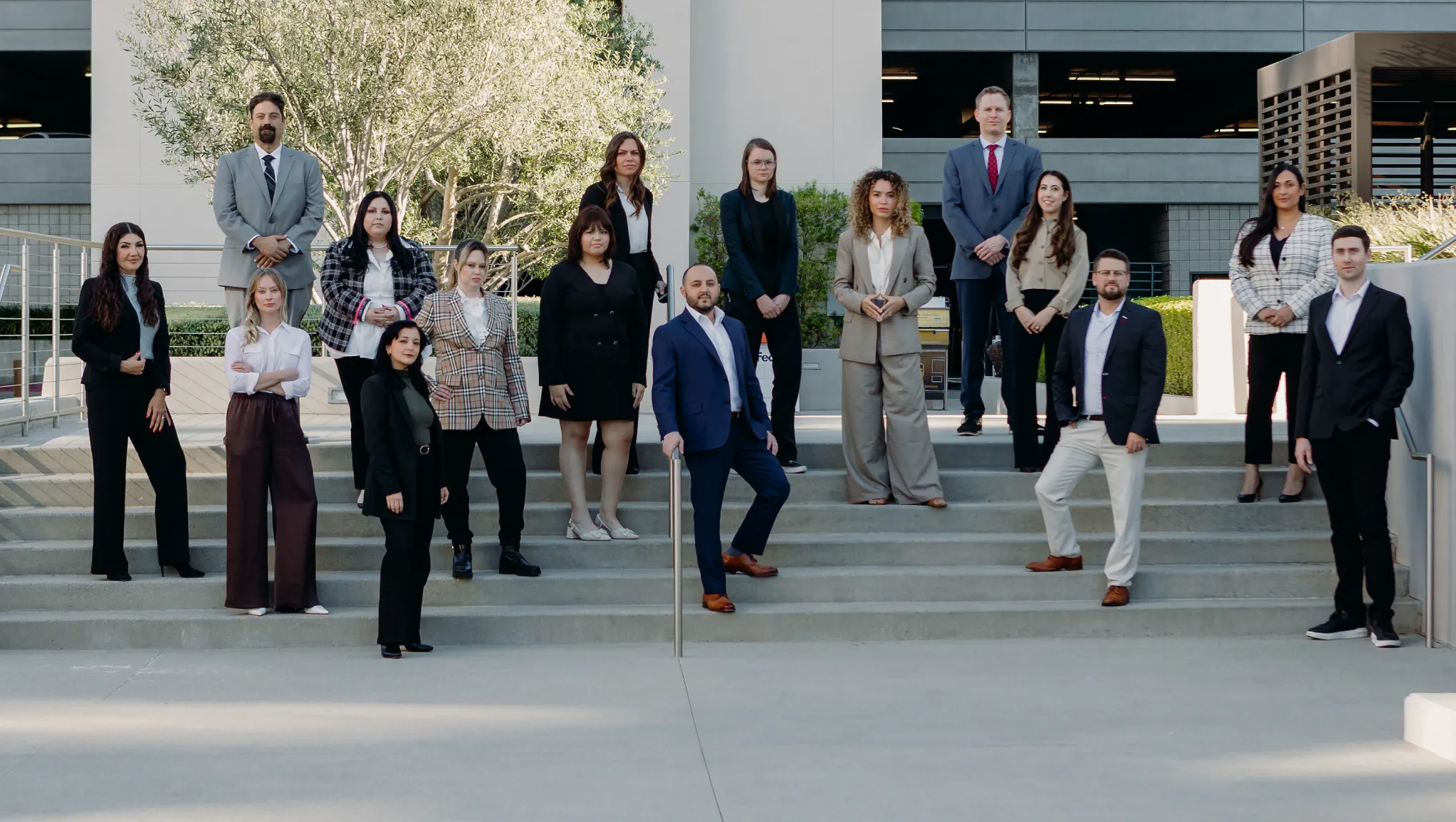
1
Kirsten Starr
Controller
2
Nicole Clancy
Senior Litigation Attorney
3
Mike Rachmann
Litigation Attorney
4
Robert Starr
Attorney, Founding Partner
5
Francine Barlavi
Client Onboarding Team
6
Danny Barlavi
Client Onboarding Team Lead
7
Kaylie Urango
Pre-Litigation Support Specialist
8
Amber Shelgren
Case Evaluation Assistant
9
Taylor McCarthy
Litigation Support Specialist
10
Gabriela Dominguez
Litigation Support Specialist
11
Cynthia Rodriguez
Case Manager
12
Collette Navasartian
Paralegal
13
Rebecca Harteker
Litigation Attorney
14
Manny Starr
Attorney, Managing Partner
15
Colin Rickard
Director of Growth & Operations
16
Mark Tieman
Attorney, Managing Partner
Why San Francisco Employees Choose the Employment Lawyers at Frontier Law Center
San Francisco employees choose Frontier Law Center because we represent employees only, move quickly, and explain things clearly. In fact, you can learn more about how we help across every type of employment claim.
More Than a Decade of California Litigation
Our experienced team has represented thousands of California employees across wrongful termination, discrimination, harassment, retaliation, and wage disputes. That team includes trial attorneys who have carried cases through verdict, and intake runs in English and Spanish.
We built our firm around technology that shortens the slow parts of a case. Gathering records, checking deadlines, and testing legal strategies happens faster here. That speed, in turn, lets our attorneys focus on strategy instead of paperwork. You stay informed and in control at every stage, since you make every decision about your claim.
If you are searching for San Francisco employment lawyers who represent employees only, we are ready to hear your case, and that consultation costs nothing. In addition, if you want to explore other claims, these pages can help.
What Happens When You Contact Frontier Law Center
1
You tell us your story
Free, confidential, no pressure. These conversations are handled with care and discretion. You share what happened in your own words, at your own pace.
2
We give you an honest assessment
Our attorneys review what you share and tell you plainly what we see. If a claim exists, we explain your options, the likely timeline, and what to realistically expect.
3
You decide what comes next
No obligation after the consultation. If we take your case, we work on contingency – we do not get paid unless you do. No upfront cost, ever.
Free consultation · Fully confidential · No win, no fee · No upfront cost
Questions San Francisco Employees Ask an Employment Lawyer Before Filing
Employees ask us the same workplace legal questions early on. In most cases, it comes down to whether a situation is serious enough to pursue.
Does San Francisco Have Employee Protections That California Law Does Not Provide?
Yes, San Francisco enforces its own employment ordinances alongside state law. The city covers minimum wage, paid sick leave, scheduling, parental leave supplements, salary history, and criminal record screening. These local rules sit on top of California law rather than replacing it. Thus, you may hold legal rights under both sets of rules at once.
Where Do I Report a Labor Law Violation in San Francisco?
Report city ordinance violations to the San Francisco Office of Labor Standards Enforcement. State wage violations go to the California Labor Commissioner instead. Discrimination or retaliation claims, on the other hand, go to the California Civil Rights Department. Choosing the wrong forum can cost you time, so confirm the right path before filing.
Can My Employer Ask What I Earned at My Last Job During a San Francisco Interview?
No, the San Francisco Consideration of Salary History Ordinance prohibits that question. Your employer cannot ask about prior pay or use it to set your offer. You may volunteer the information, although no company can require it. For instance, if an employer pressed you and then made a lower offer, that sequence deserves review.
What Happens to My Unvested Equity if I Get Fired in San Francisco?
Unvested equity usually stops vesting at termination under your grant agreement, which makes the reason for your firing financially important. In fact, when a termination broke the law, the value you lost can become part of your recovery. Bring your grant documents and any severance paperwork to the first conversation.
Does the San Francisco Minimum Wage Apply if I Work Remotely for a City Employer?
The San Francisco minimum wage generally follows where you perform the work, not where your employer keeps its office. Employees working inside city boundaries for enough hours weekly are typically covered, even part time. Remote and hybrid schedules complicate that calculation. Even so, bring your schedule records if your pay looks short.
Is a Labor Lawyer the Same Thing as an Employment Lawyer?
The terms overlap heavily, and most people use them interchangeably. Labor law traditionally means union representation and collective bargaining. Employment law, on the other hand, covers the relationship between an individual employee and an employer. Frontier Law Center handles individual and group employment claims for California employees, so just describe what happened and we will sort it out.
Last Updated: July 27, 2026
The information on this page reflects the law as of the date above and is intended for general informational purposes only. It does not constitute legal advice, nor does it create an attorney-client relationship. Laws and regulations are subject to change, and individual circumstances vary. Always consult a qualified attorney for guidance specific to your situation.
Talk With an Employment Lawyer in San Francisco About Your Case
You do not need to know whether you have a case before reaching out. Figuring that out is our job, not yours. San Francisco employees face a mix of state law and city ordinances that few people untangle alone. Frontier Law Center, however, reads both layers, checks every deadline, and tells you honestly what your options look like.
Deadlines keep running while you decide, so the sooner you get answers the more choices you keep. Contact Frontier Law Center to schedule a free case evaluation with a San Francisco employment lawyer and find out what your options are.