
Something at work changed after you spoke up, and you cannot quite shake the feeling that the two are connected. Maybe you reported harassment, raised a concern about unpaid overtime, or asked for time off to manage a medical condition. You did the right thing by being honest about it. For example, your hours may have dropped, your manager may have grown distant, or a performance review may have turned harsh for reasons that never added up. In fact, this exact pattern is what a Los Angeles workplace retaliation lawyer hears most often. Your instinct that something is wrong deserves to be taken seriously.
You do not have to sort through this alone or already know the legal terms for what happened to you. California builds some of the strongest anti-retaliation protections in the country into its employment laws. Moreover, those protections begin the moment you speak up, not after you are proven right. Frontier Law Center represents employees throughout Los Angeles County. The first conversation about your legal rights costs you nothing.

★★★★★5/5
“It was the best experience I’ve ever had in dealing with an attorney. All representatives at Frontier that communicated with me were very professional. I would highly recommend their services to anyone that wants a smooth attorney process and a law firm with a “6” Star rating in my opinion.”
— Recent Client Review
Quick Answer
Does California law protect Los Angeles employees from workplace retaliation?
Yes. California law makes it illegal for a Los Angeles employer to punish you for reporting harassment, raising a wage complaint, requesting an accommodation, taking protected leave, or reporting unsafe or illegal conduct. These protections come from the Fair Employment and Housing Act and the California Labor Code, and they apply the moment you speak up. You do not need to be fired for the law to protect you, because a demotion, a pay cut, or a sudden schedule change can each count as retaliation.
What Workplace Retaliation Looks Like for Los Angeles Employees
Retaliation at work rarely announces itself in an obvious way. In a fast moving city like Los Angeles, an employer can dress up punishment as an ordinary business decision. Similarly, the two can look nearly identical from the outside. However, the law looks past the label and focuses on what actually happened after you spoke up. The two patterns below cover most of what Los Angeles employees describe when they first reach out. Each one is a common reason people call a Los Angeles workplace retaliation lawyer.

When a Business Decision Becomes Retaliation
Many retaliation cases start with a move that looks routine on paper. Your employer might call it a reorganization, a budget cut, or a shift in team needs. Meanwhile, your role quietly shrinks or your pay falls. When the timing lines up with a complaint you raised, that sequence can support a retaliation claim. California law even creates a rebuttable presumption of retaliation when an employer acts within 90 days of your protected activity. Courts also weigh timing far more heavily than any explanation offered after the fact.

Adverse Actions That Go Beyond a Firing
You do not have to lose your job to have a valid claim. An adverse action is any meaningful change that would discourage a reasonable employee from speaking up again. That includes cut hours, a demotion, a transfer to a worse shift, or exclusion from meetings you led. Sometimes the punishment is quieter, like a manager who freezes you out or a review that suddenly turns negative. Our guide to workplace retaliation examples walks through more of these patterns.

How California Law Protects Los Angeles Employees Who Speak Up
California protects a wide range of employee conduct. In particular, Los Angeles employees benefit from state law the moment they exercise a workplace right. In fact, several statutes back that protection, each covering a different kind of protected activity. Understanding these laws is often the first step for anyone building a Los Angeles workplace retaliation claim. Our workplace retaliation practice page explains each one in more depth. The table below breaks down the most common protections and the law behind each one.
| Protected Activity | What It Covers | Governing Law |
|---|---|---|
| Reporting harassment or discrimination | Covers reports based on race, gender, age, disability, pregnancy, religion, or national origin | Fair Employment and Housing Act |
| Reporting fraud, wage theft, or unsafe conditions | One of the strongest whistleblower protections in the country | Labor Code Section 1102.5 |
| Raising a wage complaint or overtime dispute | Shields you whether you filed a charge with an agency or raised it internally | Labor Code Section 98.6 |
| Reporting a safety violation | Protects employees who flag unsafe working conditions | Labor Code Section 6310 |
| Taking protected leave or requesting a disability accommodation | Protects your request for medical leave or reasonable accommodations, including for an immediate family member | California Family Rights Act |
| Taking time off as a victim of domestic violence, sexual assault, or stalking | Protects time off for a related judicial proceeding, safety measures, or medical care | Labor Code Section 230 |
Local Los Angeles Protections That Go Beyond State Law
Los Angeles adds another layer of protection on top of state law. This layer matters more than most employees realize. The city sets its own minimum wage above the state floor. In addition, local ordinances protect employees who assert those wage rights. Similarly, county employees and people who work in nearby cities can fall under similar local rules.
Because these protections overlap, a single act of retaliation can violate more than one law at once. In turn, that overlap often strengthens your position more than you might expect. It gives an attorney several angles to evaluate rather than just one. For that reason, a conversation with a Los Angeles workplace retaliation lawyer can help you see which protections actually apply.

How Long Los Angeles Employees Have to File a Retaliation Claim
Every Los Angeles workplace retaliation claim runs on a deadline. That clock usually starts ticking on the date of the adverse action itself. Miss that window, and even a strong, well-documented claim can close for good. Deadlines change based on the type of claim and where you ultimately file it.
The table below maps the most common filing deadlines for Los Angeles employees. Many employees wait because they hope the situation will quietly improve on its own. However, the deadline does not pause while you decide what to do. Evidence fades too, as inboxes get cleared out and memories blur over time. For that reason, reaching out early protects your timeline and your proof in retaliation cases like these.
| Type of Claim | Where You File | Deadline to Act |
|---|---|---|
| Retaliation tied to harassment or discrimination complaints | California Civil Rights Department | Three years from the adverse action |
| Whistleblower or wage retaliation | California Labor Commissioner | Six months to three years by claim type |
| Workers' compensation retaliation | Workers' Compensation Appeals Board | One year from the adverse action |
| Federal retaliation claims | Equal Employment Opportunity Commission | 180 to 300 days from the adverse action |
What Los Angeles Employees Can Do After Retaliation Starts
The days right after retaliation starts matter more than most employees realize. You do not need a finished case or a binder of proof before you take your first step. Waiting until you feel fully ready often costs you more than it protects. Instead, a few steady habits can protect both your job and your legal options while you decide what comes next.
Most employers never admit their real reason out loud. Instead, a strong case has to prove what they will not say directly. Attorneys call that cover story pretext, and exposing it is often the heart of a successful retaliation claim. At Frontier Law Center, our attorneys use an AI-native approach to organize your emails, records, and dates. That builds a clear timeline before strategy even begins. As a result, the gap between what your employer claimed and what actually happened becomes much harder to defend.
The habits below cost you nothing, yet they can change the shape of a case months down the line. For instance, you may also wonder how a Los Angeles workplace retaliation claim differs from a standard firing. Our guide on wrongful termination and retaliation explains where the two overlap.
- Keep a simple written record of what changed and when it happened
- Save the emails, messages, and schedules that show your treatment shifting
- Write down names and dates while the details are still fresh
- Keep doing your job well, since strong performance undercuts a for-cause excuse
- Hold off on signing anything that waives your rights before a review
You do not need a perfect case before you call.
A short, free conversation with Frontier Law Center can show you exactly where you stand.
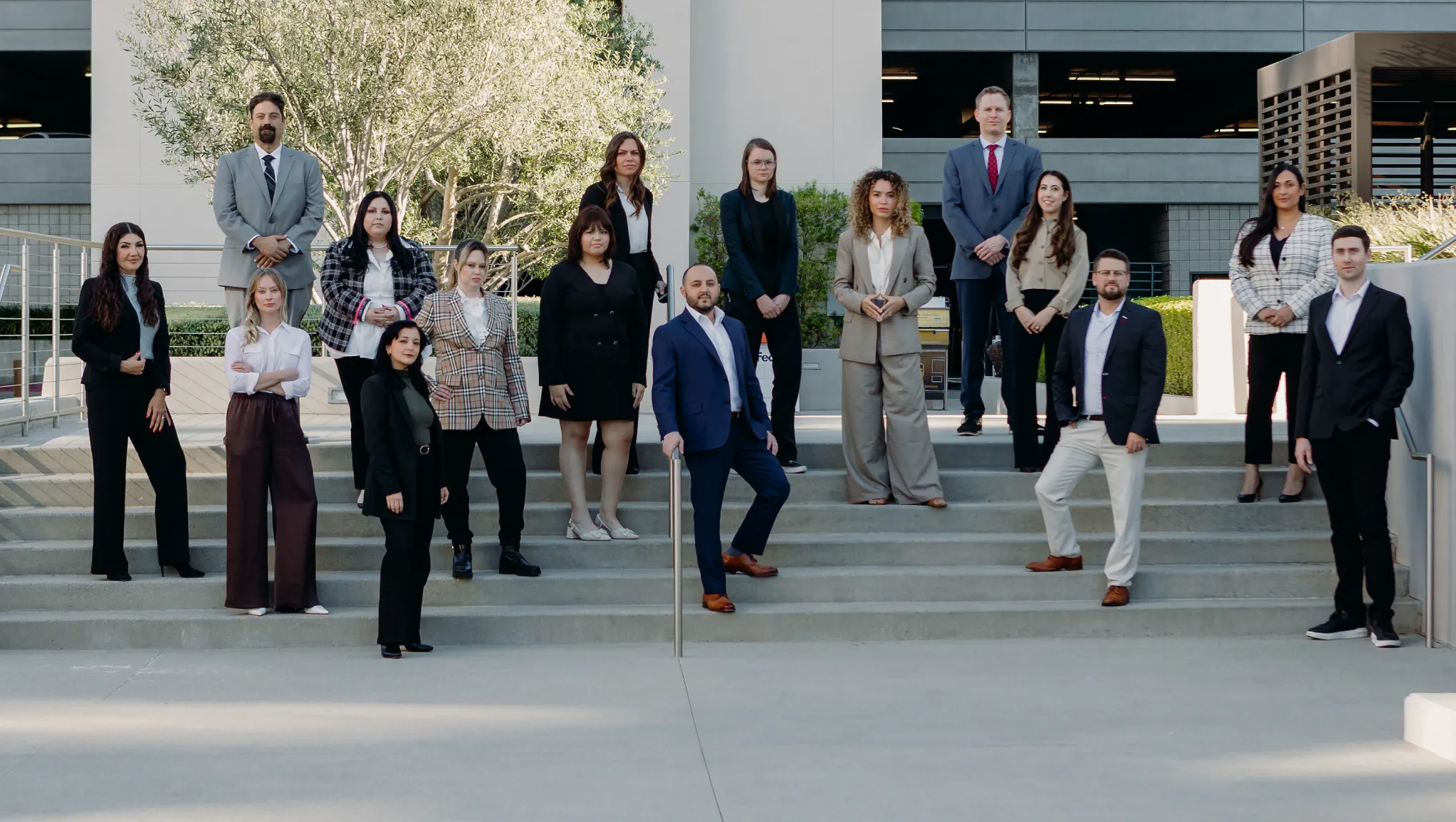
1
Kirsten Starr
Controller
2
Nicole Clancy
Senior Litigation Attorney
3
Mike Rachmann
Litigation Attorney
4
Robert Starr
Attorney, Founding Partner
5
Francine Barlavi
Client Onboarding Team
6
Danny Barlavi
Client Onboarding Team Lead
7
Kaylie Urango
Pre-Litigation Support Specialist
8
Amber Shelgren
Case Evaluation Assistant
9
Taylor McCarthy
Litigation Support Specialist
10
Gabriela Dominguez
Litigation Support Specialist
11
Cynthia Rodriguez
Case Manager
12
Collette Navasartian
Paralegal
13
Rebecca Harteker
Litigation Attorney
14
Manny Starr
Attorney, Managing Partner
15
Colin Rickard
Director of Growth & Operations
16
Mark Tieman
Attorney, Managing Partner
Why Los Angeles Employees Trust Frontier Law Center’s Attorneys
Frontier Law Center is a plaintiff-side firm, representing only employees across every type of workplace retaliation claim. Every decision we make is focused on winning for the person who was punished for doing the right thing. Our attorneys work across Los Angeles County and greater Southern California from our Woodland Hills base. Our intake also runs in both English and Spanish. You can learn more about how we help with your specific situation.

Frontier Law Center was a 2025 finalist for Law.com’s Best Use of Artificial Intelligence, competing against much larger firms. In turn, our attorneys arrive at strategy sessions with the key facts already organized, which sharpens arguments and speeds up your case. Every case also runs on contingency, so there is no upfront cost and no fee unless you recover.
Our attorneys have represented Los Angeles employees across retaliation matters tied to whistleblower reports, wage complaints, and workers’ compensation claims. In fact, we take on employers of every size, from small local businesses to some of California’s largest companies. Our approach stays the same in every case. You can review the results we have secured for California employees to see the kinds of matters we handle.
If you are searching for a workplace retaliation lawyer near you in Los Angeles, we are ready to help. If your situation also touches a firing, discrimination, or unpaid wages, explore the related claims below.
Common Workplace Retaliation Questions From Los Angeles Employees
These are the questions Los Angeles employees ask most often once they suspect workplace retaliation. If your situation is not covered here, a free case review is the fastest way to get a straight answer.
Do Los Angeles Employees Have Retaliation Protections Beyond California State Law?
Yes, Los Angeles employees are covered by both state law and local city rules at the same time. In fact, the Fair Employment and Housing Act and the California Labor Code prohibit retaliation for any protected activity statewide. In addition, the City of Los Angeles sets a higher minimum wage and protects employees who assert those local wage rights. Because these rules overlap, one retaliatory act can break several workplace violations at once, which often strengthens your claim. Workplace Fairness offers a plain-language overview of these protections if you want to read further.
Are Independent Contractors and Gig Workers in Los Angeles Protected From Retaliation?
Yes, most gig workers and independent contractors in Los Angeles hold real retaliation protections. In fact, many people labeled as contractors are actually misclassified employees, and that label alone does not erase your legal rights. If you worked under an employer’s daily control, the contractor label may not hold up in court. You may still qualify for both retaliation and wage protections. A free review can sort out how you were classified and what that means for your claim.
Can I Bring a Retaliation Claim Against a Los Angeles Employer if I Work Remotely?
Yes, working remotely does not remove your retaliation protections under California law. If you work for a Los Angeles employer, or perform your job while in California, state law generally still applies. For example, remote employees face retaliation too, through cut assignments, exclusion from calls, or a sudden drop in reviews after a complaint. A short conversation can confirm exactly which rules cover your setup.
What If My Los Angeles Employer Calls the Retaliation a Layoff or Restructuring?
A layoff label does not make retaliation legal under California law. For instance, employers often frame punishment as a reorganization, a budget cut, or a role that no longer exists. California courts look past that explanation and focus on the timing and the facts underneath it. When a layoff lands only on the employee who complained, that pattern can expose the stated reason as pretext. The Cornell Law School overview of retaliation explains this legal standard in plain terms.
Will Contacting a Los Angeles Retaliation Lawyer Put My Job at Risk?
No, contacting a Los Angeles workplace retaliation lawyer is confidential and legally protected. Your employer has no way of knowing that you called Frontier Law Center for a free consultation. Speaking with an attorney is itself a protected step. In turn, punishing you for taking that step would create a separate violation. Many employees call while still on the job, simply to understand their legal rights before deciding on anything. There is no cost and no obligation, so an early call carries very little downside.
Last Updated: July 27, 2026
The information on this page reflects the law as of the date above and is intended for general informational purposes only. It does not constitute legal advice, nor does it create an attorney-client relationship. Laws and regulations are subject to change, and individual circumstances vary. Always consult a qualified attorney for guidance specific to your situation.
What Happens When You Contact Frontier Law Center
1
You tell us your story
Free, confidential, no pressure. These conversations are handled with care and discretion. You share what happened in your own words, at your own pace.
2
We give you an honest assessment
Our attorneys review what you share and tell you plainly what we see. If a claim exists, we explain your options, the likely timeline, and what to realistically expect.
3
You decide what comes next
No obligation after the consultation. If we take your case, we work on contingency – we do not get paid unless you do. No upfront cost, ever.
Free consultation · Fully confidential · No win, no fee · No upfront cost
Talk to a Los Angeles Workplace Retaliation Lawyer at Frontier Law Center
If something at work changed after you spoke up, you deserve a straight answer. Retaliation claims run on deadlines that close quietly in the background. In fact, waiting even a few extra weeks can cost you options you did not know you had.
You do not need every answer or a folder full of documents before you reach out to us. A Los Angeles workplace retaliation lawyer at Frontier Law Center can help you understand exactly where you stand. Contact us to schedule a free case evaluation and find your options.