
If you work in California, you have probably been handed a California arbitration agreement without much explanation. The questions you are asking now are the right ones: Can your employer really require you to sign this? Is it possible to void a California arbitration agreement you already signed? And if your case goes to arbitration, can you still win?

★★★★★5/5
“Frontier Law Center made me feel heard and relieved that my situation would be taken care of. I’m grateful for the quick communication and overall support I received from the entire team.”
– Recent Client Review
Quick Answer
What is a California arbitration agreement?
A California arbitration agreement is a private contract that requires employees to resolve workplace disputes through arbitration rather than in court. Instead of a judge or jury deciding your case, a private arbitrator does. The outcome is typically binding and very difficult to appeal. Research consistently shows that employees win less often and recover less money in arbitration than they do in civil court , which is precisely why employers favor these agreements.
10,000
+
Employees Helped
100
M+
Recovered
10
+
Years in Practice
What California Arbitration Agreements Are and How They Reach Employees
Most California employees sign one of these agreements before they fully understand what it does. Here is what it actually means and how it typically ends up in front of you.

What the Agreement Does and Why Employers Prefer It
A California arbitration agreement is a contract that requires you to settle employment disputes outside of court through a private process called arbitration. A private arbitrator hears your case instead of a judge or jury. The process is confidential, and the decision typically binds both sides.
Employers favor these agreements because arbitration limits their risk. Research consistently shows that employees win less often and recover less money in arbitration than they do in court. Forced arbitration in California also removes the right to a jury trial, limits appeals, and in most cases prevents employees from joining together in a class action.

How and When Employers Present These Agreements
Most employees first see one of these agreements on their first day, buried in an onboarding packet next to a direct deposit form. Nobody explains what it means. The new hire signs it because it looks like standard paperwork.
Both new hires and current employees face these agreements. It may be a standalone document, a clause inside an employment contract, or a new page added to an employee handbook years into your job. Many are labeled “mutual,” but that word is misleading. Your employer rarely uses arbitration against you, so the practical burden falls almost entirely on the employee.

How Arbitration and Lawsuits Compare for California Employees
The table below shows the key differences between arbitration and a civil lawsuit. These distinctions matter a great deal if you are deciding whether to sign or whether your signed agreement changes your options.
| Factor | Arbitration | Civil Lawsuit |
|---|---|---|
| Decision-maker | Private arbitrator, often chosen from a pool employers use repeatedly | Judge and, in many cases, a jury of your peers |
| Discovery rights | Limited: adequate discovery is not guaranteed and disputes over evidence are common | Broader rights to request documents, take depositions, and build a full evidentiary record |
| Confidentiality | Private: outcomes and proceedings are confidential by default | Public record: court filings and verdicts are visible to other employees and the public |
| Right to appeal | Extremely limited: courts rarely overturn arbitration awards even when the outcome seems wrong | Full appellate rights through the California Court of Appeal and the California Supreme Court |
| Class or representative actions | Usually waived: most agreements block class and PAGA representative actions | Available: employees can pursue class actions and PAGA claims together |
| Average employee recovery | Statistically lower than court outcomes, according to multiple independent studies | Statistically higher recoveries, particularly in discrimination, harassment, and wage cases |
| Speed | Often faster, but speed favors the party with more resources to manage the process | Can take longer, but provides stronger procedural protections along the way |
Can Your Employer Force You to Sign an Arbitration Agreement in California?

What AB 51 Was Supposed to Do
In 2019, California passed AB 51. That law made it illegal for employers to require employees to sign an arbitration agreement as a condition of employment or continued employment. For a while, it seemed to settle the issue in favor of California employees.
Why the Federal Arbitration Act Changed That
Federal courts struck down AB 51. They ruled that the Federal Arbitration Act (FAA) overrides California state law on this point. As a result, employers in California can currently require these agreements as a condition of employment.
California’s 2026 Response: AB 2155
In 2026, California came back with a narrower but meaningful response. On June 30, 2026, Governor Newsom signed AB 2155, which ties California arbitration law directly to federal exclusions. Effective January 1, 2027, an arbitration agreement is unenforceable under California law to the extent it would already be unenforceable under the FAA, including the federal exemptions for transportation workers engaged in interstate commerce and for sexual harassment and sexual assault claims. This does not ban arbitration agreements generally, but it closes a gap: California courts previously fell back on state contract law to enforce many of these agreements anyway, and after January 1, 2027, that fallback shrinks wherever federal law already carves out the underlying claim.
What This Means for You Now
Employers can require these agreements, but that does not make every California arbitration agreement automatically enforceable. Under California Code of Civil Procedure § 1281, a valid arbitration agreement is generally enforceable. But, California courts regularly void agreements that contain unconscionable provisions or that employees signed under pressure with no real ability to refuse. Even an agreement that’s hard to read isn’t automatically unenforceable on that basis alone. In Fuentes v. Empire Nissan, Inc. (2026), the California Supreme Court held that illegibility alone doesn’t defeat enforcement, though it can still support a finding of unconscionability when combined with other unfair terms.
What Happens If You Refuse to Sign
Under current California law, an employer can make signing a condition of employment, so in theory they could fire or decline to hire you for refusing. However, if your employer fired you or threatened your job after you raised concerns, that may support a retaliation claim. If you signed under duress, that pressure may give you grounds to challenge enforceability later. If your employer is also asking you to sign a severance agreement, both documents deserve review before you commit to either. Learn more about how wrongful termination laws apply in California.
When a California Arbitration Agreement Can Be Voided
California courts regularly refuse to enforce arbitration agreements they find unfair, looking at two categories of problems.
How Employers Present Unconscionable Agreements
Courts look at how the signing happened. If your employer buried the agreement in an onboarding packet, gave you no time to review it, or handed it to you on a take-it-or-leave-it basis, those facts support a finding of procedural unfairness.
When Agreement Terms Are Too One-Sided to Enforce
Courts also examine the terms themselves. One-sided filing requirements, short deadlines, limited discovery rights for the employee, or clauses that carve out the employer’s claims while routing yours to arbitration are all grounds California courts have used to void these agreements. Courts call these unconscionable provisions.
California’s Private Attorneys General Act (PAGA) has also resisted full arbitration. If your claim involves wage and hour violations, PAGA may give you options the arbitration agreement cannot touch.
What Rights You Keep Even After Signing an Arbitration Agreement
Signing does not erase your rights. It changes where and how you pursue a claim, and several types of employment disputes carry protections courts have resisted routing into arbitration.
The table below shows how different claim types are generally treated under a California arbitration agreement.
Under the Ending Forced Arbitration of Sexual Assault and Sexual Harassment Act (2022), your employer cannot compel sexual harassment claims into arbitration. You choose the forum. A class action or PAGA representative action involving wage violations also has options that survive many arbitration agreements.
The existence of a California arbitration agreement is not the end of the conversation. It is the beginning of one.
| Claim Type | Arbitration Status | Key Authority |
|---|---|---|
| Sexual harassment and sexual assault | You choose court or arbitration. Your employer cannot force arbitration on these claims. | Ending Forced Arbitration Act (2022) |
| PAGA representative claims | California courts have preserved meaningful protection for representative claims, even when the individual portion is compelled to arbitration. | Adolph v. Uber Technologies, Inc. (2023); Viking River Cruises v. Moriana (2022) |
| FEHA claims (discrimination and retaliation) | Depends on the agreement's language. CRD and EEOC filings stay available regardless. | FEHA; Title VII |
| Government agency complaints | Always available. No arbitration agreement can block a CRD, EEOC, or Labor Commissioner filing. | FEHA; federal anti-discrimination law |
| Individual wage and hour claims | Generally subject to arbitration unless the agreement itself is unenforceable. | Federal Arbitration Act (FAA) |
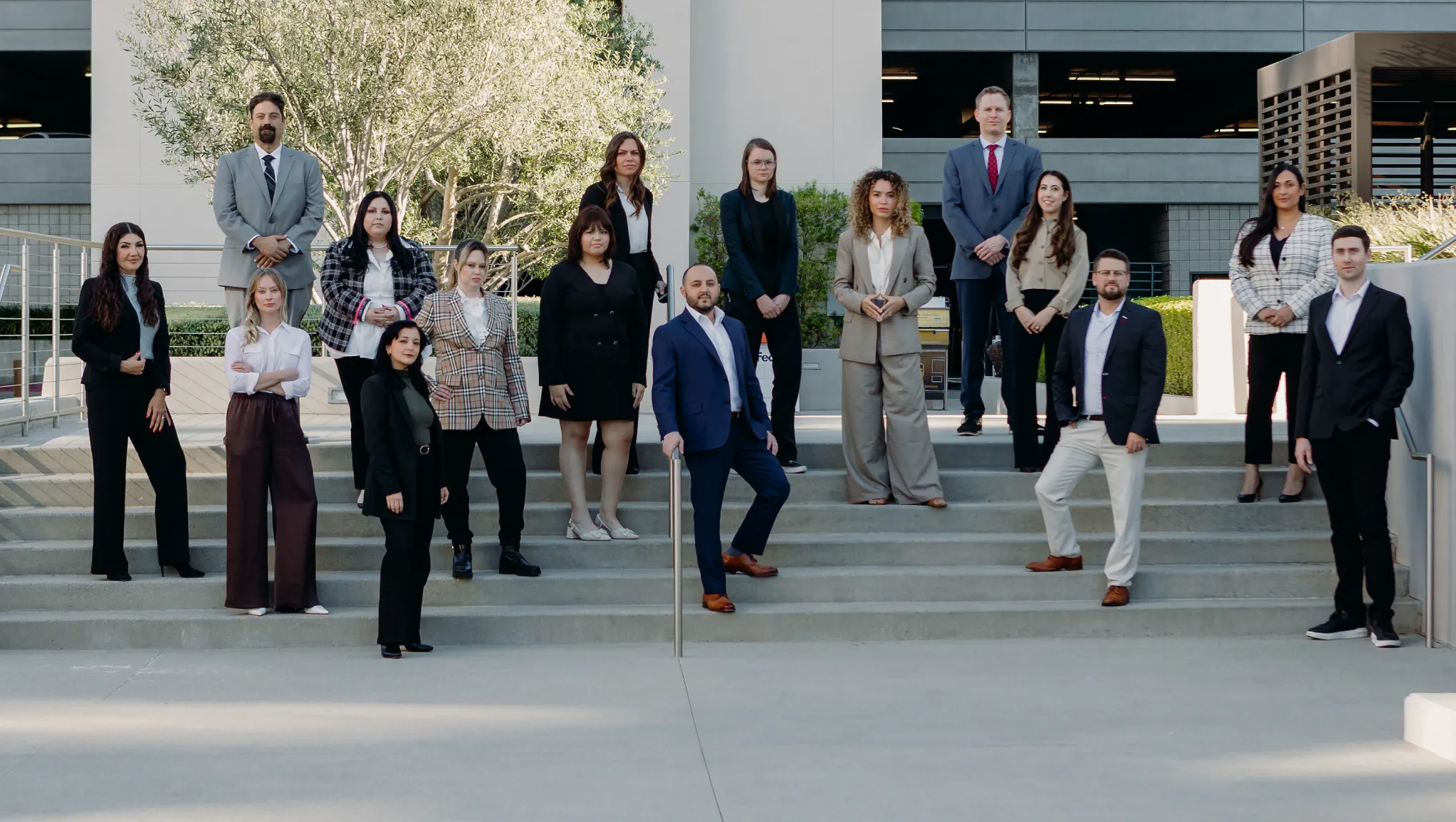
1
Kirsten Starr
Controller
2
Nicole Clancy
Senior Litigation Attorney
3
Mike Rachmann
Litigation Attorney
4
Robert Starr
Attorney, Founding Partner
5
Francine Barlavi
Client Onboarding Team
6
Danny Barlavi
Client Onboarding Team Lead
7
Kaylie Urango
Pre-Litigation Support Specialist
8
Amber Shelgren
Case Evaluation Assistant
9
Taylor McCarthy
Litigation Support Specialist
10
Gabriela Dominguez
Litigation Support Specialist
11
Cynthia Rodriguez
Case Manager
12
Collette Navasartian
Paralegal
13
Rebecca Harteker
Litigation Attorney
14
Manny Starr
Attorney, Managing Partner
15
Colin Rickard
Director of Growth & Operations
16
Mark Tieman
Attorney, Managing Partner
We’re on Your Side. Only Your Side.

100% Plaintiff-Side Practice
We never represent employers. Every resource, every strategy is dedicated to helping employees like you win.

We Actually Listen
Many firms rush through consultations. We take time to understand your full story because details that seem small can be decisive.

California Specialists
California has the most powerful employee protection laws in the country. We know them deeply and use every one to your advantage.
Our Commitment to You
We never represent employers. Every resource, every strategy is dedicated to helping employees like you win.
100%
Confidential
No Fee
Unless we win
How Frontier Law Center Fights For You
California law provides strong employee protections. Does any of this match what you experienced?
1
You Share Your Story
Free, confidential, no pressure. We listen and we give you an honest answer about your rights.
2
We Investigate
Our attorneys uncover what actually happened. You don’t lift a finger and we do the work.
3
We Fight for You
We negotiate hard and are fully prepared to go to trial. We fight for the maximum recovery.
4
You Move Forward
We only get paid when you win. You get closure, compensation, and a fresh start.
What California Employees Want to Know About Arbitration Agreements
Can I Sue My Employer If I Already Signed an Arbitration Agreement?
Yes, in many cases you still can. Signing a California arbitration agreement does not automatically eliminate your right to pursue a claim. It changes where and how you pursue it. Some claims, like sexual harassment and sexual assault, are entirely exempt from forced arbitration under federal law. Other claims, like wage theft and discrimination, depend on your agreement’s specific language.
Can an Arbitration Agreement Be Voided After I Sign It?
Yes, California courts void arbitration agreements they find unconscionable. Courts examine both how the agreement was presented and what the terms actually say. If your employer handed it to you on a take-it-or-leave-it basis with no real opportunity to negotiate, that is procedural unconscionability. If the terms heavily favor the employer, with short deadlines, limited discovery, carve-outs for employer claims, that is substantive unconscionability.
Does an Arbitration Agreement Stop Me From Filing With a Government Agency?
No, a California arbitration agreement does not block you from filing with the California Civil Rights Department (CRD), the California Labor Commissioner, or the Equal Employment Opportunity Commission (EEOC). Those administrative processes stay available regardless of what you signed. What the agreement limits is your ability to file a private civil lawsuit or join a class action in court.
What Happens to My PAGA Claim If I Signed an Arbitration Agreement?
PAGA sits at one of the most contested areas of arbitration law in California. After the U.S. Supreme Court’s 2022 Viking River Cruises decision, employers can compel individual PAGA claims to arbitration in some circumstances. Viking River also suggested employees might lose their right to pursue the remaining claims in court once that happened, but the California Supreme Court closed that gap in Adolph v. Uber Technologies (2023), confirming that representative PAGA claims filed on behalf of other employees still retain meaningful protection even after the individual portion is sent to arbitration.
What Happens If My Employer Is Slow to Pay Arbitration Fees?
California law requires the party that drafted the arbitration agreement, almost always your employer, to pay the arbitrator’s fees within 30 days of the due date. If your employer misses that deadline, you can ask to withdraw from arbitration and proceed in court instead. The California Supreme Court’s 2025 decision in Hohenshelt v. Superior Court confirmed this rule survives under federal law, though it also clarified that a genuine, good-faith mistake in payment timing won’t automatically hand your employer a free pass back into arbitration. Willful or repeated late payment is treated differently than an honest error.
Last Updated: September 21, 2026
The information on this page reflects the law as of the date above and is intended for general informational purposes only. It does not constitute legal advice, nor does it create an attorney-client relationship. Laws and regulations are subject to change, and individual circumstances vary. Always consult a qualified attorney for guidance specific to your situation.
Find Out If You Have a Case – Call Frontier Law Center
If you have signed a California arbitration agreement and something has gone wrong at work, Frontier Law Center can give you an honest read on your rights and options at no cost. Request a free, confidential case evaluation and we will follow up promptly.