
If your employer has treated you worse because of your race, a racial discrimination attorney can help you figure out whether you have a case and what to do next. California law gives employees some of the strongest anti-discrimination protections in the country, but using them effectively requires legal experience, precise documentation, and an understanding of strict filing deadlines.
Frontier Law Center handles racial discrimination claims for employees throughout California. This page covers what qualifies under the law, how to document what happened, and what to expect when you reach out for help. You can also browse our signs of unfair treatment at work in California to see if your situation fits a pattern attorneys recognize.

★★★★★5/5
“These guys are great! I’m super busy and they were able to pin me down to make sure I was taken care of!!”
— Recent Client Review
Definition
What is a racial discrimination attorney?
A racial discrimination attorney is a lawyer who represents employees whose employers treated them worse because of their race, color, ethnicity, or ancestry. In California, these claims are filed under FEHA or federal Title VII. A qualified attorney can evaluate whether your employer's conduct qualifies, gather the evidence needed to build a strong claim, and pursue your case through settlement or litigation. Frontier Law Center represents employees throughout California, including the greater Los Angeles area.
10,000
+
Workers Helped
100
M+
Recovered
10
+
Years in Practice
What the Law Says About Racial Discrimination at Work
Racial discrimination at work is illegal under both California and federal law. Understanding what qualifies and which protections apply to your situation is the foundation of any strong claim.

What Counts as Racial Discrimination
California law recognizes two distinct forms of racial discrimination. You do not need to identify which one applies before speaking with an attorney, but understanding both helps you recognize your situation.
- Disparate treatment means your employer deliberately treats you worse than others because of your race
- Disparate impact means a workplace policy that looks neutral but actually affects one racial group more than others
Both forms are illegal under California law and both are worth discussing with an attorney before you take any further action.

Your Legal Protections as a California Employee
California’s main anti-discrimination law is FEHA, which covers employers with five or more employees. Title VII of the Civil Rights Act only reaches employers with fifteen or more. That gap matters, because many California employees have no federal protection but still have a strong state claim. California law also allows for broader damages, including distress and punitive damages in serious cases.

How Workplace Race Discrimination Actually Shows Up
Race discrimination does not always look the way people expect. Some of the most common scenarios Frontier Law Center handles are hard to spot at first. The table below covers the patterns we see most often.
| Type | What It Looks Like at Work |
|---|---|
| Denied promotion | You get passed over while less qualified coworkers move up, with no clear or consistent explanation given. |
| Unequal pay | Employees of different races do the same work but receive different pay. California equal pay laws apply here regardless of what reason the employer gives. |
| Uneven discipline | You get written up, suspended, or fired for things your employer overlooks when other employees do the same thing. |
| Biased assignments | Your employer steers you toward worse shifts or projects based on race, while others get the higher-paying or more visible work. |
| False firing | Your employer fires you and cites a performance issue that did not exist, or that only applied to you. When the stated reason does not match the facts, it may be evidence of racial discrimination. |
When Workplace Conduct Crosses the Legal Line
Not all racial discrimination shows up as a firing or a denied promotion. Sometimes it is built into the daily experience of showing up to work. When that conduct is severe or consistent enough to interfere with your ability to do your job, California law treats it as a hostile work environment.
Many people assume only a direct manager’s behavior counts. That is not accurate under FEHA. Conduct from coworkers, clients, or vendors can also create legal liability if your employer knew about it and did nothing.
A single comment rarely meets the legal bar. A documented pattern very often does. Our hostile work environment in California page explains exactly how courts measure these claims.
You don’t need to have all the answers.
You just need to tell us your story. We’ll figure out if it was illegal. Many of our most successful clients started by
saying “I’m not even sure I have a case.”
- Your supervisors or coworkers made racial comments and your employer took no action
- Racial jokes circulated at work with no consequences from management
- You reported the conduct formally and conditions stayed the same or got worse
- You were excluded from meetings, projects, or team events based on your race
- Stereotyping affected your job assignments, workload, or path to advancement
- Your performance reviews changed after you raised a concern about racial treatment
- Coworkers or managers referred to your race in ways that affected your work relationships
- The environment became so hostile you considered leaving your job
Steps to Take If You Are Being Discriminated Against at Work
The actions you take right now can shape the strength of any claim you bring later. Each step below protects your rights before your employer can take further action.

Start Documenting Everything Now
Write down dates, times, what was said, and who was present. Include any change in how your managers or coworkers treated you and when it started. Save emails, performance reviews, and any written communications to a personal device or account outside your work systems. If your employment ends, access to company files often disappears the same day.
Do Not Resign Before Speaking With an Attorney
Quitting because conditions became intolerable can still support a legal claim. California law calls this constructive discharge. But how and when you leave affects your case in ways that are hard to undo. Talk to an attorney before you make any decision about leaving.
Do Not Sign Anything Your Employer Hands You
If your employer offers a severance agreement, separation package, or release of claims, do not sign before getting legal advice. Signing waives your right to pursue a claim, sometimes permanently. Read our post on whether to sign a severance agreement in California before you respond.
Understand Your Filing Deadlines
Under FEHA, you have three years from the last act of discrimination to file with the California Civil Rights Department. The EEOC federal deadline is 300 days. Both are firm and hard to extend. Our guide to employment claim deadlines in California breaks down every timeline.
Get a Legal Review Before You Act
A racial discrimination attorney can identify evidence you may have overlooked, assess whether your employer’s stated reason holds up legally, and walk you through your options before you take any step that could affect your rights.
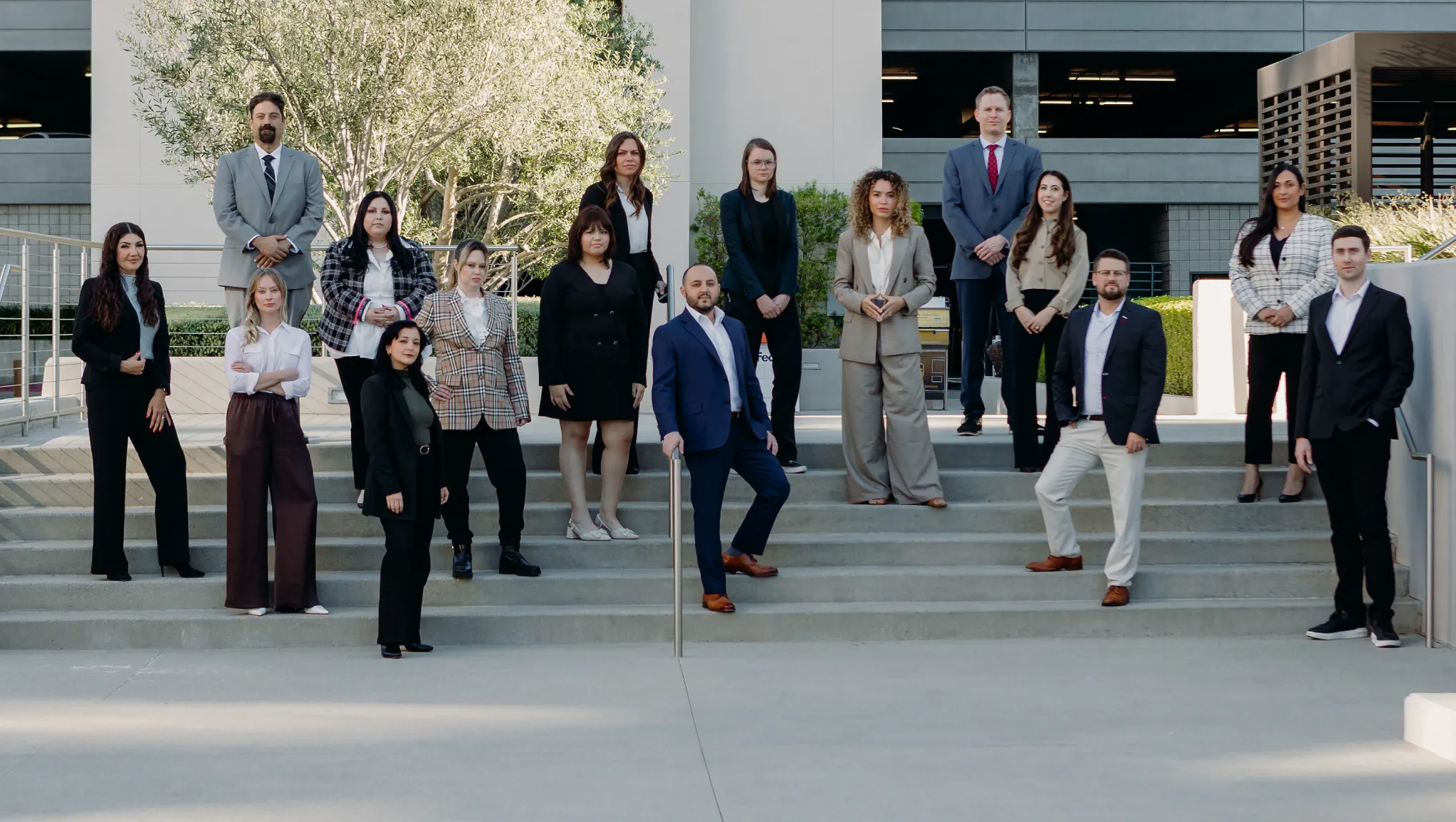
1
Kirsten Starr
Controller
2
Nicole Clancy
Senior Litigation Attorney
3
Mike Rachmann
Litigation Attorney
4
Robert Starr
Attorney, Founding Partner
5
Francine Barlavi
Client Onboarding Team
6
Danny Barlavi
Client Onboarding Team Lead
7
Kaylie Urango
Pre-Litigation Support Specialist
8
Amber Shelgren
Case Evaluation Assistant
9
Taylor McCarthy
Litigation Support Specialist
10
Gabriela Dominguez
Litigation Support Specialist
11
Cynthia Rodriguez
Case Manager
12
Collette Navasartian
Paralegal
13
Rebecca Harteker
Litigation Attorney
14
Manny Starr
Attorney, Managing Partner
15
Colin Rickard
Director of Growth & Operations
16
Mark Tieman
Attorney, Managing Partner
We’re on Your Side. Only Your Side.
Every case starts with a free consultation where we review the facts and give you an honest read on your claim. We work on contingency, so you owe nothing unless we recover for you. Not sure whether your situation qualifies? That is exactly what the first call is for.

100% Plaintiff-Side Practice
We never represent employers. Every resource, every strategy is dedicated to helping employees like you win.

We Actually Listen
Many firms rush through consultations. We take time to understand your full story — because details that seem small can be decisive.

California Specialists
California has the most powerful employee protection laws in the country. We know them deeply and use every one to your advantage.
Our Commitment to You
Frontier Law Center is a plaintiff-side employment law firm built entirely around representing California employees. When you work with a racial discrimination attorney here, you are working directly with a team led by Managing Partner Manny Starr. The team focuses on case strategy and building the strongest legal argument for each client. You can learn more about our results on the Frontier Law Center accomplishments page.
100%
Confidential
No Fee
Unless we win
How Frontier Law Center Fights For You
California law provides strong employee protections. Does any of this match what you experienced?
1
You Share Your Story
Free, confidential, no pressure. We listen — and we give you an honest answer about your rights.
2
We Investigate
Our attorneys uncover what actually happened. You don’t lift a finger — we do the work.
3
We Fight for You
We negotiate hard and are fully prepared to go to trial. We fight for the maximum recovery.
4
You Move Forward
We only get paid when you win. You get closure, compensation, and a fresh start.
What California Employees Ask About Race Discrimination
California employees searching for a racial discrimination attorney tend to arrive with the same core questions. Does your situation qualify? How exactly do you prove what happened? What can you recover? The answers below cover what we hear most often. For more on California employment law, visit our legal resources page.
What Qualifies as Racial Discrimination Under California Law?
Racial discrimination qualifies when your employer makes a work decision because of your race. This includes being fired, demoted, or passed over for a raise or promotion. Unequal pay based on race also qualifies. The conduct does not have to be overtly racist. A pattern of unequal treatment or false performance claims can qualify too.
How Do I Prove Racial Discrimination at Work?
You will need to show three key things. First, that you are in a protected class. Second, that your employer took action against you. Third, that the reason your employer gave does not hold up. Good evidence includes emails about your race, records showing others were treated better, and reviews that changed without cause. An attorney can help you find more proof through the discovery process.
What Is the Deadline to File a Racial Discrimination Claim in California?
Under FEHA, you have three years from the last act of discrimination to file with the California Civil Rights Department. To keep a federal civil rights claim open, the EEOC deadline is 300 days. Both of these deadlines are strictly enforced. If you think you have a case, do not wait to get legal advice. Our full guide to employment claim deadlines in California covers every timeline.
Can My Employer Retaliate Against Me for Reporting Racial Discrimination?
No, reporting racial discrimination is a protected act. Your employer cannot fire you, cut your hours, or give you bad reviews because you spoke up. This covers formal complaints and internal reports alike. If your employer fires you in response to a complaint, that termination may also support a separate legal claim. Our post on wrongful termination and retaliation in California explains how these two claims often overlap.
What Can I Recover in a Racial Discrimination Lawsuit?
A strong racial discrimination claim in California can lead to back pay and future lost wages. It can also include damages for pain and suffering. Serious cases can also result in punitive damages. Under FEHA, you may also recover your legal costs if you win. The value of your case depends on the specific facts.
Does California Law Protect Employees at Smaller Companies?
Yes, FEHA covers employers with five or more employees. Federal law requires at least fifteen employees. If someone told you that federal law does not apply, that does not mean state law leaves you without protection. Many employees at smaller companies have strong claims under California law. This is one of the most important reasons to speak with a California-focused employment attorney.
Last Updated: June 01, 2026
The information on this page reflects the law as of the date above and is intended for general informational purposes only. It does not constitute legal advice, nor does it create an attorney-client relationship. Laws and regulations are subject to change, and individual circumstances vary — always consult a qualified attorney for guidance specific to your situation.
Get a Free Case Evaluation From Frontier Law Center
If you are looking for a racial discrimination attorney in California, including the greater Los Angeles area, Frontier Law Center offers a free case evaluation where we listen to what happened, review the facts, and give you a clear read on your rights and options, with no pressure and no commitment.
California filing deadlines are strict, so knowing where you stand sooner is always the right move. Call today.