
If someone with authority over your job has tied your employment to sexual conduct, you are experiencing quid pro quo sexual harassment. California law explicitly prohibits it, and you have more options than you may realize.
At Frontier Law Center, we represent California employees in exactly this situation. This page explains what the law covers, what your case might look like, and what your next steps are.

★★★★★5/5
“I had a first rate experience. Love the AI.
But it was the attention of your attorneys that formed the basis of an outstanding experience!”
— Recent Client Review
Quick Answer
What is quid pro quo sexual harassment?
Quid pro quo sexual harassment occurs when a supervisor, manager, or employer conditions a job benefit or continued employment on tolerating or accepting unwanted sexual conduct. It is illegal under California's Fair Employment and Housing Act (FEHA) and federal Title VII. California law goes further than federal minimums, holding employers strictly liable when a supervisor is the harasser and giving employees three years to file a claim.
10,000
+
Workers Helped
100
M+
Recovered
10
+
Years in Practice
What Is Quid Pro Quo Sexual Harassment?
What makes this type of harassment legally distinct is the direct connection between your employment and the sexual conduct. Unlike hostile work environment harassment, which requires a pattern of severe or pervasive conduct, quid pro quo harassment can be established from a single conditional demand. California courts do not require the demand to be explicit. The key question is whether something of job value was tied to how you responded.
The communication does not need to be a formal statement. A supervisor, manager, or employer communicates that something you value at work depends on how you respond to their sexual demands. That could mean keeping your job, maintaining your employment benefits, getting a promotion, or avoiding a demotion. The demand can be direct or implied through behavior and consequences.
Under California’s Fair Employment and Housing Act (FEHA), employers are directly responsible for quid pro quo harassment committed by supervisors and managers, even when they claim they had no knowledge. That strict liability standard matters significantly when building your case.

What Does Quid Pro Quo Harassment Look Like at Work?
This type of harassment does not always come with an explicit statement. Often, the exchange is implied through behavior and consequences rather than spelled out in words. California courts recognize both explicit and implicit quid pro quo conduct.
If any of the situations on the right sounds familiar, you are not overreacting. California law is clear: the demand itself counts as quid pro quo sexual harassment. You do not need to submit to the conduct for it to be a violation. Also, California law does not require a single isolated incident. Even a pattern of behavior that develops over time can support a strong claim.
You don’t need to have all the answers.
You just need to tell us your story. We’ll figure out if it was illegal. Many of our most successful clients started by
saying “I’m not even sure I have a case.”
Common real-world scenarios include:
- A manager suggesting that a positive performance review depends on whether you agree to go out with them
- A supervisor threatening your schedule, shift, or job status after you reject their advances
- An employer offering a raise, promotion, or desirable assignment in exchange for a personal or sexual relationship
- A boss or manager making offensive sexual comments and then penalizing employees who push back or refuse
- A person with hiring authority conditioning a job offer on accepting unwanted physical contact
Quid Pro Quo vs. Hostile Work Environment in California
Both types of workplace sexual harassment are illegal under California’s sexual harassment laws, and many employees experience both at the same time. Understanding the difference between them shapes the legal strategy and helps you recognize what happened to you.

How Quid Pro Quo Harassment Works
Quid pro quo harassment involves a direct exchange between a supervisor and a subordinate. A tangible adverse action, such as a termination, demotion, or denied promotion, connects directly to how you respond to sexual conduct. Because a supervisor’s power over your employment is the source of the harm, California courts hold employers strictly liable for this conduct. Your employer cannot escape responsibility by claiming they were unaware.

How Hostile Work Environment Harassment Works
Hostile work environment harassment does not require a direct threat or conditional exchange. Instead, it involves conduct that is severe or pervasive enough to change your working conditions on its own. There is no required job consequence tied to how you respond. The accumulation of conduct is what creates the violation. Our blog on hostile work environments in California covers exactly how that standard works under state law.

California Law Gives You Stronger Protections Than Federal Law
Federal law prohibits quid pro quo sexual harassment under Title VII of the Civil Rights Act, but California goes further than those federal minimums. FEHA gives California employees broader protections and a clearer path to enforcing their rights.
Here is what California law provides that makes a real difference in your case.

You Have Three Years to File
AB 9, signed in 2019, extended California’s FEHA filing deadline to three years from the most recent incident. Federal law gives you only 300 days. So if the harassment happened months ago, or even a couple of years back, you may still have a valid claim.
Your Employer Is Automatically Liable for Supervisor Harassment
When a supervisor or manager commits quid pro quo harassment, California holds the employer strictly liable under FEHA. You do not need to prove the company knew about every incident. You also do not need to show that a formal complaint was made. The employer’s responsibility attaches the moment a supervisor crosses that line.
Smaller Employers Are Covered
FEHA applies to employers with five or more employees. Federal Title VII requires at least 15. So if you work for a smaller California business, state law still protects you.
Before filing a civil lawsuit under FEHA, you must first file a complaint with the Civil Rights Department (CRD) and receive a right-to-sue notice. An attorney can walk you through that process and make sure every deadline is met. If you also experienced retaliation after reporting, our blog on wrongful termination and retaliation in California explains how those two claims often work together.
Evidence That Supports Your Harassment Claim
One of the first things employees ask us is: “What if there were no witnesses?” You do not need a witness or a recording to have a strong case. In fact, many successful quid pro quo sexual harassment claims are built on a documented pattern of conduct. That pattern tells a clear and credible story.
Start collecting and preserving evidence now, even if you are still unsure whether you have a case. The documentation you save today is often what Frontier’s legal team uses to build your case tomorrow.
| Evidence Type | What to Save and Why It Matters |
|---|---|
| Digital messages | Text messages, emails, or direct messages that contain demands, implications, or a noticeable change in tone following a refusal |
| Record of adverse job changes | Documentation of demotions, schedule shifts, or termination that followed your refusal of the conduct |
| Screenshots | Communication captured from any platform, including internal workplace tools or personal social media accounts |
| Written incident timeline | A personal record of specific dates, locations, and what was said or done, written as close to each incident as possible |
| Performance or disciplinary records | Reviews or discipline documents that changed materially after you declined the conduct or made a report |
What to Do If Quid Pro Quo Harassment Is Happening to You
If you are currently experiencing quid pro quo harassment, the steps you take early on matter. They can significantly affect the strength of your claim. Here is where to begin building that case. Our blog on being fired after reporting sexual harassment in California also explains how California law protects employees who speak up. It also covers what to watch for if your employer retaliates after you come forward.
| Step | What to Do |
|---|---|
| 1. Document immediately | Write down what happened, who said or did what, when it occurred, and whether anyone else was present. Record the details while they are still clear in your memory. |
| 2. Secure your evidence | Save all copies somewhere your employer cannot access or delete. Personal email or private cloud storage works well. Do not rely on a work device or work account to store anything related to your claim. |
| 3. Be careful with HR | Reporting to HR is not always the right first move. A formal internal complaint can sometimes trigger retaliation or affect how your claim develops. Speaking with an attorney before you report internally gives you a clearer picture of your protections. |
| 4. Contact Frontier Law Center | You do not need a complete file of evidence or a full understanding of the law to reach out. We evaluate your situation, explain your rights under California law, and help you decide what to do next. |
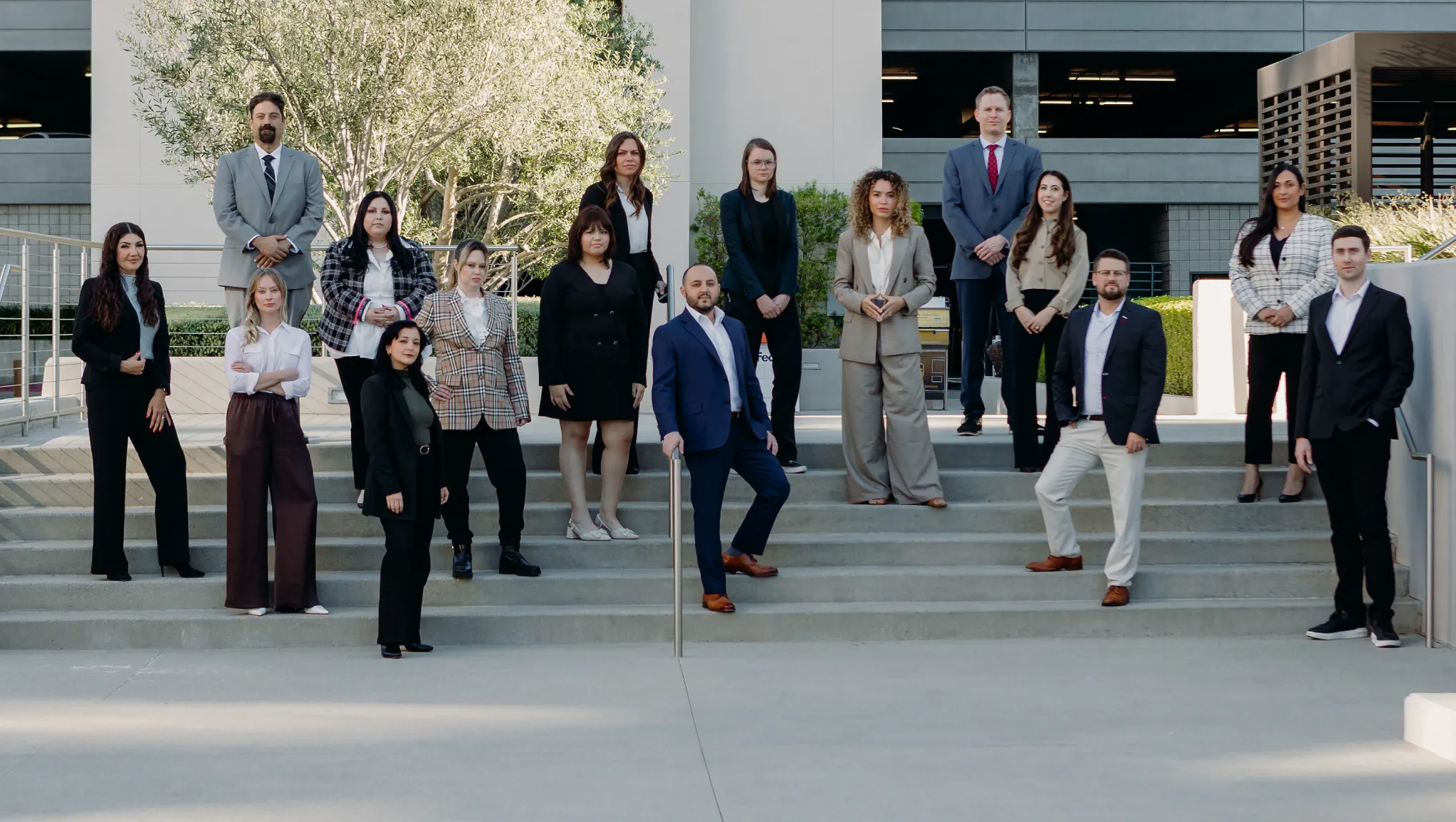
1
Kirsten Starr
Controller
2
Nicole Clancy
Senior Litigation Attorney
3
Mike Rachmann
Litigation Attorney
4
Robert Starr
Attorney, Founding Partner
5
Francine Barlavi
Client Onboarding Team
6
Danny Barlavi
Client Onboarding Team Lead
7
Kaylie Urango
Pre-Litigation Support Specialist
8
Amber Shelgren
Case Evaluation Assistant
9
Taylor McCarthy
Litigation Support Specialist
10
Gabriela Dominguez
Litigation Support Specialist
11
Cynthia Rodriguez
Case Manager
12
Collette Navasartian
Paralegal
13
Rebecca Harteker
Litigation Attorney
14
Manny Starr
Attorney, Managing Partner
15
Colin Rickard
Director of Growth & Operations
16
Mark Tieman
Attorney, Managing Partner
How Frontier Law Center Fights for You
At Frontier Law Center, we represent employees exclusively. So every decision we make and every strategy we build centers entirely on your interests.
Our legal team, led by Managing Partner Manny Starr, takes quid pro quo harassment cases seriously because the harm is serious. When a harasser abuses their power over a subordinate, employees lose promotions, lose jobs, and lose the careers they worked hard to build. California employment law was built to address exactly that situation, and holding employers accountable is what Frontier Law Center does every day.
We also work on a contingency fee basis. That means you pay nothing unless we recover for you. There is no financial barrier to getting the legal help you deserve.
You can review the results we have achieved for California employees on our accomplishments page. To understand what a claim like yours may be worth, visit our blog on sexual harassment settlement amounts in California. It walks through the key factors that affect a case’s value. For the full picture of your rights under California harassment law, visit our sexual harassment in California service page.
If you are searching for wrongful termination lawyers near me anywhere in California, we are ready to hear your case. Contact us today, and, if you want to explore other employment claims related to your situation, you can also learn more about
Questions California Employees Ask About This Type of Harassment
These are the questions Frontier Law Center hears most often from California employees trying to understand their situation. If your specific circumstances are not covered here, a free consultation is the fastest way to get a direct answer.
Does Quid Pro Quo Harassment Only Apply If My Supervisor Made the Demand?
Not exclusively, but supervisory conduct is where California law is strictest. When a supervisor commits quid pro quo harassment, FEHA holds your employer automatically liable. However, if a coworker in a non-supervisory role is responsible, the standard is different. In that case, liability depends on whether the company knew about the conduct and failed to take appropriate steps. Either way, the harassment is still illegal and still actionable. An attorney can help you identify who holds legal responsibility in your specific circumstances.
Do I Have to Have Refused the Demand for It to Count as Harassment?
The demand itself counts as harassment under California law, regardless of how you responded. If you felt pressured to comply in order to protect your job, California law still recognizes that as a violation of your rights. Your response to the demand does not determine whether quid pro quo harassment occurred. The law focuses on the conduct itself and the power dynamic behind it.
Can I Still File a Claim If the Harassment Happened More Than a Year Ago?
The answer is possibly yes, depending on when the most recent incident occurred. California’s AB 9 extended the FEHA filing deadline to three years from the most recent incident of harassment. So if the conduct occurred within the past three years, you may still have a valid claim. This is especially important for employees whose harassment developed gradually over time. Speaking with an attorney early helps confirm whether the filing window is still open for your situation.
What If My Company Has a Sexual Harassment Policy but Still Did Nothing?
A written policy does not protect your employer from legal responsibility. Under FEHA and California Government Code Section 12940, employers have a legal obligation to take all reasonable steps to prevent and correct harassment. That duty does not end with writing a policy. If your employer had a policy in place and still failed to act, that failure can actually strengthen your claim. Having a policy means nothing if the company does not stand behind it.
What Happens to My Claim If the Person Who Harassed Me No Longer Works at the Company?
Your claim does not disappear just because the harasser left the company or was terminated. Under FEHA, employer liability in quid pro quo cases attaches based on the conduct that occurred, not on the harasser’s continued employment. Your employer remains responsible for what happened during the period of harassment. In some cases, the harasser’s departure after a complaint is itself evidence that the employer knew the conduct was wrong. Your legal options under California law stay intact, and Frontier Law Center can help you evaluate them.
Last Updated: June 01, 2026
The information on this page reflects the law as of the date above and is intended for general informational purposes only. It does not constitute legal advice, nor does it create an attorney-client relationship. Laws and regulations are subject to change, and individual circumstances vary — always consult a qualified attorney for guidance specific to your situation.
Find Out If You Have a Case
You should not have to choose between your job and your dignity. If what happened to you at work sounds like anything on this page, a free case evaluation with Frontier Law Center gives you a straight read on where you stand under California law and what your options are.
We review the facts of your situation, explain whether a claim is viable, and walk you through your next steps with no pressure, no obligation, and no cost unless we recover for you.