
Your manager called it a performance issue, and the timing still does not sit right. Maybe the write-ups started the week after you reported something to HR at your South of Market office. Or maybe your role vanished in a round of layoffs that somehow spared everyone else on your team. If you are already searching for a San Francisco wrongful termination lawyer, that gut feeling is usually the first sign.
Most people in that position never plan to call a lawyer right away. They cannot tell yet whether anything illegal happened, and that doubt is normal. In fact, it is exactly why so many real claims quietly expire. California protects employees far more than most people realize. San Francisco then stacks its own local rules on top of state law.

★★★★★5/5
“This place is amazing because the people here have real genuine good hearts to help people through there tough times and situations. They’re a people first business and I appreciate there establishment and customer service. ”
— Recent Client Review
Quick Answer
Does San Francisco give employees wrongful termination protections beyond California law?
Yes. California protects you from being fired for an illegal reason, and San Francisco adds its own layer on top through the Fair Chance Ordinance, the Family Friendly Workplace Ordinance, and the Paid Parental Leave Ordinance. A firing that looks defensible under state law alone can still violate a city rule, which is why a termination tied to a criminal record, a caregiving request, or a leave request deserves a second look.
Get a Free ConsultationWhat San Francisco Wrongful Termination Attorneys Count as an Illegal Firing
California is an at-will state, so employers often assume they can end a job for any reason at all. However, that assumption holds only up to a point. At-will employees still keep real legal limits on their side. Specifically, your employer cannot fire you, demote you, or cut your hours for a reason the law protects.
When they do it anyway, the firing stops being a business decision. It becomes a legal claim instead. In fact, most San Francisco employees who reach out simply noticed that the company story did not match the dates they lived through.
Why the Stated Reason Usually Matters Less Than the Timeline
Employers almost never announce an illegal motive out loud. Instead, these cases turn on whether the official story holds up. For example, a company might cite restructuring and then post your role again six weeks later. That gap becomes evidence.
A wrongful termination attorney in San Francisco therefore starts by mapping every relevant date. Then comes the comparison, because how your employer treated similar employees often says more than any single document. Our wrongful termination team runs that analysis first. Our guide to at-will employment in California explains where the exceptions come from, and Nolo covers the basic rule.

Common Grounds a San Francisco Wrongful Termination Lawyer Sees Most
Every case is different. However, most inquiries fall into a short list of recurring patterns worth a closer look.
Retaliation
Fired for reporting harassment, discrimination, workplace safety issues, or other unlawful activity.
Discrimination
Termination tied to race, gender, age, disability, pregnancy, or another protected characteristic.
Whistleblower
Fired for reporting illegal activity to a supervisor, an agency, or law enforcement.
FMLA / CFRA Leave
Fired for taking legally protected medical, family, or pregnancy leave.
Arbitration Agreement
A private contract that can route your dispute out of court instead.
Severance Agreement Review
Some releases fail on procedure, and some claims survive what you signed.
Wage Complaints
Fired after raising unpaid overtime, missed breaks, or sick leave violations.
Workers’ Compensation
Fired for filing or planning to file a workers’ comp claim after a workplace injury.
Constructive Discharge
Forced to resign because your employer made your San Francisco job intolerable.
How a San Francisco Employment Lawyer Uses Local Ordinances Beyond State Law
San Francisco enforces more local employee protections than any other California city. The Office of Labor Standards Enforcement handles all of them. Notably, most get discussed as wage rules, yet several govern firings directly.

The Fair Chance Ordinance Now Reaches Firings and Not Only Hiring
San Francisco expanded its Fair Chance Ordinance on August 10, 2026. The change matters for anyone fired over a criminal record, since it now applies across the whole job, not only at hiring.
Your employer must run an individualized assessment before acting on your record, then tell you what they found and let you respond. In addition, employers cannot weigh out-of-state convictions for conduct California treats as lawful. That includes abortion-related healthcare, gender-affirming care, drag performances, and miscarriage. Penalties for violating the ordinance doubled at the same time, so a second violation now reaches $4,000 per affected employee.
Caregiving Schedule Requests and the Firings That Follow Them
The Family Friendly Workplace Ordinance covers employers with 20 or more employees. They must answer a caregiving schedule request within 21 days and explain any denial in writing. That paperwork trail fixes the date you asked, so a termination soon afterward forces your employer to explain its own timeline. Similarly, the Paid Parental Leave Ordinance requires employers to top up your pay during leave.
Wage Rules That Often Reveal a Second Claim
San Francisco’s minimum wage reached $19.61 an hour on July 1, 2026. It applies to anyone working two or more hours a week in the city. Unpaid wages often surface during a firing review, so our breakdown of the California minimum wage shows how the local rates compare.
Pushed Out Without Being Officially Let Go
Sometimes employers do not formally fire anyone. Instead, they make the workplace so hostile that leaving feels like the only option. California law recognizes this as constructive discharge and treats it as wrongful termination. If quitting felt like the only option, it is worth reviewing with an attorney.
Types of Wrongful Termination Claims San Francisco Attorneys Handle
Most claims fall into a handful of familiar patterns. Often, they tie to a protected characteristic, a protected activity, or a specific San Francisco ordinance. The table below pairs common San Francisco scenarios with the protection behind each one.
| Situation | Your Right | Relevant Law |
|---|---|---|
| Fired soon after reporting a suspected legal violation | Protection from whistleblower retaliation | California Labor Code section 1102.5 |
| Fired because of age, race, disability, pregnancy, gender, or religion | Protection from employment discrimination | California FEHA, Government Code section 12940 |
| Fired after requesting or taking family or medical leave | Protection from leave retaliation | California Family Rights Act, federal FMLA |
| Fired over criminal history with no individualized assessment | Right to notice and a chance to respond first | San Francisco Fair Chance Ordinance |
| Fired shortly after a caregiving schedule request | Right to a written response within 21 days | San Francisco Family Friendly Workplace Ordinance |
| Conditions made intolerable until you resigned | Right to treat the resignation as a firing | California constructive discharge doctrine |
Fired After Reporting Something You Believed Was Illegal
Retaliation rules exist because rights mean little when using them costs you your job. Labor Code section 1102.5 covers you when you report a suspected violation. Notably, it still applies even when your report turns out to be wrong.
Good faith is the standard here, not accuracy. For example, reporting harassment inside the company counts. So does raising a safety problem or asking about missing pay. Our guide to workplace retaliation examples shows how these cases unfold, and Cornell Law School explains the legal standard behind them.
Pushed Out Rather Than Formally Let Go
Some employers never actually fire anyone at all. Instead they make the job unbearable until leaving looks like your only real option, which California recognizes as constructive discharge.
A resignation like that can still support a claim, since California public policy treats a forced resignation the same as a firing. Your employer will argue you quit by choice. So the record you build first carries real weight. Write down what changed, when it changed, and who saw it.
Records a San Francisco Employment Attorney Needs to Build Your Case
Documents win these cases far more often than dramatic stories do. So save copies of whatever you can lawfully access, and do it soon. Specifically, anything time-stamped works in your favor. A message sent the same week as your complaint carries more weight than a memory of when it happened.
Coworkers matter too, especially the ones who noticed the same pattern or overheard what your manager said. Even without a document behind it, a colleague willing to describe what they saw can support your timeline. Our guide on what to do after being fired in California covers your first steps.
- Emails and texts that predate the dispute
- Performance reviews and write-ups
- Internal chat and Slack messages
- Work schedules and time records
- Pay stubs and wage statements
You may have more of a case than you think.
Most people who contact Frontier Law Center are not sure they have a case. The legal threshold for harassment is often lower than employees expect, and a free conversation is the clearest way to find out where you actually stand.
Where a San Francisco Wrongful Termination Attorney Files Your Claim
San Francisco hosts several federal administrative agencies but not the state civil rights agency. Specifically, the Equal Employment Opportunity Commission runs a district office right in the city. The National Labor Relations Board runs Regional Office 20 here as well.
The State Agency With No Office in the City
State discrimination and retaliation complaints all go to the California Civil Rights Department. That department runs six offices statewide, and none sit in San Francisco.
San Francisco employees therefore file online or use the Oakland office across the Bay. City ordinance complaints follow a separate path through the Office of Labor Standards Enforcement. Our guide on how to file a wrongful termination claim walks through both routes.

Deadlines a San Francisco Wrongful Termination Lawyer Cannot Afford to Miss
Deadlines end more employment claims than weak facts ever do, so each claim type runs on its own clock. Notably, several of those clocks start the day the problem happened, not the day you understood it.
| Claim Type | Where It Goes | Deadline |
|---|---|---|
| Discrimination, harassment, or retaliation under FEHA | California Civil Rights Department, online or the Oakland office | Three years from the last violation |
| Civil lawsuit after a right to sue notice | San Francisco Superior Court | One year from the date on the notice |
| Whistleblower retaliation under Labor Code section 1102.5 | Labor Commissioner or civil court | Three years |
| Wrongful termination that violates public policy | San Francisco Superior Court | Two years |
| San Francisco local ordinance violation | Office of Labor Standards Enforcement | Varies by ordinance, commonly one to three years |
| Federal discrimination claim | EEOC San Francisco District Office | 300 days from the violation |
Our guide to the employment statute of limitations in California explains how each clock runs.
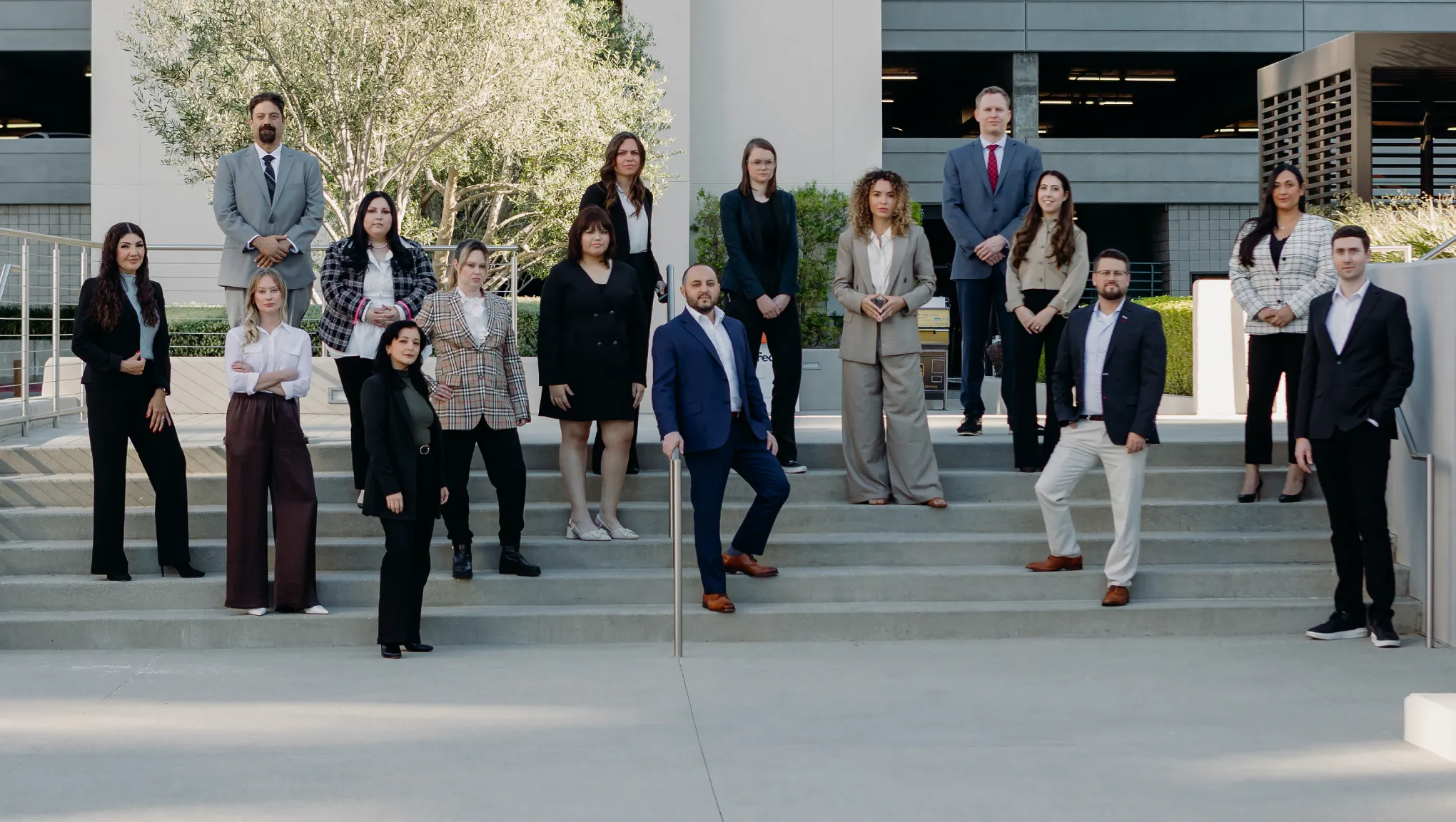
1
Kirsten Starr
Controller
2
Nicole Clancy
Senior Litigation Attorney
3
Mike Rachmann
Litigation Attorney
4
Robert Starr
Attorney, Founding Partner
5
Francine Barlavi
Client Onboarding Team
6
Danny Barlavi
Client Onboarding Team Lead
7
Kaylie Urango
Pre-Litigation Support Specialist
8
Amber Shelgren
Case Evaluation Assistant
9
Taylor McCarthy
Litigation Support Specialist
10
Gabriela Dominguez
Litigation Support Specialist
11
Cynthia Rodriguez
Case Manager
12
Collette Navasartian
Paralegal
13
Rebecca Harteker
Litigation Attorney
14
Manny Starr
Attorney, Managing Partner
15
Colin Rickard
Director of Growth & Operations
16
Mark Tieman
Attorney, Managing Partner
Why a San Francisco Employment Lawyer Doesn’t Need a Local Office
A successful wrongful termination case can restore what you lost financially, and often goes well beyond that. Back pay covers wages you should have earned from the date of the firing forward. Front pay accounts for income you are likely to lose in the future. On top of that, compensatory damages cover the emotional distress an illegal firing causes. In cases where the employer’s conduct was especially harmful, the court may also award punitive damages. FEHA also allows you to recover attorney’s fees in most discrimination and retaliation cases, so you do not have to pay out of pocket to pursue your rights.
For context on what these cases typically resolve for, see our guide to average wrongful termination settlements in California.
You do not need a San Francisco wrongful termination lawyer with a local address for your case to work. Frontier Law Center works out of Woodland Hills and represents employees across California. Because employment claims go to statewide agencies and California courts, your attorney does not need an office on your block.
What matters is whether the firm’s employment law attorneys know your local rules and take these claims often. San Francisco cases run much like our Los Angeles wrongful termination cases do. Our broader San Francisco employment law practice covers the rest of the city rules.
What It Costs to Learn Where You Stand
Nothing at all, because we review San Francisco termination claims free of charge. We take these cases on contingency, so our fee comes out of a recovery rather than your pocket. When there is no recovery, you owe us no attorney fees. That way cost never decides whether someone learns their rights.
What Happens When You Contact Frontier Law Center
1
You tell us your story
Free, confidential, no pressure. These conversations are handled with care and discretion. You share what happened in your own words, at your own pace.
2
We give you an honest assessment
Our attorneys review what you share and tell you plainly what we see. If a claim exists, we explain your options, the likely timeline, and what to realistically expect.
3
You decide what comes next
No obligation after the consultation. If we take your case, we work on contingency – we do not get paid unless you do. No upfront cost, ever.
Free consultation · Fully confidential · No win, no fee · No upfront cost
Questions San Francisco Employees Ask a Wrongful Termination Lawyer
These come up in nearly every first conversation with San Francisco employees.
Can My San Francisco Employer Fire Me Over a Conviction From Another State?
Often they cannot, especially when the conduct behind the conviction is lawful in California. The expanded Fair Chance Ordinance requires an individualized assessment and a real chance to respond before your employer can act on your record.
Can I Be Fired for Asking to Change My Schedule to Care for a Family Member?
Your employer cannot punish you for making that request. The request itself creates a record that works in your favor. The Family Friendly Workplace Ordinance requires a written response within 21 days, so a firing right afterward is hard to explain away.
What if My San Francisco Job Ended Right After I Asked About Parental Leave?
That sequence deserves a close look, because tight timing rarely reads as chance. San Francisco requires covered employers to top up your pay during parental leave, and California separately protects pregnancy and family leave. Write down when you asked, who you told, and what changed afterward.
Do San Francisco City Protections Apply if My Employer Is Headquartered in Another State?
Yes, in most cases, because these ordinances follow the work rather than the head office. The Fair Chance Ordinance alone covers employers with five or more employees anywhere. You qualify by working eight or more hours a week inside San Francisco. Employees who split time between home and a city office still count.
I Already Signed My San Francisco Layoff Paperwork. Do I Have Any Options Left?
Possibly, because a signature does not close every door behind you. Some releases fail on procedure, and some claims survive what you signed. Bring us the documents, and we will explain what remains, including how any arbitration agreement affects you.
Does a San Francisco Ordinance Violation Make My Termination Claim Stronger?
It often does, because local violations stack alongside state claims rather than replace them. One firing can produce three claims at once. You might hold a state discrimination claim, a Labor Code retaliation claim, and a city ordinance violation. Each one carries its own remedies and filing route. Identifying every legal theory that applies matters from the first call, which is why the workplace retaliation review happens early.
Last Updated: September 25, 2026
The information on this page reflects the law as of the date above and is intended for general informational purposes only. It does not constitute legal advice, nor does it create an attorney-client relationship. Laws and regulations are subject to change, and individual circumstances vary. Always consult a qualified attorney for guidance specific to your situation.
Talk With a San Francisco Wrongful Termination Lawyer at Frontier Law Center
You do not need to be certain before you reach out. In fact, most San Francisco employees who contact us are still working out whether what happened crossed a legal line. Sorting that out is our job, not yours. We will review your timeline, explain which protections apply, and tell you honestly what we think.
Contact Frontier Law Center to schedule a free case evaluation and find out what your options are.
