
How to Fight a Wrongful Termination in California
- June 24, 2026
Most California employers do not explain why they fired you, and they are not required to. They can call it a restructuring, a performance issue, or a change in direction. As long as the explanation sounds plausible on paper, most employees accept it and move on. When a firing follows a complaint, a leave request, or another legally protected action, the stated reason often hides the real one. Learning how to fight wrongful termination in California means knowing that the stated reason is not always the final word. This guide gives you a clear picture of what the law allows and what it looks like to push back.
Quick Answer
How do you fight a wrongful termination in California?
To fight a wrongful termination in California, you need to show that your firing violated a law, a public policy, or a protected right. Start by preserving your evidence and identifying whether the firing involved discrimination, retaliation, or another illegal motive. Then speak with an employment attorney before any deadlines close. California's at-will rule has real limits, and a firing that crosses one of them can be challenged through an agency complaint, direct negotiation, or a civil lawsuit.
Get a Free ConsultationWhat Qualifies as Wrongful Termination Under California Law
A wrongful termination in California breaks a specific law, violates public policy, or punishes you for a protected right. The at-will employment doctrine gives employers broad authority, but it does not protect firings based on illegal reasons. California courts have recognized significant exceptions to at-will employment. These include the public policy exceptions, the implied contract exception, and statutory protections under state and federal law.
California’s Fair Employment and Housing Act prohibits termination based on race, sex, age, disability, religion, national origin, pregnancy, or sexual orientation. Beyond discrimination, California law also protects employees who report harassment, request medical leave, or file a workers’ compensation claim. California Labor Code section 1102.5 shields employees who report suspected violations to a government agency. Retaliation claims in California fall under both state labor law and federal statutes. Our guide on unlawful termination in California explains how courts draw the line between a firing that feels unfair and one that is actually illegal.
These situations are what Frontier Law Center sees most often from employees ready to fight wrongful termination in California. Finding your situation here does not guarantee a winning claim. It means you should not count yourself out before speaking with someone who can evaluate the facts.
You don’t need to have all the answers.
You just need to tell us your story. We’ll figure out if it was illegal. Many of our most successful clients started by
saying “I’m not even sure I have a case.”
- Fired after reporting discrimination, harassment, or unsafe working conditions
- Termination followed a medical leave, pregnancy absence, or disability accommodation request
- Let go shortly after filing a workers’ compensation claim
- Employer retaliated after you refused to participate in something you knew was illegal
- Race, age, sex, disability, religion, or another protected characteristic was cited or implied
- A Performance Improvement Plan appeared right after you filed a formal workplace complaint
- The firing came days or weeks after reporting suspected illegal conduct
- An offer letter or employee handbook created an expectation that termination required cause
How to Prove Wrongful Termination in California
You prove wrongful termination, also called wrongful discharge, in California by showing that your employer’s stated reason does not hold up. Most employer defenses rely on claiming a valid, non-discriminatory reason for the firing. Your job is to show that reason is a cover story. You build a picture from several pieces of evidence that, together, point toward an illegal motive. These patterns emerge more often than people expect, and they are what you need to fight wrongful termination effectively.

Evidence That Contradicts Your Employer’s Explanation
The most persuasive evidence is anything that exposes pretext, the legal term for a cover story used to hide an illegal motive. Employers often point to valid business grounds or cite employee misconduct to explain the firing. When that story does not match your documented record, the gap is your evidence. Performance reviews that were positive before your complaint and sharply negative right after are a clear example. Our guide to wrongful termination examples in California shows how these patterns appear in actual workplace cases.

Why the Timing of a Firing Matters to Your Claim
Timing is one of the most reliable signals in a wrongful termination case. Courts pay close attention to how quickly a firing followed a protected complaint or a leave request. When that gap is only days or weeks, it raises serious questions about the employer’s real motivation. Write down exactly when you spoke up and when the firing happened. That documented sequence often carries more weight than people realize once a case reaches an agency or a courtroom.

How to Fight Wrongful Termination in California Step by Step
Most wrongful termination claims follow a predictable sequence. Knowing each step before you act keeps you from losing time or damaging your case before it gets started.

Protect Your Evidence Before You Do Anything Else
Save your termination letter, performance reviews, pay stubs, and work emails before your system access is cut off. Write down a timeline in your own words while the details are still fresh. Our guide on what to do after being fired in California covers each of these steps in detail.
Identify the Legal Basis for Your Claim
Whether your case involves discrimination, retaliation, or an implied contract breach determines which agency handles your complaint. Understanding the type of claim you have shapes every decision that follows, from how you gather evidence to where you file.
File a Complaint With the Right Agency
Most claims require filing with the California Civil Rights Department or the EEOC before you can pursue a lawsuit. This step opens the legal process and triggers your right-to-sue notice. Our guide on how to file a wrongful termination claim in California covers every filing step.
Move Toward Settlement or Take It to Court
Once a complaint is filed, your attorney will push for a negotiated settlement. Most claims resolve before a trial date is ever set. If negotiation stalls, a civil lawsuit in California Superior Court becomes the next move. Our post on whether you can sue for wrongful termination in California walks through that decision in full.
Deadlines and Mistakes That Can End Your Claim Early
California sets firm time limits on wrongful termination claims, and the window starts running from your termination date. These are the mistakes that cost employees their ability to fight wrongful termination before a case ever gets started.
| Common Mistake | Why It Damages Your Case |
|---|---|
| Signing severance without legal review | Release clauses can permanently waive your right to file a claim, sometimes before you understand the full scope of what you are giving up. |
| Posting about the firing on social media | Screenshots and posts can surface during legal proceedings and be used to contradict your account of events. |
| Confronting your former employer directly | Direct confrontation rarely produces anything useful and can create new complications that hurt settlement negotiations later. |
| Waiting until you feel ready to act | Filing deadlines run from your termination date, not from when you decide to pursue a claim. Waiting can permanently close the window. |
| Signing post-termination paperwork without review | NDAs and arbitration agreements can narrow or close your legal options before you fully understand what you are agreeing to. |
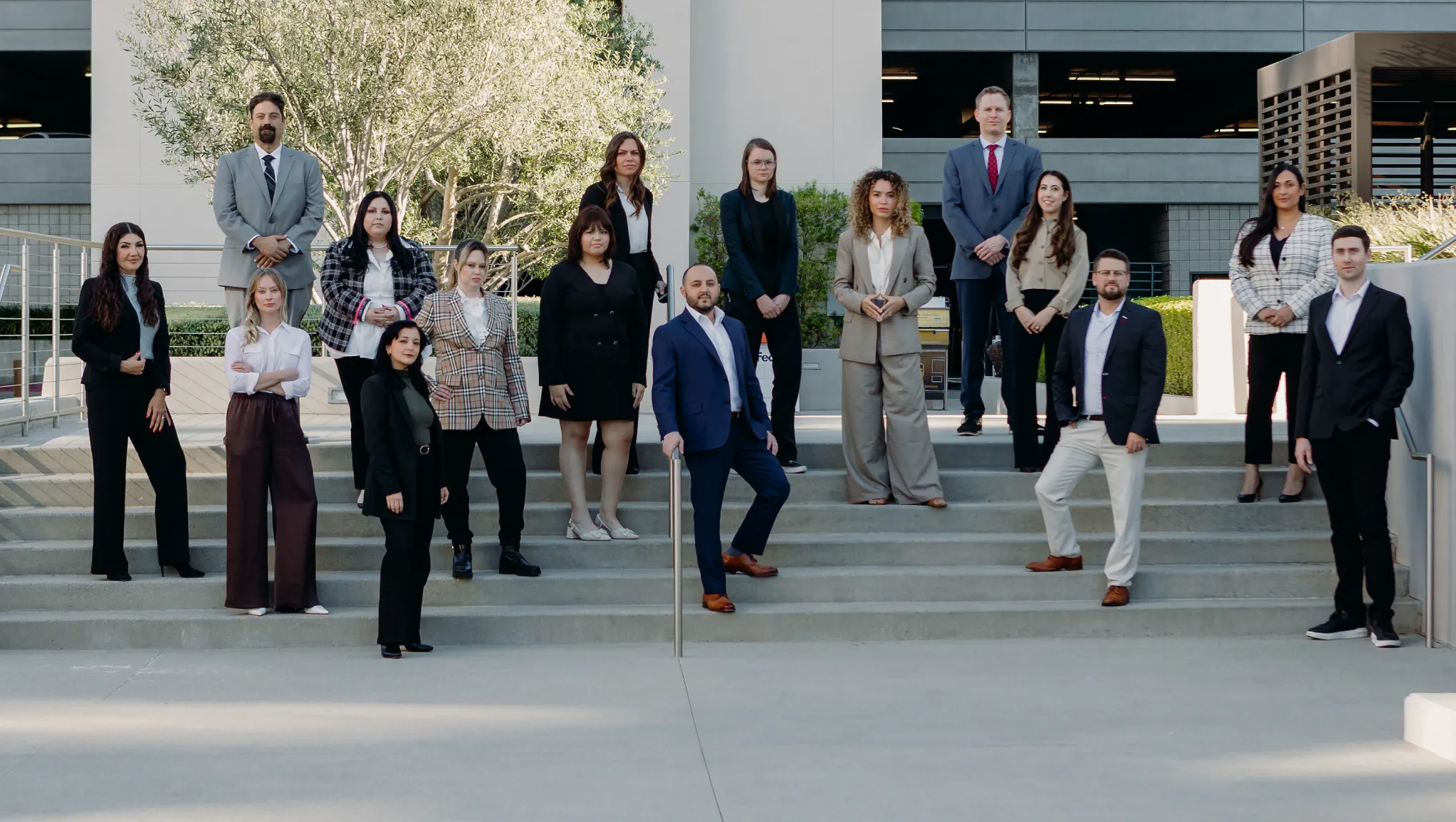
Kirsten Starr
Controller
Nicole Clancy
Senior Litigation Attorney
Mike Rachmann
Litigation Attorney
Robert Starr
Attorney, Founding Partner
Francine Barlavi
Client Onboarding Team
Danny Barlavi
Client Onboarding Team Lead
Kaylie Urango
Pre-Litigation Support Specialist
Amber Shelgren
Case Evaluation Assistant
Taylor McCarthy
Litigation Support Specialist
Gabriela Dominguez
Litigation Support Specialist
Cynthia Rodriguez
Case Manager
Collette Navasartian
Paralegal
Rebecca Harteker
Litigation Attorney
Manny Starr
Attorney, Managing Partner
Colin Rickard
Director of Growth & Operations
Mark Tieman
Attorney, Managing Partner
How Frontier Law Center Handles Your Case
Frontier Law Center is a plaintiff-side employment law firm based in Woodland Hills, California. Our attorneys know how to fight wrongful termination cases from intake through trial. Our team handles evidence preservation, agency filings, deadline tracking, and litigation strategy from start to finish. We recently won a trial for an employee fired after requesting a religious accommodation, with the court ordering reinstatement and back pay. Frontier Law Center works on a contingency basis, so you pay nothing upfront to get started.
If you believe your firing broke the law, contact Frontier Law Center through our contact page to schedule a free consultation and understand your options. You can also learn more through our wrongful termination lawyer in California page.
Learn More:
Common Questions About Fighting Wrongful Termination in California
These are the questions California employees most often raise when they first wonder whether their firing crossed a legal line and what to do next. Each answer leads with a direct statement, because clarity matters most when you are still deciding what to do.
What Is the First Step to Fight Wrongful Termination in California?
The first step to fight wrongful termination in California is to protect your evidence before it disappears. Save your termination letter, performance reviews, pay stubs, and any work emails related to the firing. Forward important messages to a personal account while your work access is still active. Then write down a detailed timeline while the facts are still fresh in your mind.
Can I Challenge My Firing if My Employer Gave a False Reason?
Yes, and a false reason can actually make your case stronger. When the stated reason for a firing does not match your documented work record, that inconsistency is called pretext. It is a recognized legal basis for proving wrongful termination in California. Reviews that were positive before a complaint and sharply negative right after are a clear example of pretext.
Does Being At-Will Stop Me From Challenging a Wrongful Firing in California?
No, at-will status does not prevent you from challenging an illegal firing. At-will employment gives your employer the right to end your job for many lawful reasons. However, it offers no protection for firings based on discrimination, retaliation, or violations of public policy. When your termination connects to a protected category or a protected activity, the at-will label carries no legal weight.
What If I Already Signed Paperwork From My Employer After the Firing?
Have the paperwork reviewed by an employment attorney, because not every signature closes the door to a legal claim. Some severance and release agreements are narrower than they appear on the surface. Certain claims may remain available even after a document is signed. An attorney review can tell you what you waived and what options are still open.
Take the First Step With Frontier Law Center
Losing a job you did not deserve to lose is hard enough without navigating the legal system alone. If you believe your firing broke the law, contact Frontier Law Center to schedule a free consultation and understand your options.
More Blogs

Is Working Off the Clock in California Legal Even If You Volunteer?
Is Working Off the Clock in California Legal Even If You Volunteer?

Signing a Severance Agreement Over 40 Gives You Rights Younger Employees Do Not Have
Signing a Severance Agreement Over 40 Gives You Rights Younger Employees Do Not Have

Can You Still Sue After Signing a Severance Agreement in California?
Can You Still Sue After Signing a Severance Agreement in California?

What to Do If You’re Sexually Harassed at Work in California
What to Do If You’re Sexually Harassed at Work in California

How to Tell If Discrimination in Hiring Cost You a Job in California
How to Tell If Discrimination in Hiring Cost You a Job in California

PAGA Reform Explained, What Changed for California Employees
PAGA Reform Explained, What Changed for California Employees