
If your paycheck does not add up, you may be dealing with a California minimum wage violation, and you are not alone. Employees across industries, from restaurants and retail to healthcare and construction, often lose wages to underpayment they cannot immediately name. The shortfall might be small each week, but it adds up fast, and it may be illegal. Frontier Law Center represents California employees who were paid below the minimum wage, and we know how to find the evidence that proves it.
This page explains how minimum wage underpayment actually happens, what California law entitles you to recover, and what steps to take if you believe your employer has paid you less than the law requires.

★★★★★5/5
“Simply the best law firm that I have hired to represent me in my case. From the bottom of my heart I want to thank this law firm frontier law center for helping me with my case”
— Recent Client Review
Quick Answer
What is a California minimum wage violation?
A California minimum wage violation occurs when an employer pays less than the legally required rate for the hours an employee worked. California's statewide minimum wage is $16.90 per hour in 2026, and many cities and counties set higher local rates that override the state floor. Violations most often stem from off-the-clock work, improper paycheck deductions, unrecorded training time, or tip practices that reduce base pay below the legal minimum.
10,000
+
Workers Helped
100
M+
Recovered
10
+
Years in Practice
California Minimum Wage Violation Rates From 2017 to 2026
California has raised the statewide minimum wage on a regular schedule, and the rate in effect during your employment determines the value of any California minimum wage violation claim. Older pay periods are governed by whichever rate was in effect at the time. The table below shows every statewide rate since 2017. If you worked in a city or county with a higher local ordinance, such as Los Angeles, San Francisco, or dozens of other jurisdictions, your employer was required to pay that higher local rate instead.
| Effective Date | 25 or Fewer Employees | 26 or More Employees |
|---|---|---|
| January 1, 2017 | $10.00/hr | $10.50/hr |
| January 1, 2018 | $10.50/hr | $11.00/hr |
| January 1, 2019 | $11.00/hr | $12.00/hr |
| January 1, 2020 | $12.00/hr | $13.00/hr |
| January 1, 2021 | $13.00/hr | $14.00/hr |
| January 1, 2022 | $14.00/hr | $15.00/hr |
| January 1, 2023 | $15.50/hr | $15.50/hr |
| January 1, 2024 | $16.00/hr | $16.00/hr |
| January 1, 2025 | $16.50/hr | $16.50/hr |
| January 1, 2026 | $16.90/hr | $16.90/hr |
How California Minimum Wage Attorneys Identify Violations in Your Pay Records
Most California minimum wage violations do not come from one obvious payroll mistake. They build through patterns that repeat across shifts and pay periods, often embedded in timekeeping systems or deduction practices that look routine on the surface.

Unrecorded Hours and Off-the-Clock Time
Off-the-clock work is one of the most common drivers of minimum wage violations in California. Pre-shift setup, post-shift closing duties, mandatory trainings that go untracked, and messages answered outside logged hours are all compensable work time under California law. When that time is excluded from your paycheck, your effective hourly rate may fall below what the law requires. Our page on off-the-clock work in California covers how these violations are proven and recovered.

Deductions and Pay Practices That Lower Your Effective Rate
Charges for uniforms, tools, register shortages, or breakage can push your effective hourly pay below the minimum wage floor. California also does not allow tip credits, meaning your employer must pay the full minimum wage in base wages regardless of tip income. Our tip pooling violations page explains how improper tip practices create a separate layer of underpayment on top of base wage claims.
| Violation Type | What It Looks Like | How It Affects Your Pay |
|---|---|---|
| Off-the-clock work | Tasks performed before or after your logged shift hours | Unrecorded time lowers your effective hourly rate |
| Unpaid training or meetings | Mandatory sessions not included in recorded hours | Missing pay reduces your effective rate below the minimum |
| Unlawful deductions | Charges for uniforms, equipment, or register shortages | Deductions bring your take-home below the legal floor |
| Time rounding abuse | Clock-in and clock-out rounded consistently in the employer's favor | Cumulative rounding reduces total wages owed |
| Misclassification | Being labeled exempt or as an independent contractor when you legally should not be | Exemption removes minimum wage and overtime protections |
What a California Minimum Wage Lawyer Can Help You Recover
California law provides strong remedies for California minimum wage violations, and the total recovery is often larger than employees expect. Under California Labor Code Section 1194, employees have the right to sue for unpaid minimum wages, and that right comes with meaningful financial protections. A California minimum wage lawyer can evaluate the full scope of what you are owed across all applicable claim types.
Many minimum wage cases involve more than one violation at the same time. Unrecorded hours affect both minimum wage and California overtime law, and pay stub inaccuracies can add separate statutory penalties on top of the back wages themselves. The recoveries listed below can apply together depending on your situation.
Knowing How Far Back You Can Claim Unpaid Wages
Timing matters significantly in every wage claim, because the recoverable period depends on when you file. The general deadline for statutory minimum wage claims is three years from the date of each violation, and certain claims brought under California’s Unfair Competition Law extend that window to four years. Many employees discover that violations continued for months or years without their knowledge, meaning the recoverable period can cover a significant amount of back pay. Our post on California employment statutes of limitations explains how these deadlines work across different claim types. Acting sooner preserves more of your options and the evidence that supports your case.
- Back pay for the difference between what you were paid and what you were legally owed, typically reaching back three years under California labor statutes or four years under the Unfair Competition Law
- Liquidated damages equal to the amount of unpaid wages when your employer cannot show its pay practices were made in good faith, which effectively doubles the back-wage recovery
- Wage statement penalties under California Labor Code Section 226 when your pay stubs failed to accurately reflect your hours, rate, or gross wages
- Expense reimbursement for out-of-pocket costs like uniforms or tools when those costs pushed your take-home pay below the minimum wage floor
- Attorney’s fees, which California law allows prevailing employees to recover, making it financially viable to pursue claims of any size
You don’t need to have all the answers.
You just need to tell us your story. We’ll figure out if it was illegal. Many of our most successful clients started by
saying “I’m not even sure I have a case.”
Steps California Employees Should Take Before Calling a Minimum Wage Attorney
Knowing what to do before you contact an attorney makes a California minimum wage violation evaluation faster and more useful for you. You do not need to have everything organized before reaching out, but starting these steps right away helps preserve the evidence that matters most in a minimum wage case.
The most important thing you can do right now is preserve whatever documentation you already have. Pay stubs, timecards, schedule records, screenshots of timekeeping apps, and any messages where your employer discussed your hours or tasks are all potentially relevant. Evidence that exists today may be harder to recover later, particularly when employers control their own timekeeping systems.

Document Your Work History Before Memories Fade
Write down a simple timeline of your employment, including your job title, your pay rate, and the city and county where you worked. Note the types of tasks you performed outside of logged shift times, such as pre-shift setup, post-shift duties, or mandatory trainings that were not counted toward your hours. If you worked across multiple locations in different cities, record each address separately, because local minimum wage ordinances are location-specific and the applicable rate depends on where you actually performed the work.
Understand Which Minimum Wage Rate Applies to Your Job
The rate that applies to you depends on when and where you worked. California’s statewide rate applies as a floor, but if a city or county ordinance in your area set a higher rate, your employer was required to pay that higher amount. Some industries also have industry-specific rules, such as fast food and healthcare settings, where different thresholds may apply. A minimum wage attorney can identify which rate governed your employment and calculate the gap between what you received and what you were owed.
Know That Retaliation for Raising a Wage Complaint Is Illegal
California law prohibits employers from retaliating against employees who raise wage complaints or cooperate in a wage investigation. If your employer reduced your hours, terminated your position, or began writing you up after you raised a concern about your pay, that change in treatment may constitute a separate retaliation claim on top of the original minimum wage violation. Our wage and hour violations page covers how retaliation intersects with wage claims.
1
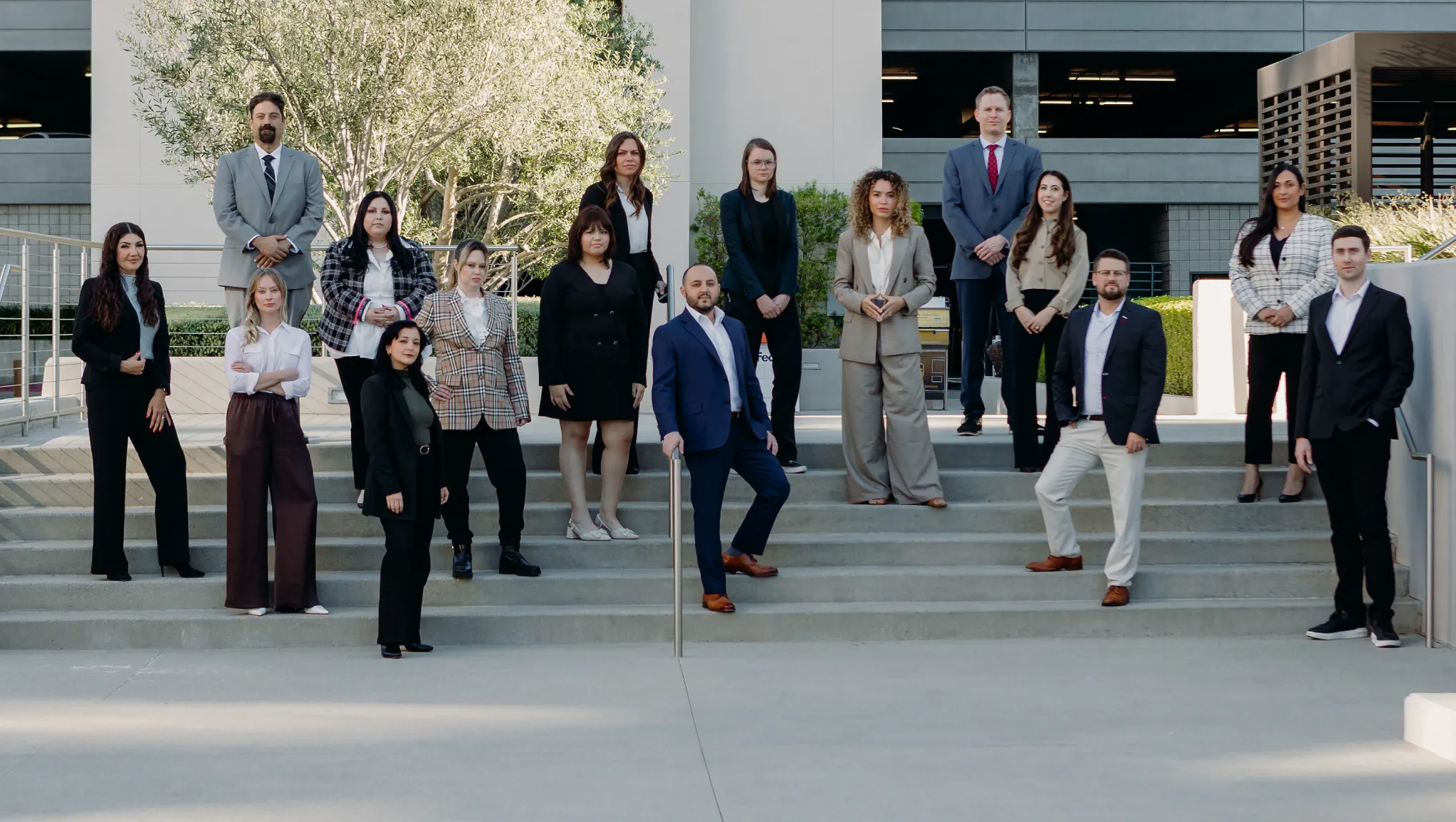
Kirsten Starr
Controller
2
Nicole Clancy
Senior Litigation Attorney
3
Mike Rachmann
Litigation Attorney
4
Robert Starr
Attorney, Founding Partner
5
Francine Barlavi
Client Onboarding Team
6
Danny Barlavi
Client Onboarding Team Lead
7
Kaylie Urango
Pre-Litigation Support Specialist
8
Amber Shelgren
Case Evaluation Assistant
9
Taylor McCarthy
Litigation Support Specialist
10
Gabriela Dominguez
Litigation Support Specialist
11
Cynthia Rodriguez
Case Manager
12
Collette Navasartian
Paralegal
13
Rebecca Harteker
Litigation Attorney
14
Manny Starr
Attorney, Managing Partner
15
Colin Rickard
Director of Growth & Operations
16
Mark Tieman
Attorney, Managing Partner
We’re on Your Side. Only Your Side.

100% Plaintiff-Side Practice
We never represent employers. Every resource, every strategy is dedicated to helping employees like you win.

We Actually Listen
Many firms rush through consultations. We take time to understand your full story — because details that seem small can be decisive.

California Specialists
California has the most powerful employee protection laws in the country. We know them deeply and use every one to your advantage.
Our Commitment to You
We never represent employers. Every resource, every strategy is dedicated to helping employees like you win.
100%
Confidential
No Fee
Unless we win
How Frontier Law Center Fights For You
California law provides strong employee protections. Does any of this match what you experienced?
1
You Share Your Story
Free, confidential, no pressure. We listen — and we give you an honest answer about your rights.
2
We Investigate
Our attorneys uncover what actually happened. You don’t lift a finger — we do the work.
3
We Fight for You
We negotiate hard and are fully prepared to go to trial. We fight for the maximum recovery.
4
You Move Forward
We only get paid when you win. You get closure, compensation, and a fresh start.
Wage Underpayment Questions California Employees Ask Our Attorneys
California minimum wage violations generate real questions from employees who are not sure whether what happened to them is illegal or worth pursuing. Here are direct answers to the questions Frontier Law Center hears most often from employees in this situation.
Can My Employer Pay Me Less Than Minimum Wage if I Receive Tips?
California does not permit a tip credit, which means your employer must pay the full minimum wage in base wages on top of any tips you receive. Tips belong to you and cannot be used to offset the employer’s minimum wage obligation. If your employer has been reducing your base pay because of tip income, that is a minimum wage violation regardless of how much you actually earned in tips.
Does It Matter Whether My Employer Says the Underpayment Was an Accident?
Intent does not determine whether you have a valid wage claim under California law. Your employer’s legal obligation to pay the minimum wage applies regardless of whether the shortfall was deliberate, careless, or the result of a payroll system that was never reviewed. What matters is whether you received less than the law required and how long that pattern continued.
Can I File a California Minimum Wage Violation Claim While Still Employed?
Yes, you are not required to quit before filing a wage claim in California. California law protects employees from retaliation for asserting their wage rights, and many employees pursue claims while remaining in their current position. An attorney can help you file in a way that protects your position and preserves your claim.
What Should I Do if My Employer Rounds Down My Hours Every Single Pay Period?
California courts have held that employer timekeeping rounding policies are unlawful when they consistently reduce total pay below what employees would have earned based on actual clock-in and clock-out times. If the rounding always runs in your employer’s favor across many pay periods, that pattern supports a claim for the difference between your actual and recorded hours, and the recovery can reach back three or four years depending on the claim type.
What Is the Difference Between Filing With the Labor Commissioner and Hiring a California Minimum Wage Attorney?
Filing a wage claim directly with the California Labor Commissioner is an administrative process that does not require legal representation and can work well for straightforward individual claims. Hiring a California minimum wage attorney allows you to pursue a civil lawsuit with broader discovery tools, opens the door to class or PAGA actions when the violation affected your entire team, and typically results in a larger recovery when the underpayment is systematic. Frontier Law Center can evaluate both paths during a free consultation and explain which one fits your situation.
Last Updated: June 01, 2026
The information on this page reflects the law as of the date above and is intended for general informational purposes only. It does not constitute legal advice, nor does it create an attorney-client relationship. Laws and regulations are subject to change, and individual circumstances vary — always consult a qualified attorney for guidance specific to your situation.
Speak With a California Unpaid Wages Attorney at Frontier Law Center
Frontier Law Center represents California employees in minimum wage cases on a contingency basis, which means you pay nothing unless we recover for you. When you reach out, our team reviews your pay records, timekeeping data, and any documentation you have to identify the pay practice behind the underpayment and determine whether related violations are present alongside the base wage claim.
Contact Frontier Law Center to schedule a free case evaluation and find out what your options are.