
Meal Break Violations in California Restaurants and What the Whole Staff Can Recover
- October 23, 2026
California restaurant break laws protect your meal breaks, but when the rush hits, your break is often the first thing to go. If your manager delays, shortens, or skips it, the law usually treats that shift as a violation. Each of those workdays earns you one extra hour of pay. Since you spend those hours on your feet, a lost break is more than a small inconvenience.
The same habit also tends to reach everyone on the schedule, so one employee can often pursue missed pay for the whole staff. Frontier Law Center represents California employees, and we see this pattern in restaurants and bars across the state.
Quick Answer
What do California restaurant break laws require?
California restaurant break laws require a duty-free meal period of at least 30 minutes that starts before the end of the fifth hour of work, unless a valid waiver applies. They also require a paid 10-minute rest break for every four hours worked or major fraction of four hours. A workday with a missed meal period earns one additional hour of pay at the employee's regular rate, and a missed rest break earns another.
Get a Free ConsultationHow California Restaurant Break Laws Apply to Front and Back of House
California restaurant break laws come down to timing, and busy schedules make that timing easy to miss. These rules go well beyond federal law, since the Fair Labor Standards Act (FLSA) does not require meal breaks at all. Two sets of rules apply on every shift, and each carries its own price when the restaurant breaks it.

The Meal and Rest Break Rules on Every Shift
Under Labor Code section 512, your first meal break must start before the end of your fifth hour. It has to last 30 minutes or longer, and you must be free of all duties the entire time. Similarly, doubles and closing shifts that run past ten hours need a second meal break before the tenth hour ends. Our guide to California meal break law walks through each timing rule.
California restaurant break laws also draw on Wage Order 5, the state rule for restaurants, bars, and other public housekeeping businesses. Rest breaks must be paid, and these short breaks last 10 minutes for every four hours worked or major fraction of four hours. A major fraction means more than two hours, so an eight-hour shift includes two paid rest breaks. Our page on meal and rest break rights explains how the two sets of rules fit together.

What Each Missed or Late Break Adds to Your Pay
Any workday with a late, short, or missed meal period adds a premium to the pay your employer owes you. Specifically, Labor Code section 226.7 sets that premium at one hour of pay at your regular rate. Employees often call it the California meal break penalty, and a missed rest break earns its own separate hour too.
Your regular rate also counts shift differentials and bonuses you earn for hitting set goals. As a result, the premium can run higher than your base wage. Our breakdown of meal break penalty pay walks through the math. Because each workday stands on its own, the total grows with every shift and every coworker on the schedule.
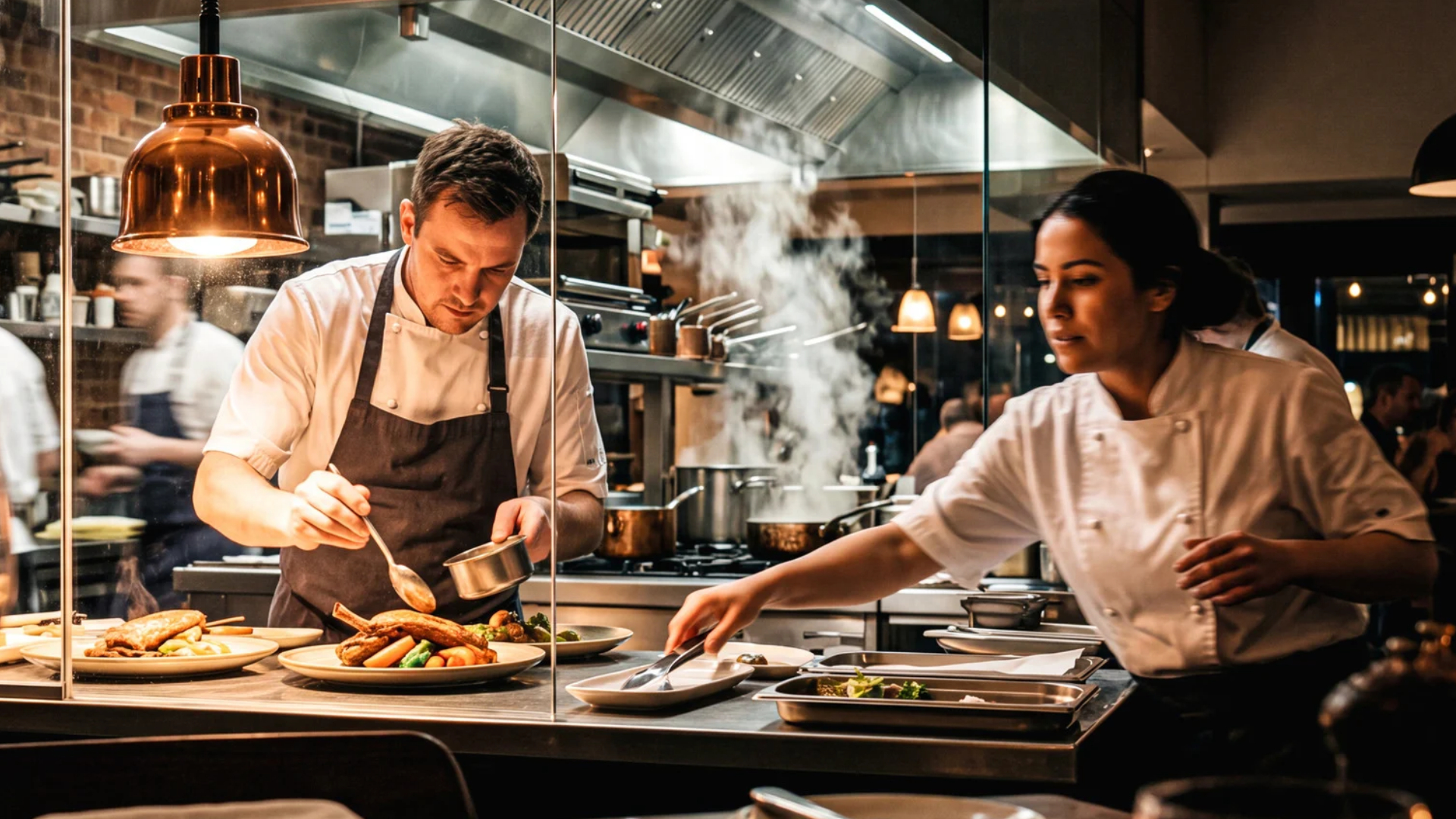
Restaurant Habits That Cost You the Break California Law Protects
Most violations of California restaurant break laws come from habits and employer policies that feel normal, rather than from a manager saying no. A 2012 California Supreme Court decision against a restaurant chain sets the standard. Your employer must relieve you of all duty, give up control of your time, and allow a 30-minute uninterrupted, duty-free meal break.
Waiting for the rush to end still costs a full premium, even if you finally eat. Many time clocks also deduct a 30-minute unpaid meal break by default, even though Wage Order 5 requires restaurants to record actual meal periods. When no real break happened, that deduction leaves time worked unpaid on top of the premium.
Likewise, family meal eaten while you roll silverware does not count as a break. The Labor Commissioner’s meal period guidance also counts a break as hours worked when you cannot leave the premises.
California restaurant break laws limit waivers too, since you can only waive a first meal period when the whole shift lasts six hours or less. A second waiver only works on shifts of twelve hours or less, and only after you take the first meal.
- Your manager says to take your break after the rush
- The time clock deducts 30 minutes whether you ate or not
- Family meal happens while you roll silverware at your station
- Instead of a real break, you grab bites at the pass between tickets
- You have to stay on the premises during unpaid meal breaks
- Your onboarding packet included a blanket meal break waiver
- Solo bar shifts come with no written on duty agreement
You don’t have to prove everything on day one.
Bring your schedules, pay stubs, and any texts about coverage. We’ll then help you see whether the pattern reaches your whole staff.
What Restaurant Time Records Prove About a Missed Break in California
Your restaurant’s own time records can prove missed breaks, because Wage Order 5 requires employers to record meal periods. In addition, a 2021 California Supreme Court decision bars employers from rounding meal period time punches. The same ruling says records showing short, late, or missing meals create a rebuttable presumption, a starting assumption the employer then has to disprove. That turns the records into strong proof under California restaurant break laws for a whole staff.
Wage Order 5 also lets you inspect your records when you reasonably ask, so put the request in writing and keep a copy. Similarly, coworkers can make the same request, which helps show that one practice reached everyone. Break premiums count as wages too, so a pay stub with no premium line can support a separate wage statement claim.
If a manager asks you to clock out and then finish side work, that time counts as working off the clock. Unpaid hours like these can lead to minimum wage violations or a failure to pay overtime, and the same records often reveal them.

How One Employee Can Pursue Missed Break Pay for the Whole Staff
One employee can pursue missed break pay for a whole restaurant staff through a class action or a claim under the Private Attorneys General Act (PAGA). When a manager ignores California restaurant break laws on every shift, the cause usually traces back to one schedule, waiver form, or time clock setting. That is why break violation cases so often become group claims, since the same proof covers everyone.
Frontier Law Center handles wage-and-hour litigation, and that work includes class and PAGA cases for fast food and food service employees. In fact, missed breaks rank among the wage and hour issues employees bring to us most often. As a result, our class actions and PAGA claims team knows how to weigh which path fits your restaurant.

A Class Action Puts the Whole Crew in One Case
A class action lets one or more employees, known as class representatives, pursue claims under California restaurant break laws for every coworker under the same policy. Before the case can proceed as a group, a court decides whether it qualifies, a step called class certification. Courts look for common proof, and shared records such as time clock data and schedules often supply it.
PAGA Penalties Reach Coworkers Who Stay Quiet
In contrast, a PAGA claim lets an aggrieved employee, meaning someone who personally experienced the violations, seek civil penalties for the state. Penalties add up for each affected employee and pay period, so the claim covers coworkers who never speak up.
Employees Share in the Penalties the State Recovers
After the 2024 PAGA reform, affected employees share 35 percent of the penalties, and the state keeps the rest. Before any lawsuit, the process starts with a written notice to the state’s labor agency and the employer.
An Arbitration Agreement Does Not End the Group Claim
Many restaurant groups require new hires to sign arbitration agreements, which can move your own claim to a private arbitrator. However, a 2023 California Supreme Court decision lets the PAGA claim for other employees stay in court. A judge may pause that part during the arbitration, but the signature does not erase it.
Filing Deadlines for California Restaurant Break Law Claims
You generally have three years from each missed break to recover the premium that California restaurant break laws require. Each workday starts its own clock, so older shifts age out while recent ones stay open. Pairing the claim with California’s unfair competition law can stretch that reach to four years. However, a PAGA claim only reaches back one year before the notice, so the group penalty claim runs on the shortest clock.
Restaurants close, rebrand, and change owners often, so waiting puts any wage and hour claim at risk. When you leave a job, any unpaid premiums are due with your final pay. If the restaurant leaves them out, it may also owe waiting time penalties of up to 30 days of wages. Our guide to the statute of limitations for unpaid wages compares these windows. You can also file a wage claim with the Labor Commissioner for your own premiums.
| Claim | What It Covers | Deadline |
|---|---|---|
| Meal and rest break premiums | One extra hour of pay for each workday with a late, short, or missed break | 3 years from each violation |
| Unfair competition claim | Repayment of unpaid premiums under California's unfair competition law | 4 years from each violation |
| PAGA civil penalties | Penalties for every affected employee, with 35 percent shared among them | Violations within 1 year before the notice |
| Waiting time penalties | Up to 30 days of wages when premiums are missing from your final pay | Same window as the unpaid premiums |
Questions Restaurant Employees Ask About Break Rules in California
Servers, bartenders, cooks, and bussers often ask these questions after they learn their workplace rights.
Is It Illegal to Not Get Breaks at Work in California When the Restaurant Is Short Staffed?
Yes, it is illegal, because California restaurant break laws do not excuse missed breaks when a restaurant is short staffed. Your employer has to provide legally required meal periods, and that includes scheduling enough coverage to relieve you. Each workday you lose a meal period because nobody could cover you still earns a full premium.
Can a Lone Bartender Get an On Duty Meal Period in California?
Yes, but only when the job itself prevents any relief and you sign a written agreement that you can revoke. An on-duty meal break is a 30-minute meal break you take while still working, and the restaurant must pay for it. The Labor Commissioner asks whether any employee in your role would be unable to take a duty-free break. Without a valid agreement, however, each solo shift with no real meal period earns a premium.
Do Tips Lower Meal Break Premium Pay at a California Restaurant?
No, tips never lower the premium that California restaurant break laws require for a missed meal break. That is because California bars employers from counting tips toward wages, and break premiums count as wages. Instead, the premium follows your regular rate, which starts with the hourly wage your employer pays.
Can I Bring a Meal Break Claim in California While I Still Work at the Restaurant?
Yes, you can pursue a claim under California restaurant break laws while you still work at the restaurant. California law bars workplace retaliation, such as cut shifts or firing, against employees who complain about unpaid wages. If the restaurant takes that kind of action within 90 days of your complaint, the law presumes retaliation. The restaurant then has to show it acted for a legitimate reason unrelated to your complaint.
What Happens to My Meal Break Claim if a California Restaurant Closes?
A restaurant closing does not end your meal break claim on its own. Owners, directors, officers, and managing agents, meaning senior managers who shape company policy, can be personally liable when they cause break violations. A successor that keeps running substantially the same restaurant can inherit a final wage judgment. The three-year clock keeps running after the doors close, so early action protects more of your shifts.
Find Out What Your Restaurant Owes Your Whole Staff
Every workday with missed or shortened breaks is back pay your restaurant still owes you. If your restaurant treats California restaurant break laws as optional, you may have a claim for the whole crew. Frontier Law Center has helped more than 10,000 employees so far. Meanwhile, our online intake assistant lets you share the basics on your own schedule.
Contact Frontier Law Center to schedule a free consultation by phone or online and find out what the restaurant may owe your whole staff.
More Blogs

What the California 10-Minute Break Law Requires and What Missed Breaks Pay
What the California 10-Minute Break Law Requires and What Missed Breaks Pay

Is Working Off the Clock in California Legal Even If You Volunteer?
Is Working Off the Clock in California Legal Even If You Volunteer?

Signing a Severance Agreement Over 40 Gives You Rights Younger Employees Do Not Have
Signing a Severance Agreement Over 40 Gives You Rights Younger Employees Do Not Have

Can You Still Sue After Signing a Severance Agreement in California?
Can You Still Sue After Signing a Severance Agreement in California?

What to Do If You’re Sexually Harassed at Work in California
What to Do If You’re Sexually Harassed at Work in California

How to Tell If Discrimination in Hiring Cost You a Job in California
How to Tell If Discrimination in Hiring Cost You a Job in California
